
Last updated November 2, 2026
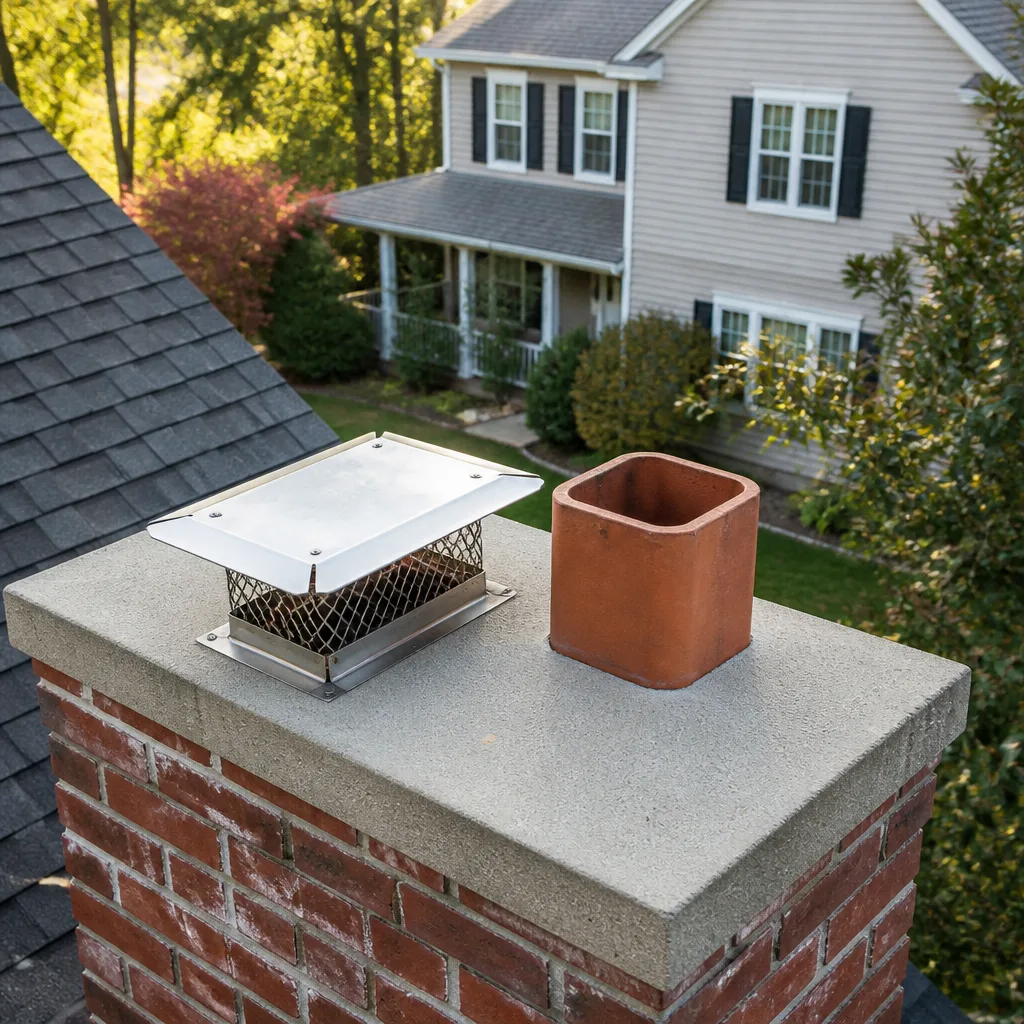 Sweep & inspection
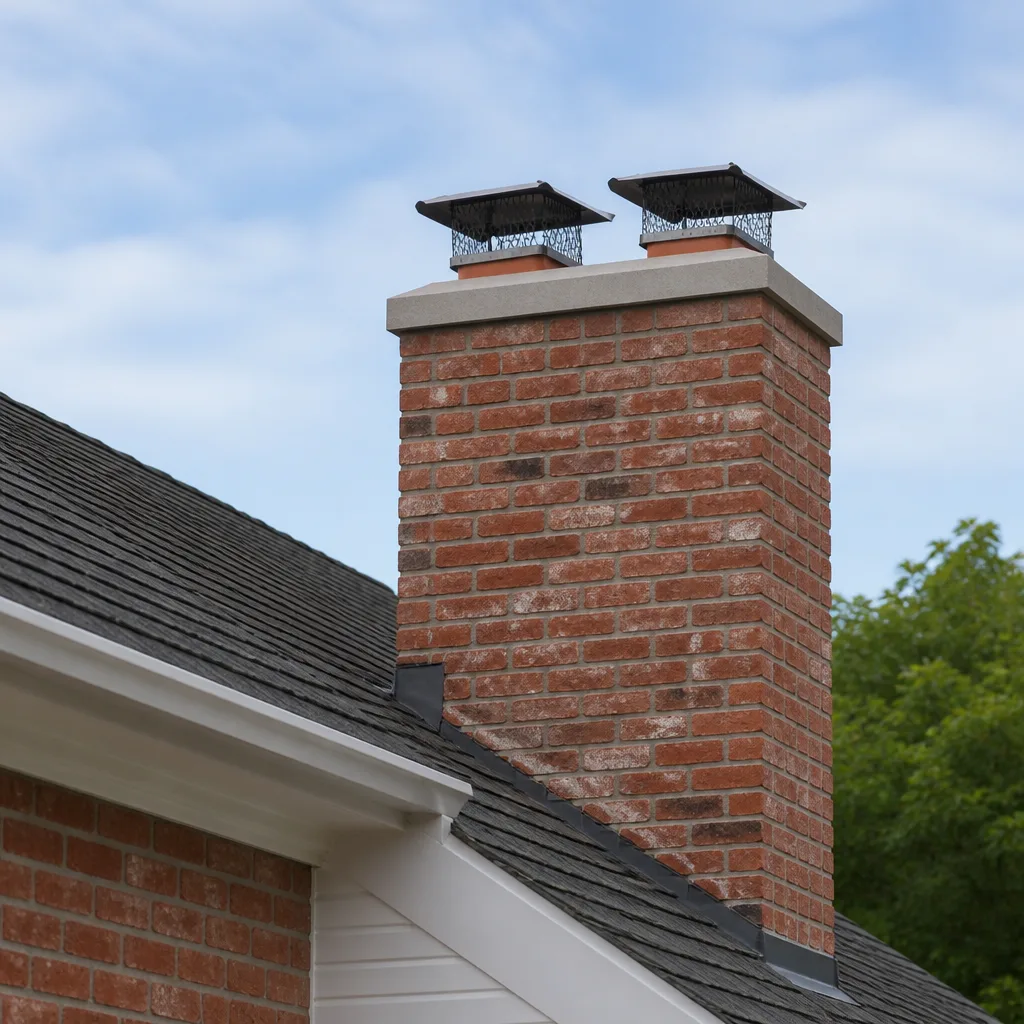 Caps & crowns
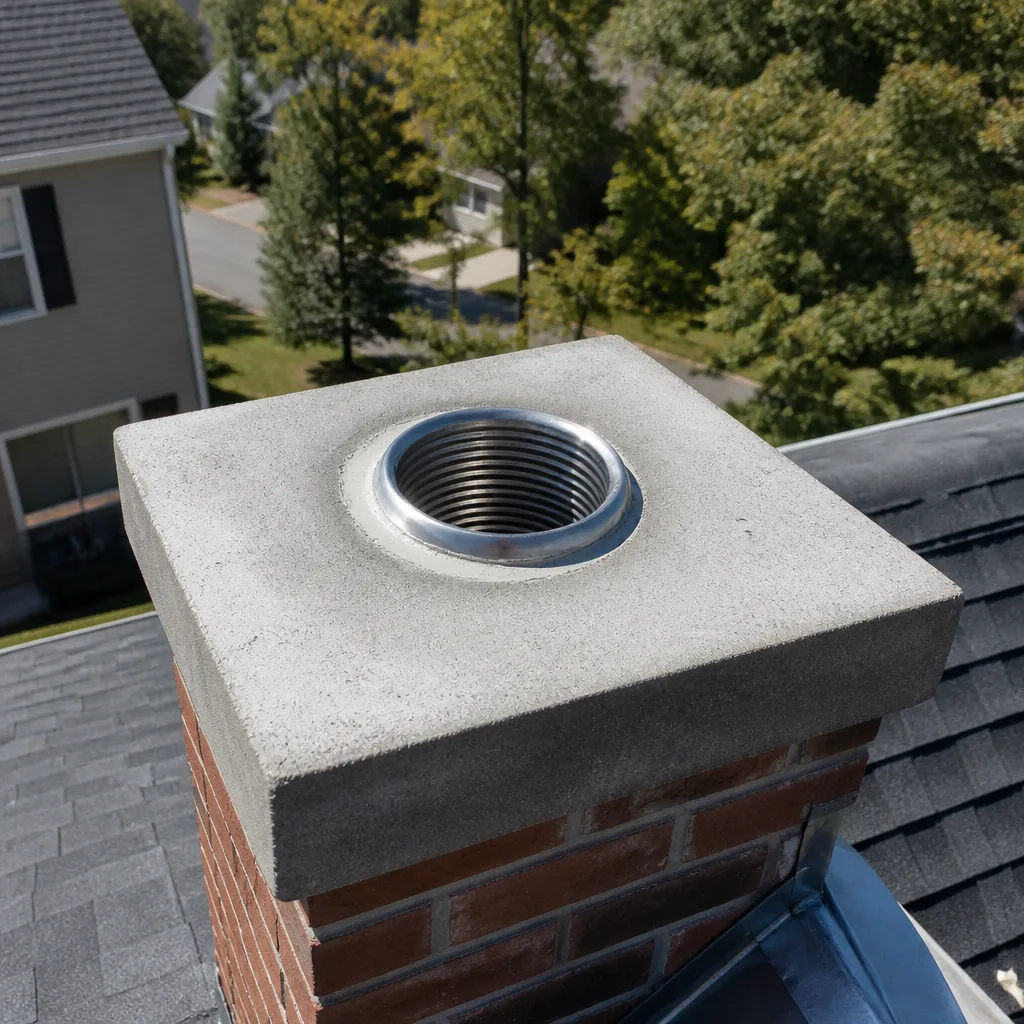 Flue relining
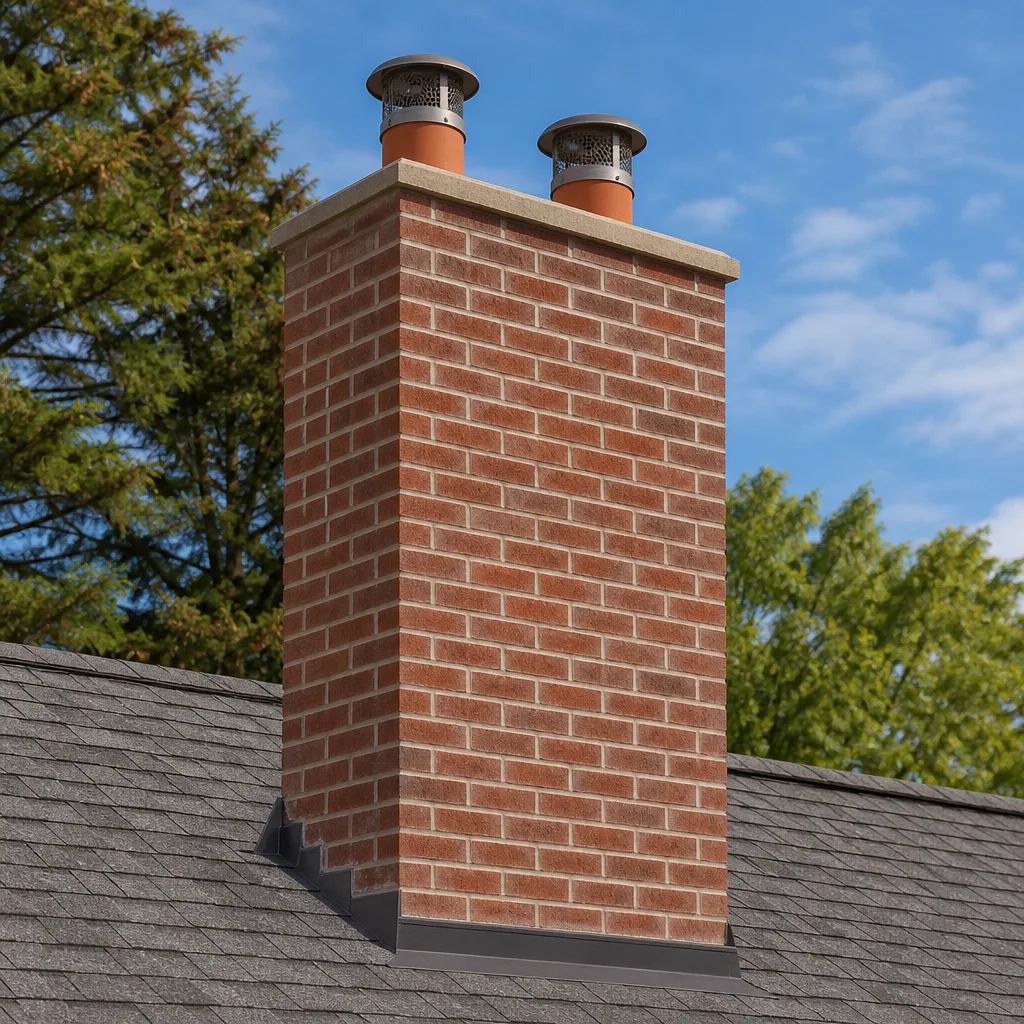 Masonry repair
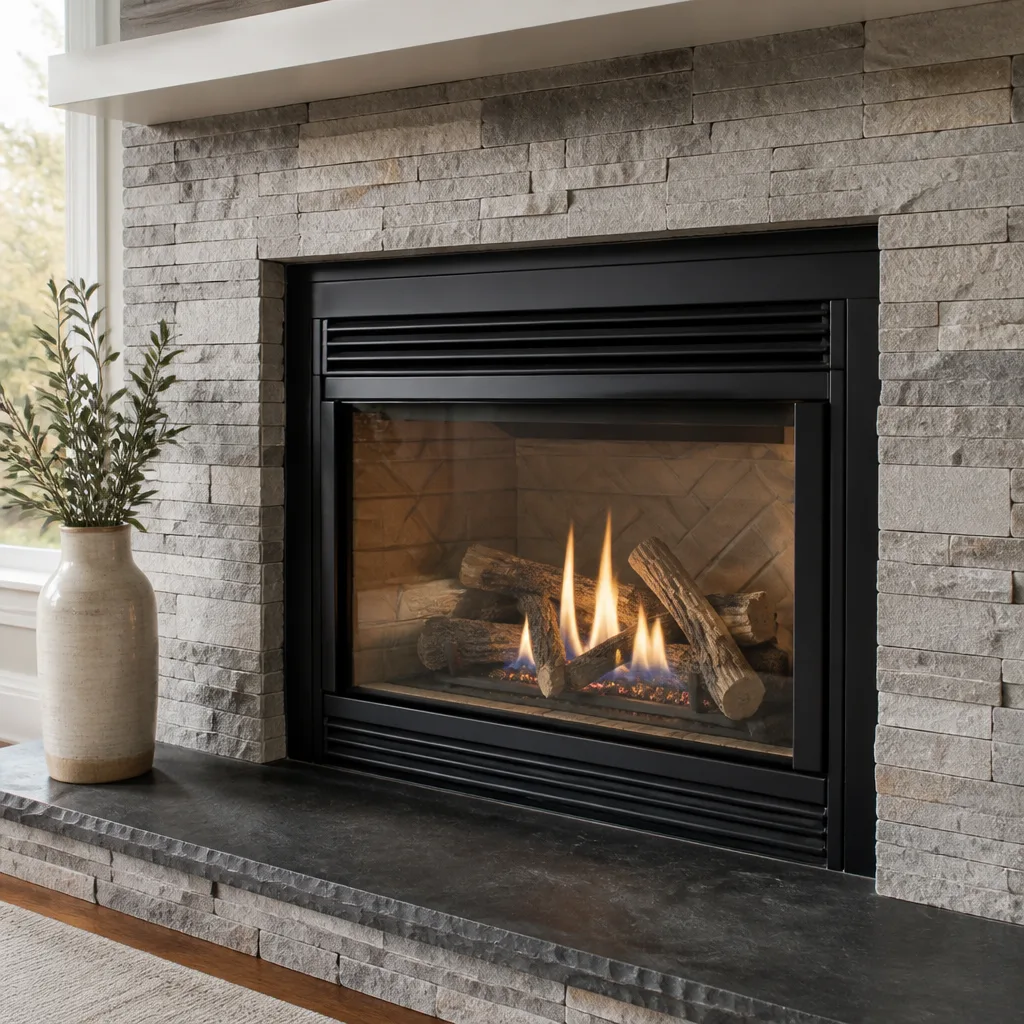 Gas fireplace service
Level 1 sweep and inspection to the NFPA 211 annual standard - flue, crown, cap, and flashing checked and photographed
Chimney sweep logs do not sweep chimneys. They loosen some creosote - which then falls where a brush and vacuum still have to collect it.
Chimney Cleaning Warning Signs: A Baldwin Hills Homeowner’s Reference Guide
A white chalky stain on the exterior of your chimney looks cosmetic. It isn’t. That crust is called efflorescence, and it’s evidence that water is moving through your masonry and dissolving the mortar salts holding your firebox together. Most Baldwin Hills homeowners only call a chimney professional when smoke fills the living room or a brick falls onto the patio. By then, the repair is expensive and the fire hazard is real. This guide maps the eight warning signs every chimney gives before it fails, so you can act early, budget accurately, and avoid paying for damage that was preventable. We wrote it for homeowners in Baldwin Hills and the surrounding hillside neighborhoods who would rather catch a problem at the stain stage than the teardown stage.
Quick Answer
The clearest chimney cleaning warning signs in Baldwin Hills are white chalky staining (efflorescence), spalling or flaking brick, rust on the firebox or damper, smoke rolling back into the room, a persistent odor that changes with the weather, and visible deterioration inside the flue. If you notice any of these, the safest action is a professional inspection. A Chimney Sweep in Baldwin Hills can identify whether the cause is creosote buildup, water intrusion, or a structural problem, and recommend the correct fix instead of guessing.
Styles & brands we work with
- Sweep & inspection
- Caps & crowns
- Flue relining
- Masonry repair
- Gas fireplace service
Table of Contents
- Efflorescence: The White Stain That Signals Masonry Water Damage
- Spalling Brick and Flaking Mortar: When Your Chimney Is Losing Its Skin
- Rust Staining on the Firebox and Damper: What It Actually Means
- Smoke Rollout on the First Fire: Cold Flue or Blockage?
- Draft Reversal and the Sealed Modern Home
- The Three Chimney Odors: Petroleum, Musty, and Sulfur
- Flaking Tile and Visible Daylight Through the Liner
- Settlement Cracks vs. Structural Joint Failure in Expansive Clay Soil
Efflorescence: The White Stain That Signals Masonry Water Damage
Efflorescence forms when water penetrates chimney masonry, dissolves soluble salts inside the mortar and brick, then evaporates on the surface, leaving a white chalky residue. In Baldwin Hills, the combination of coastal fog mornings, seasonal rain, and warm afternoon sun creates freeze-thaw and wet-dry cycles that accelerate this process. The stain itself isn’t dangerous, but it proves water is moving through places water was never supposed to reach.
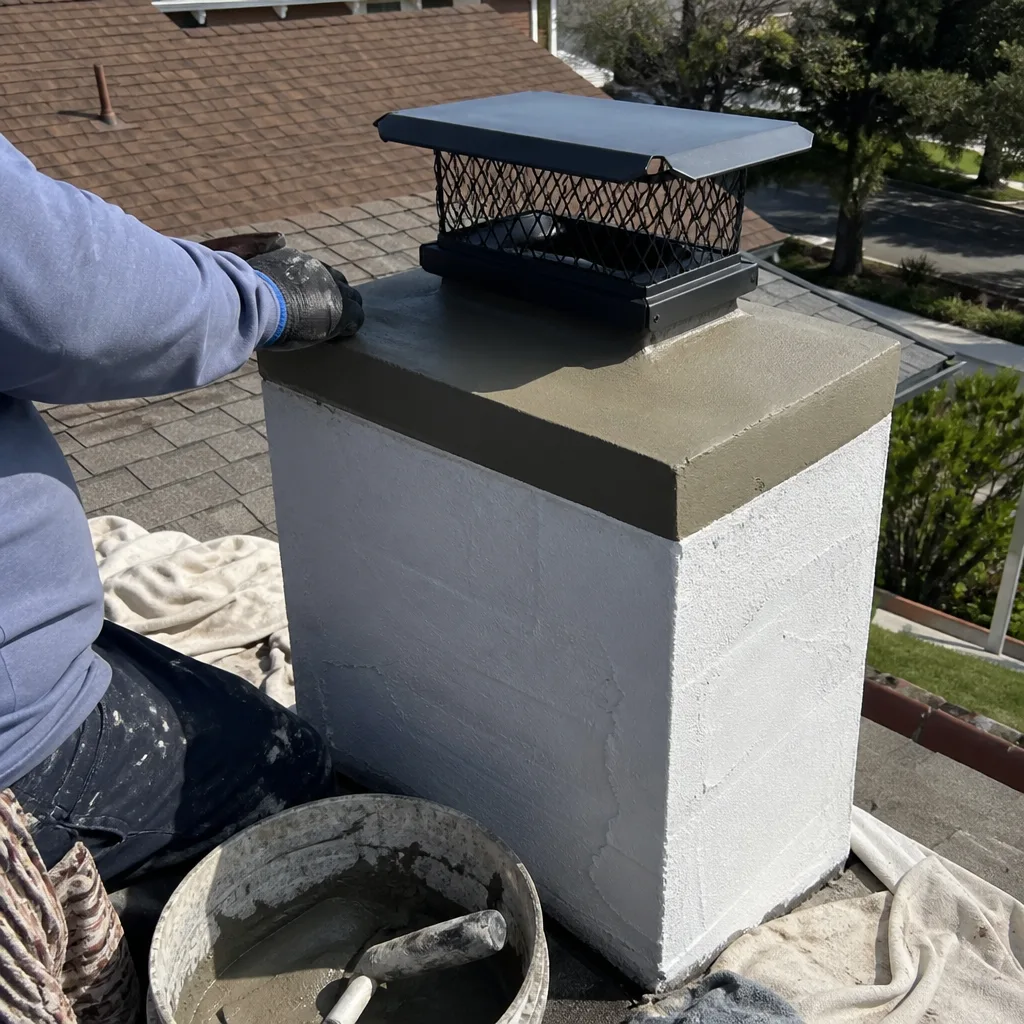
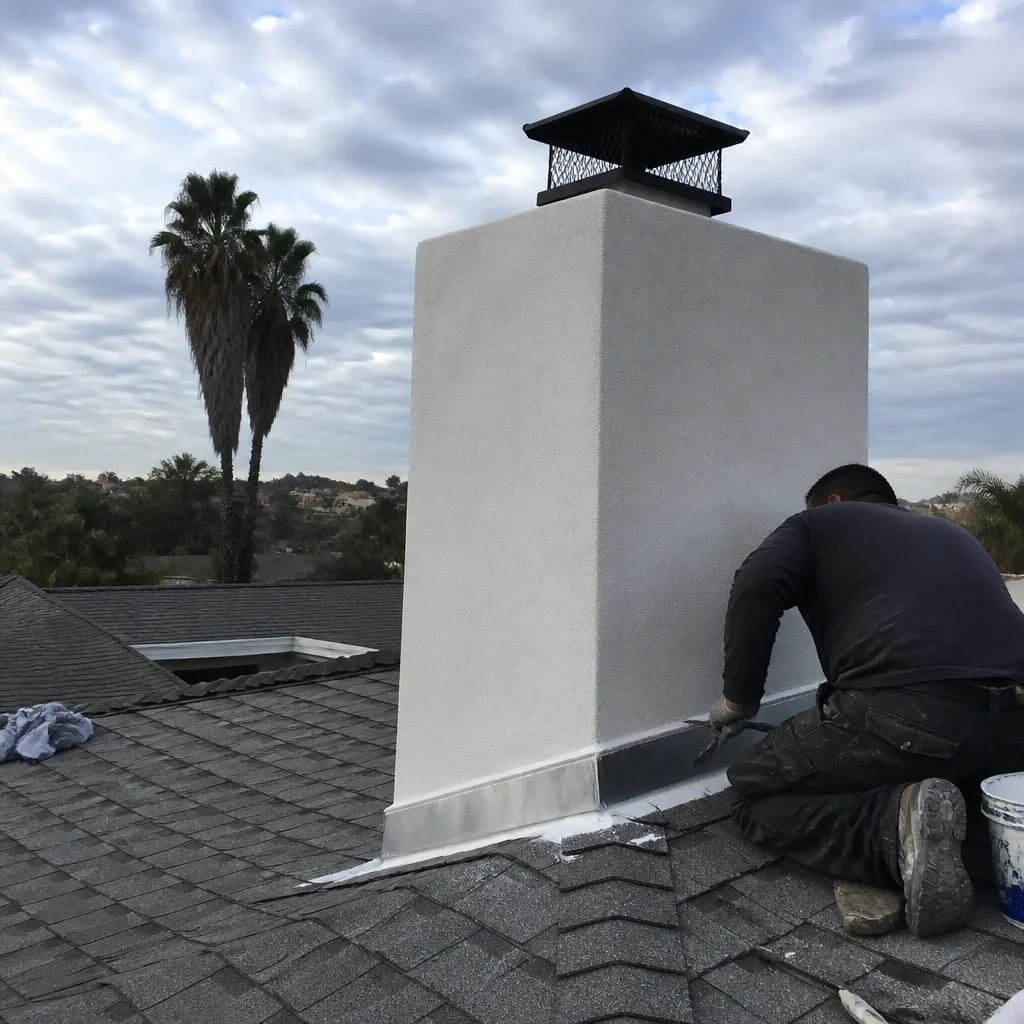
Untreated efflorescence progresses. The same moisture that draws salts to the surface also expands inside the masonry, and over time that pressure causes spalling. The solution depends on where the water is entering: a cracked crown, failed flashing at the roof line, a deteriorated chimney cap, or porous brick that was never sealed with the right product. We inspect the entire path of water entry before recommending any repair, because treating the stain without stopping the source just means cleaning it again next year.
One thing we consistently tell homeowners: a chimney cap is the cheapest insurance you can buy. Most Baldwin Hills chimneys without a cap collect rain directly into the flue, and that standing water mixes with creosote to form an acidic slurry that eats mortar joints from the inside. Efflorescence on the exterior is often accompanied by this internal damage that you can’t see yet.
Spalling Brick and Flaking Mortar: When Your Chimney Is Losing Its Skin
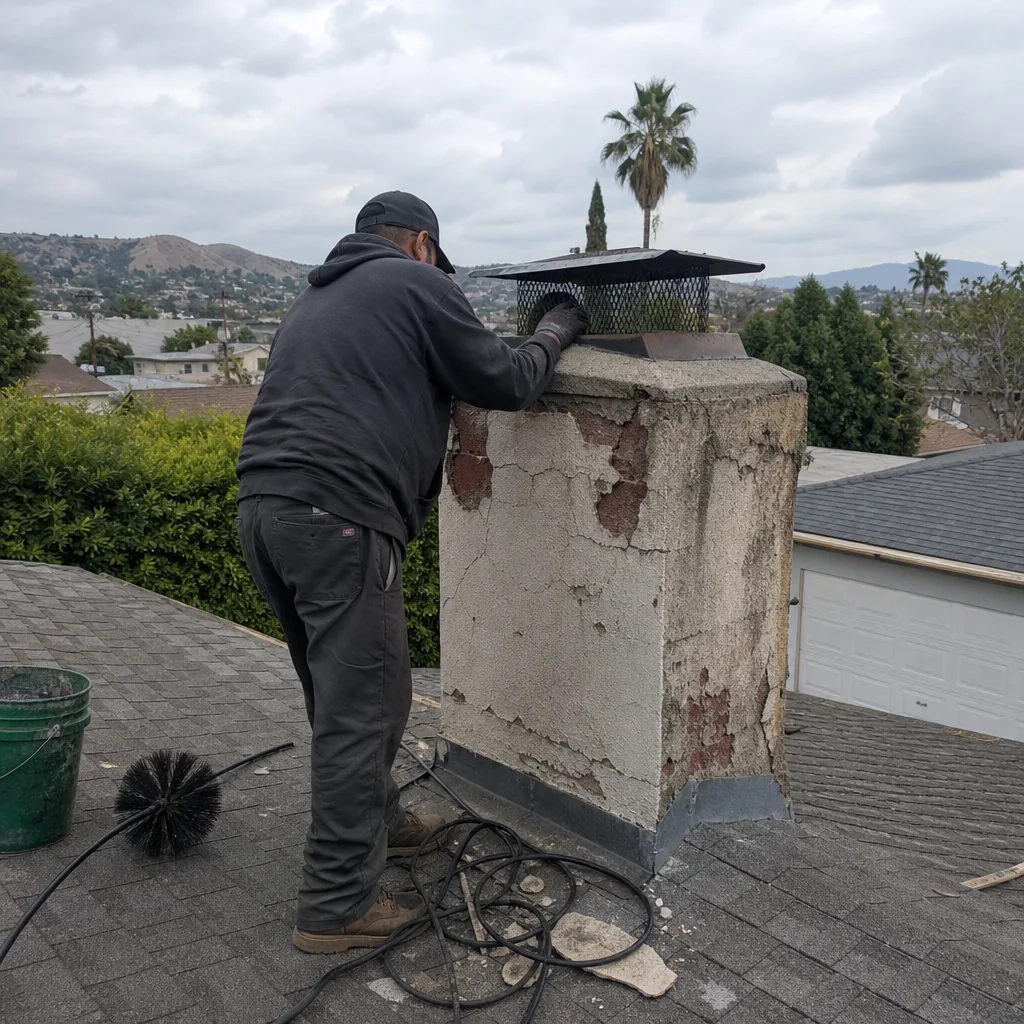
Spalling means the faces of bricks are popping off. You’ll find brick chips on the ground near the chimney base, or see shallow divots in the brick face where the outer layer has already fallen. This is not normal aging. Spalling is structural deterioration driven by water, and in a climate like Baldwin Hills where summer heat follows winter rain, the damage compounds fast.
Once the protective fired surface of a brick is gone, the softer interior absorbs water faster and crumbles sooner. On a chimney, spalling brick in the firebox is a fire code issue; spalling brick in the exterior stack is a structural one. Either way, it doesn’t self-heal and it doesn’t stop.
Repair options range from individual brick replacement to partial rebuilds, depending on how far the damage runs. For homes in the Baldwin Hills Estates and Village Green areas, where chimneys date from the 1940s through the 1960s, we see spalling concentrated at the top two feet of the stack. That’s the zone most exposed to weather and least likely to be visible from the ground. A simple binocular check from the yard once a season catches it early.
Rust Staining on the Firebox and Damper: What It Actually Means
Rust inside a fireplace tells you two things: water is getting in, and it’s been happening for a while. The firebox and damper assembly are galvanized or cast iron, and they do not rust in a dry chimney. When you see orange-brown staining across the damper frame or running down the firebox walls, the moisture has been cycling through for months at minimum.
Rust changes both safety and function. A rusted damper eventually seizes, which means you can’t properly control the draft. A rusted firebox tile can crack under heat because the metal backing has expanded and contracted. We also watch for rust staining at the thimble, the connector where a fireplace insert’s flue attaches, because rust there indicates a liner leak that may be allowing combustion gases into the wall cavity rather than up and out.
In chimney repair calls, rust is often the first visible symptom of a failed chase cover or damaged flashing. We don’t paint over rust. We find the leak, stop it, and assess whether the component needs resurfacing or replacement. In flue liners, HeatShield ceramic resurfacing can restore a rust-damaged liner without tearing the chimney apart, provided the structural shell is still sound.
Smoke Rollout on the First Fire: Cold Flue or Blockage?
In Baldwin Hills, the first fire of the season often comes on a cool evening after months of disuse. You light the kindling, and within seconds, smoke curls into the room instead of up the chimney. Most homeowners assume there’s a blockage. More often, the flue is simply cold, and cold air is a dense plug that fresh smoke cannot push through.
When dense cold air sits in a flue after a warm afternoon, the fire has to heat that entire column before a draft can form. Smoke rolls out until the flue warms enough to draw. This is not by itself a reason to panic, but you should know how to distinguish it from a real blockage. A proper warm-up protocol is step one:
- Open the damper fully and confirm you can see daylight above (if not, stop and call for service).
- Hold a lit match or rolled newspaper near the damper opening for 30 seconds to begin warming the flue.
- Light a small, fast-burning starter such as a wax fire starter or dry twisted paper.
- Gradually add small kindling before larger logs wait at least five minutes from first flame.
- If smoke still rolls out after the flue has visibly warmed and a starter flame has burned for a full minute, suspect a blockage or draft problem and stop using the fireplace until inspected.
If the rollback continues beyond a couple of minutes, or if it happens every time you light a fire even after following this protocol, the issue is likely creosote buildup, a nesting animal, a collapsed flue tile, or a negative pressure problem inside the home. That’s when a camera inspection earns its cost. You’ll see exactly what’s inside rather than guessing.
Draft Reversal and the Sealed Modern Home
Draft reversal means air is coming down the chimney instead of going up. You’ll feel cold air entering the room when the fire is out, or see smoke retreat back into the house even after the flue has warmed. In older Baldwin Hills homes with looser building envelopes, this is rare. In renovated or newer homes with tight weather sealing, new windows, and continuous insulation, it’s becoming common.
Modern homes are much more airtight than their mid-century counterparts, and that changes chimney physics. A house under negative pressure your bathroom fans, kitchen exhaust, or heating system all pull air out, and if there isn’t enough makeup air coming in, the home will draw air down the chimney to equalize. Fireplaces become the path of least resistance. This is not a chimney problem in the traditional sense; the flue may be perfectly clean and structurally sound.
The fix is different from a sweep. You may need a dedicated outside air supply for the fireplace, a mechanical makeup air system, or a damper that seals more tightly. But here’s the diagnostic challenge: negative pressure and an actual chimney obstruction produce similar symptoms. You can’t tell them apart without measuring. We use draft tests during the inspection to quantify what’s happening, because a sweep can’t resolve a pressure imbalance and a pressure fix won’t clear a bird’s nest. Knowing which problem you have before spending money is the entire point of a professional camera inspection.
The Three Chimney Odors: Petroleum, Musty, and Sulfur
Chimney odors are one of the most useful diagnostic signals a homeowner gets, and one of the most misread. Each distinct smell points to a different underlying condition, and knowing the difference helps you describe the issue accurately when you call. We’ve developed a simple three-part framework for what we encounter in Baldwin Hills chimneys:
Petroleum or asphalt odor in summer: This is latent creosote. Creosote is a byproduct of wood combustion that condenses on flue walls, and when the weather turns warm, it softens and off-gasses a smell like fresh tar or a hot parking lot. It’s strongest in the afternoon when the chimney stack absorbs sun. This is your most common summer odor. It tells you creosote is present, but not necessarily in dangerous quantity. However, the same deposit that smells in August is the fuel that ignites in December. A sweep removes it before it becomes a fire source.
Musty or damp-earth odor: This is biological, usually from moisture inside the chimney that never dries completely. Water entry plus decomposing leaves or nesting material from birds or squirrels creates a compost-like smell. In Baldwin Hills, where mature sycamore and eucalyptus trees overhang many chimneys, leaf litter and animal nesting are steady inputs. This odor typically indicates a failed chimney cap or a water entry point allowing both rain and debris inside.
Sulfur or rotten-egg odor: This is the one that should send you outside. In a gas fireplace, a sulfur smell indicates incomplete combustion, which can mean a blocked vent, a faulty gas valve, or a cracked heat exchanger. If the smell is strong, extinguish the fire, ventilate the room, and call a professional. Carbon monoxide can accompany this condition, and CO is odorless, so by the time you smell sulfur, you already need a trained eye on the system.
Flaking Tile and Visible Daylight Through the Liner
Fireplace flues in Baldwin Hills homes built before the 1980s are typically lined with clay tile, and that tile was never designed to last forever. Over decades of heating and cooling, the tiles develop hairline cracks, then flakes, then full fractures. You may find small pieces of clay tile on the smoke shelf or at the base of the fireplace after a season of use. That’s the liner telling you it’s failing.
The most definitive sign is daylight through a crack. During a professional inspection, we look up the flue with a high-powered light, or run a camera through it, and if you can see daylight through a vertical crack in the tile, the liner is no longer containing combustion gases or heat the way it must. That’s a fire risk and a carbon monoxide risk in one finding. The tile can’t be patched; it has to be replaced or resurfaced.
For homes where a full teardown and rebuild isn’t warranted, a Chimney Repair in Baldwin Hills resurfacing approach using HeatShield can restore the flue liner from the inside. The system applies a ceramic coating that seals cracks and smooths the interior wall, restoring the liner’s protective function without disrupting the exterior masonry. For flues with greater structural damage, a DuraFlex flexible liner can be installed as a continuous stainless steel replacement that runs the full height of the chimney. These are the same products commercial contractors specify for multi-unit buildings, applied at residential scale.
Settlement Cracks vs. Structural Joint Failure in Expansive Clay Soil
Baldwin Hills sits on expansive clay soil, the kind that swells when wet and shrinks when dry. Every home in the area moves a little with the seasons. That’s why you’ll see hairline cracks in interior drywall, driveway slabs, and sometimes in fireplace brickwork. The question isn’t whether cracks exist. It’s whether they’re active, stable, or structural.
Here’s the simple triage we use when assessing a fireplace crack:
- Hairline, straight, single-direction, under 1/16 inch wide: Usually settlement. Monitor seasonally with a dated photo. If it doesn’t grow over 12 months, it’s stable.
- Crack that appears in summer and closes in winter, or vice versa: Classic expansive soil movement. The firebox is flexing with the house. Not ideal, but common in Baldwin Hills, View Park, and Windsor Hills.
- Stair-step crack through the mortar joints: This follows the mortar lines rather than cutting through brick. It suggests the masonry is separating along the joints, and it needs closer inspection.
- Wide crack (over 1/8 inch), crack that crosses through brick faces, or displacement where one side is higher than the other: This is joint failure or structural movement in the firebox itself. Do not use the fireplace until a professional has evaluated it.
Structural firebox failure isn’t about cosmetics at that point. A compromised firebox can allow heat to reach wood framing inside the wall, and that’s how chimney fires become house fires. The repair is typically repointing of the firebox joints or rebuilding sections with proper refractory mortar. Our Chimney Sweep Baldwin Hills home inspections always include a firebox joint evaluation because this is the most dangerous and least visible failure mode.
Common Mistakes to Avoid
- Ignoring a smoke rollback after one warm-up attempt. If the smoke clears on the second fire with proper preheating, you’ve confirmed a cold flue. If it doesn’t, every subsequent fire is pushing combustion byproducts into your living space. Stop and schedule a camera inspection rather than assuming it’s “just the way this fireplace is.”
- Painting over efflorescence or using a standard masonry sealer. Efflorescence isn’t a paint problem. Sealers trap moisture inside the brick and make spalling worse. You have to stop the water at the source, then address any brick damage.
- Burning pine or unseasoned wood because it’s what you have. Baldwin Hills is not a pine forest; most local firewood is mixed hardwood. But if you’re buying convenience bundles from the gas station, you’re burning high-resin wood that creates creosote rapidly. Hardwood, seasoned at least six months, is the only wood that belongs in your fireplace. A Chimney Sweep in Baldwin Hills can tell from your flue deposits exactly what you’ve been burning.
- Using the fireplace as a construction debris incinerator. After a remodel, we’ve seen homeowners burn old trim, particle board, or painted wood. These materials release toxic fumes and create almost instant creosote. Construction debris goes to the dump, not the firebox.
- Shutting the damper before the fire is completely out. A bed of coals still releases carbon monoxide, and a closed damper sends it into the room. The damper stays open until every visible ember is gone.
- Custom-fitting a grate or glass door from a hardware store. Fireplace dimensions vary more than most homeowners realize. An ill-fitting door restricts combustion air and can cause smoke rollback. We see this in older Baldwin Hills homes where original fireplace dimensions are non-standard.
See the difference
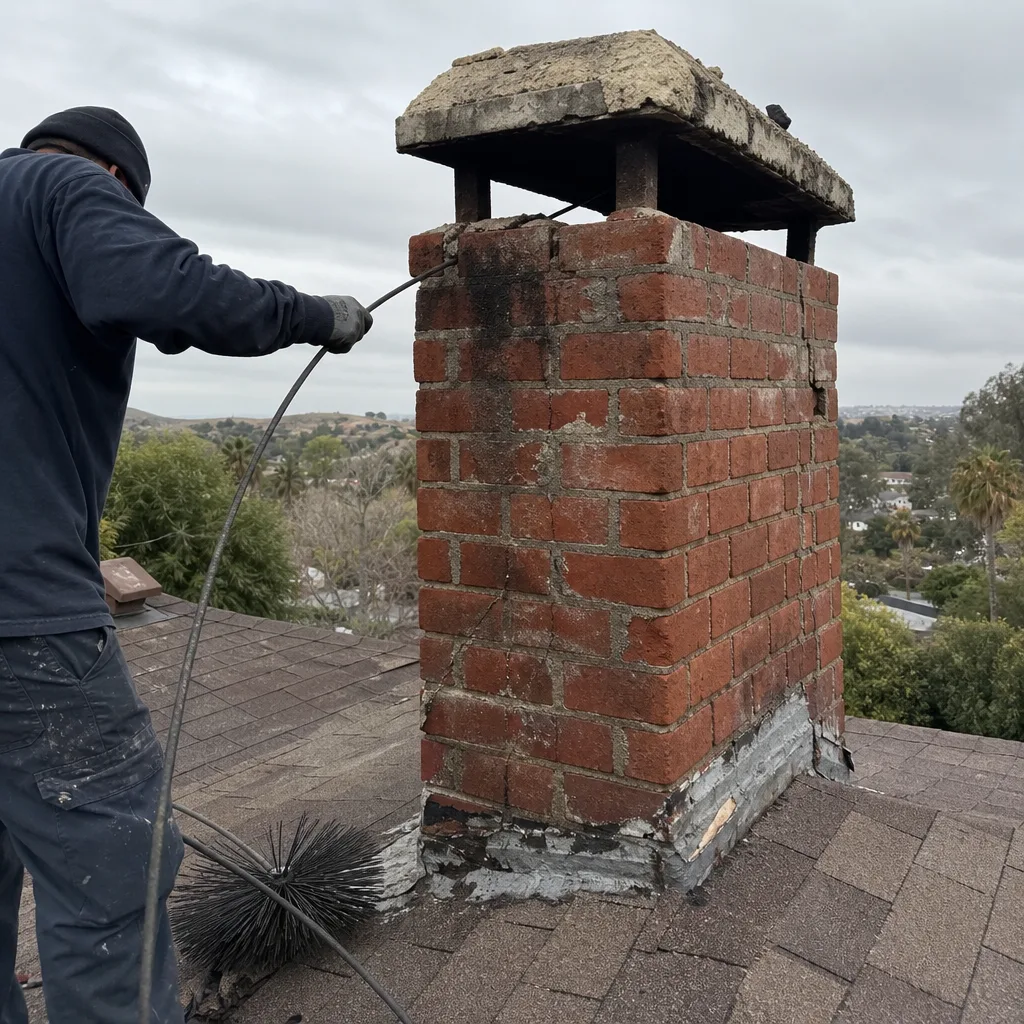 Before
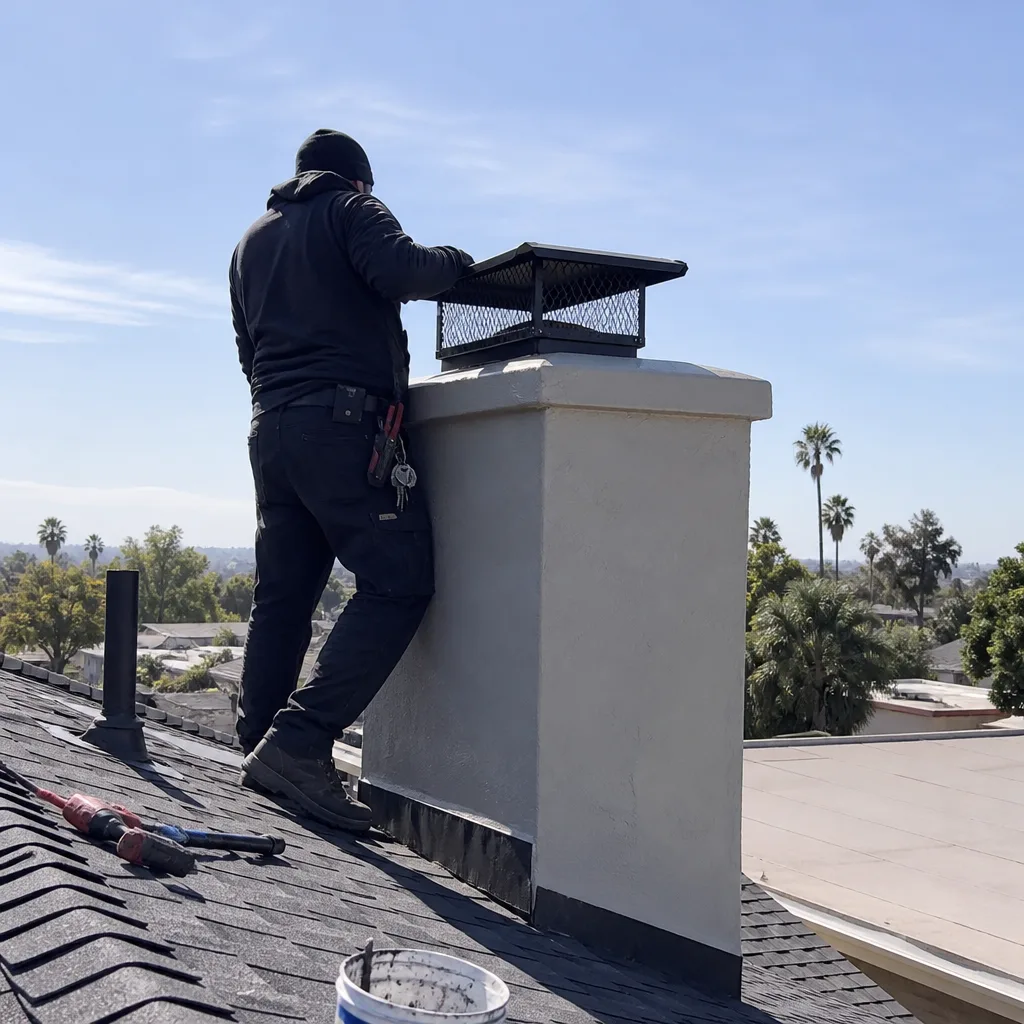 After
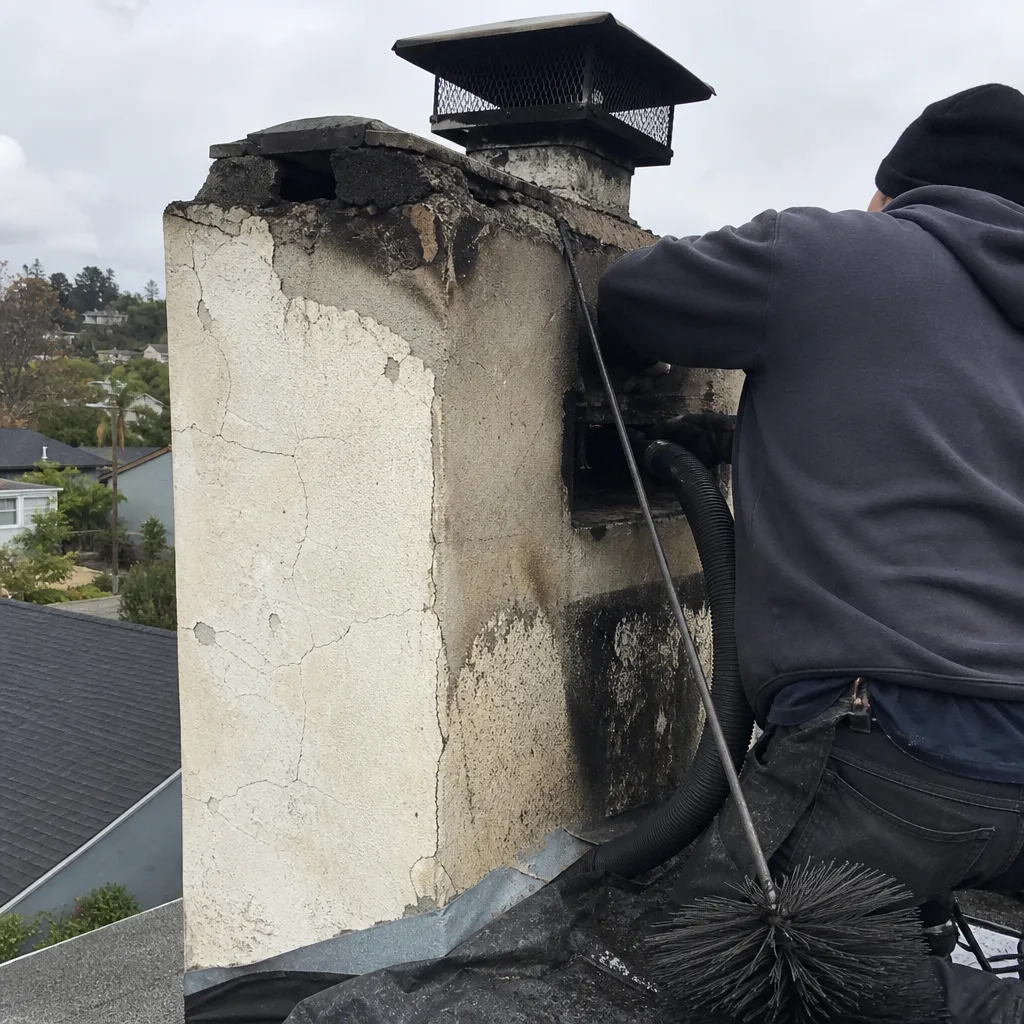 Before
 After
 Before
 After
When to Call a Professional
Call when you see spalling brick, rust staining on the damper, flaking tile inside the firebox, or smoke rollback that persists beyond a proper warm-up. Call when you can smell creosote in the summer heat or sulfur with a gas fireplace. Call if you can see daylight through a flue crack from inside the firebox. These are not conditions that improve with time. Each one represents a problem already in motion, and the correction is always cheaper before the first fire of the season. Dryer Vent Cleaning in Baldwin Hills is also part of the same fire-safety equation for the whole home; lint accumulation is the leading appliance fire cause, and it builds up with zero visible warning. Chimney Sweep Baldwin Hills offers free estimates in Baldwin Hills; call (877) 752-4855 and we’ll put a camera in your flue so you know exactly what you’re working with.
Frequently Asked Questions
You’ll notice one or more of these: smoke rolling back into the room, a persistent tar smell that gets stronger in warm weather, visible black or brown glaze on the firebox walls, flaking tile in the firebox, or a sticky brown deposit on a poker pushed up toward the damper. Any of these means creosote or blockage may be present, and a professional inspection is the only way to confirm how much and where. Call us at (877) 752-4855 to schedule a Baldwin Hills chimney inspection with camera documentation.
The National Fire Protection Association standard is an annual inspection with cleaning as needed, and that standard applies here. Homes in Baldwin Hills that burn wood more than twice a week during winter typically need a sweep before each season. Gas fireplaces need less frequent cleaning but still require an annual check of the venting system.
A homeowner can do a basic visual check: look for efflorescence outside, check the firebox for flaking tile and rust, shine a flashlight up the flue to check for blockage. What you can’t do is see the full length of the flue, evaluate joint condition, measure draft pressure, or identify early-stage creosote glazing that isn’t visible without a camera. Those limitations are exactly why paper-thin liner cracks get missed until they become house fires. The inspection cost is small compared to what it catches.
Not necessarily. If the cracking is limited and the structural clay tile shell is still sound, a HeatShield ceramic resurfacing can seal the cracks and restore the liner from the inside at a fraction of the cost of a tear-out. If the tile is substantially deteriorated or the flue size needs correction, a DuraFlex flexible liner may be the correct call. Neither is a one-size-fits-all answer. The camera determines which applies. Call (877) 752-4855 for an inspection and we’ll show you your flue on screen and explain your options in plain language.
Creosote accumulates in layers. The first stage is a flaky soot that brushes off easily. The second stage is a tar-like glaze that requires rotary cleaning. The third stage is a baked-on carbon that coats the flue wall. Chimney fires are most common in the second and third stages because the fuel load is high and the air gaps are gone. If a chimney fire does ignite, it can crack the liner, spread to the home’s framing, or launch burning creosote onto the roof. The fire you never have is the reason you sweep.
A different fire hazard runs through the same house. Lint accumulates in dryer ducts and is a leading cause of residential appliance fires, according to the U.S. Fire Administration. Baldwin Hills homes with older, uninsulated dryer runs are particularly prone to buildup. Dryer Vent Cleaning in Baldwin Hills addresses that risk as a standalone service, and because one company handles chimney sweep, dryer vent, and chimney repair, you consolidate fire-safety maintenance under one phone call. We’re the rare company that can clean your chimney and your dryer vent in the same trip.
The Bottom Line
Chimneys don’t fail silently. They signal through efflorescence, spalling, rust, smoke rollout, draft reversal, odor, flaking tile, and cracking. Your job as a homeowner is to read these signals correctly and act before the first winter fire. In Baldwin Hills, expansive clay soil and a coastal climate add local variables that a generic checklist misses. The brands we work with including Olympia Chimney, Copperfield, and DuraFlex reflect a standard of material quality that matters when your family’s fire safety is on the line. If any signal in this guide matches something you’ve seen, start with a camera inspection you can watch in real time. It’s the fastest way to replace guesswork with fact.
Written by the team at Chimney Sweep Baldwin Hills, serving Baldwin Hills since 2015.