
Last updated November 2, 2026
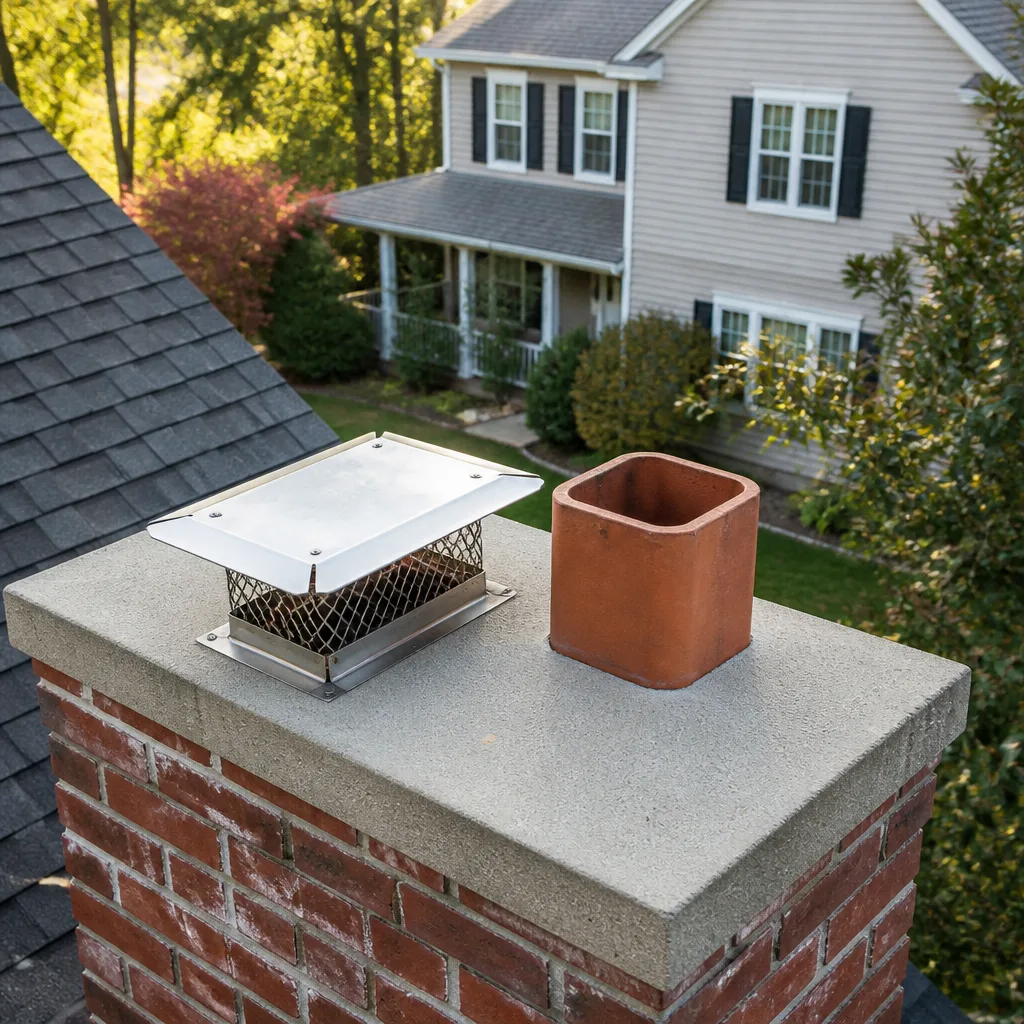 Sweep & inspection
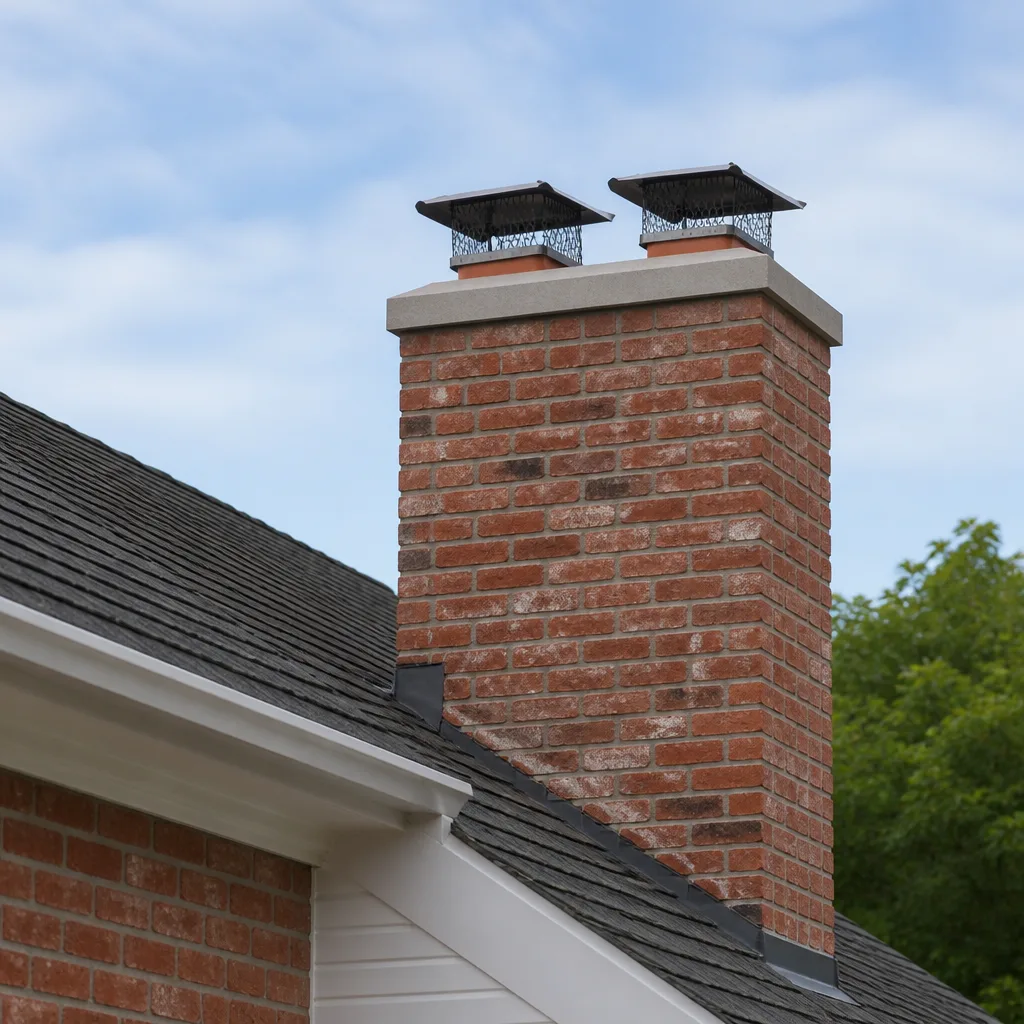 Caps & crowns
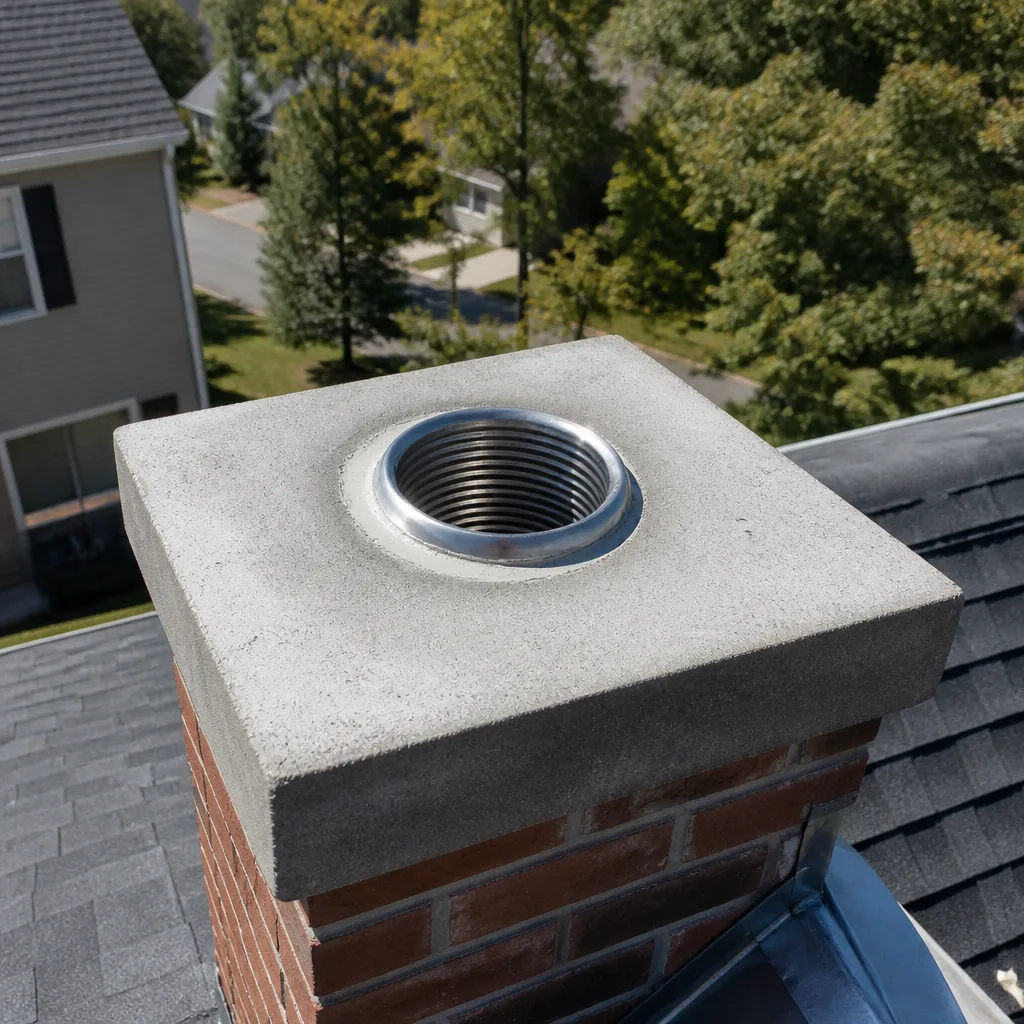 Flue relining
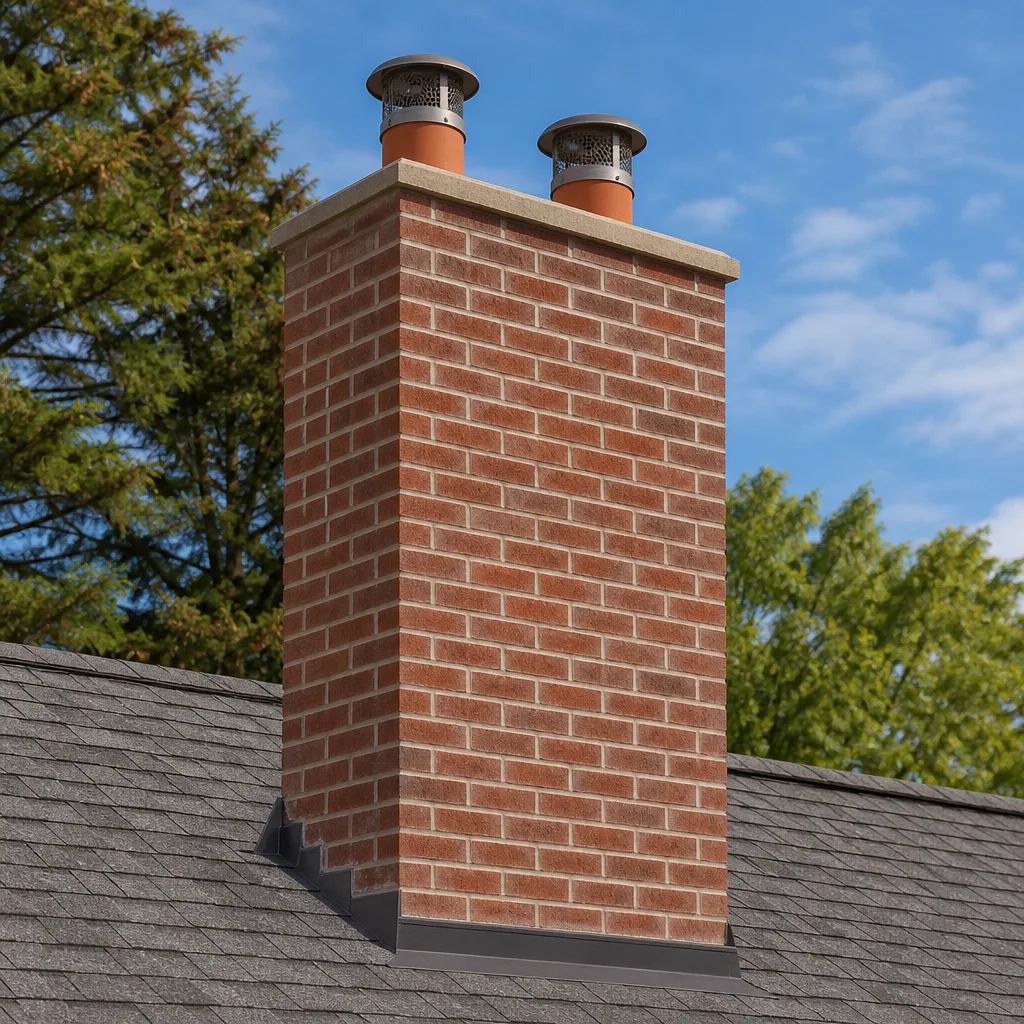 Masonry repair
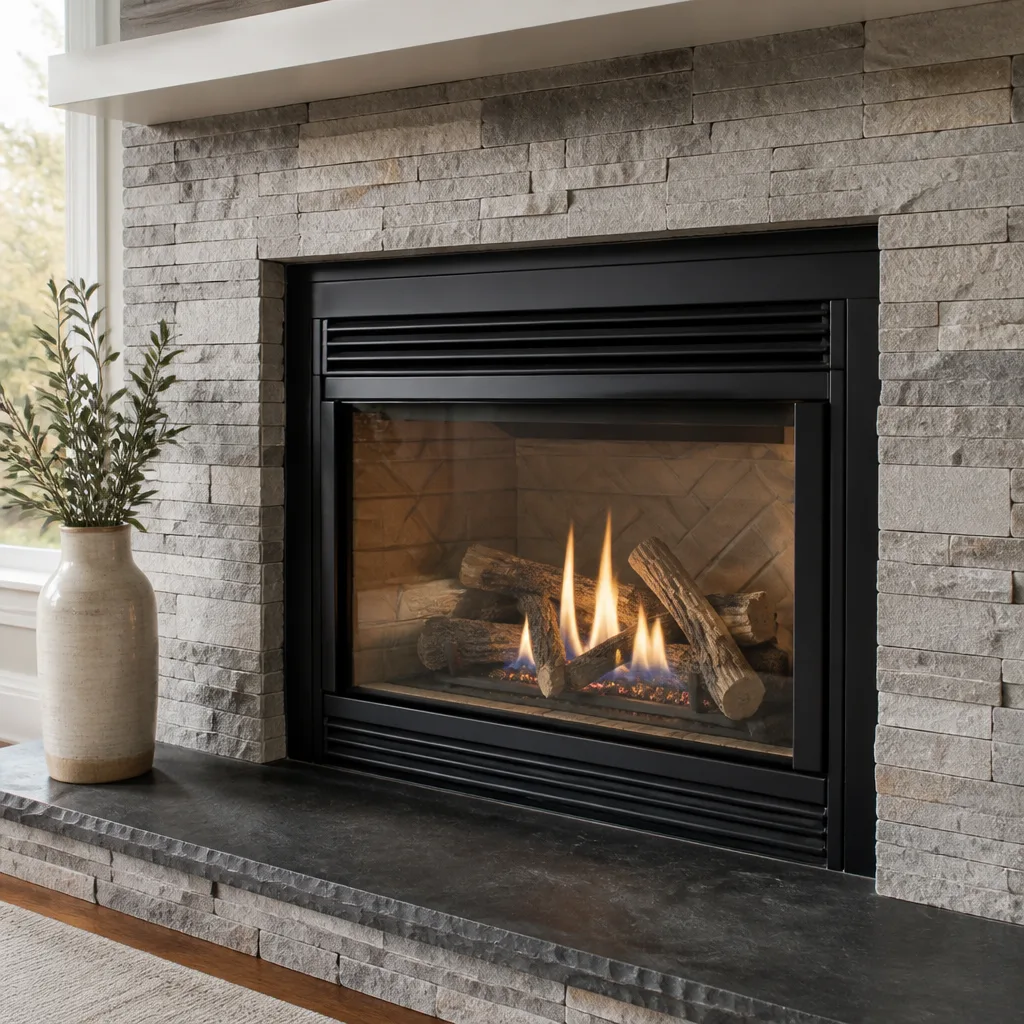 Gas fireplace service
Level 1 sweep and inspection to the NFPA 211 annual standard - flue, crown, cap, and flashing checked and photographed
Chimney sweep logs do not sweep chimneys. They loosen some creosote - which then falls where a brush and vacuum still have to collect it.
How to Hire a Chimney Cleaning Contractor in Baldwin Hills: A Step-by-Step Guide
Here’s a statistic most Baldwin Hills homeowners never hear: according to the National Fire Protection Association, the leading cause of chimney fires isn’t neglect, it’s incomplete cleaning. A sweep that skips the smoke shelf or fails to remove creosote from the upper flue walls leaves behind the exact fuel that ignites. In our inspection work across Baldwin Hills, we regularly encounter flues that were swept only months earlier but still carry dangerous stage-two creosote glaze in the upper third, the part you can’t see from the firebox. This guide and our more guides & resources exist because hiring the right contractor is a skill, and it’s one you can learn in about fifteen minutes. We’ll walk you through the credentials that matter, the questions that expose guesswork, and the line-by-line reading of an estimate most homeowners never do. You’ll finish this page knowing more about vetting a chimney contractor than most people who claim to be one.
Quick Answer
To hire a chimney cleaning contractor in Baldwin Hills, verify three credentials before anything else: CSIA certification, a California C-61 specialty contractor license, and general liability insurance that specifically covers chimney work. Then ask the contractor to identify your flue liner type from a photo before they visit. A legitimate professional can tell you whether you have a terra cotta tile liner, a stainless liner, or an unlined masonry flue by sight, and a contractor who can’t answer that question is not ready to work on a pre-1978 Baldwin Hills chimney.
Styles & brands we work with
- Sweep & inspection
- Caps & crowns
- Flue relining
- Masonry repair
- Gas fireplace service
Table of Contents
- The Credential Stack: What Actually Proves a Contractor Knows Chimneys
- Four Interview Questions That Separate Trained Sweeps from Generalists
- Reading a Written Estimate Line by Line
- Why the Lowest Bid Usually Skips the Smoke Shelf and Chamber
- Red Flags in Online Reviews Specific to Chimney Contractors
- What Makes Baldwin Hills Chimneys Different
- What a Legitimate Sweep Visit Actually Looks Like
- When Cleaning Isn’t Enough: Repair Signals to Understand Before You Book
The Credential Stack: What Actually Proves a Contractor Knows Chimneys
Here’s the uncomfortable truth about the chimney service market in Baldwin Hills: anyone with a ladder, a brush, and a Nextdoor account can call themselves a chimney sweep. There is no single license that says this person is qualified to evaluate a masonry flue. That’s why you need a stack of three credentials, each of which covers a gap the others leave open.
CSIA Certification
The Chimney Safety Institute of America is the industry’s recognized standard for technician training. A CSIA-certified sweep has passed a multi-hour examination covering flue physics, code requirements, and inspection methodology. The certification is not lifetime. Technicians recertify every three years, which means a CSIA credential also signals that the person has stayed current with the National Fire Protection Association codes that govern chimney construction and clearance. In Baldwin Hills, where many homes predate modern code enforcement, that currency matters. A technician trained on modern standards is also trained to spot the deficiencies in a 1960s masonry chimney.
California C-61 Specialty Contractor License
California requires a C-61 license, specifically the D-24 or D-42 sub-classification, for anyone performing controlled or contracted work on chimneys and flues. You can verify this number on the Contractors State License Board website in under two minutes. If a Baldwin Hills contractor cannot produce a C-61 number that checks out against their business name, that’s not a small omission. It means the person on your roof is not operating under the state’s contractor oversight system, and you have significantly less recourse if the work damages your flue or your roof. We recommend checking the CSLB database while the contractor is on the phone with you, before you book.
General Liability Insurance with Chimney-Specific Coverage
Plenty of general contractors carry liability insurance. The problem is that chimney work is often excluded from standard policies because it involves roof access and fire-bearing systems. Ask for a certificate of insurance, not just a claim, and read the certificate line that describes covered operations. It should mention chimney sweeping, chimney repair, or at minimum roofing and masonry access. A Baldwin Hills contractor who hesitates to show you a certificate is often someone who has never actually read their own policy. In our experience, reputable local sweeps will send the certificate proactively.
The takeaway: if you have to choose between a CSIA-certified sweep without a C-61 and a C-61 licensed contractor without CSIA certification, don’t. Keep looking until you find both. The Baldwin Hills market is large enough that you can be selective.
For a deeper look at what a proper sweep covers, see our Chimney Sweep in Baldwin Hills service page.
Four Interview Questions That Separate Trained Sweeps from Generalists
Here’s the core problem the credential stack doesn’t solve: a contractor can hold every license and still be a box-ticker who hasn’t done real diagnostic work in years. Credentials prove minimum competence. Questions reveal whether the person thinks like a technician. We’ve developed four questions that we ask ourselves about our own process, and we think every Baldwin Hills homeowner should ask them before booking a sweep.
Question 1: What type of liner do you see in the photos I send you?
This is the single most effective filter in our book. Take three photos of your firebox and flue with your phone flashlight and send them to the contractor before booking. Ask them to tell you what they’re seeing. A trained sweep can identify a terra cotta tile liner, a stainless steel liner, or an unlined masonry stack from a photo. They’ll also notice things like spalling (flaking masonry surfaces), creosote glaze, or evidence of a previous chimney fire. A generalist will respond that they’ll need to see it in person. That’s not wrong, but it tells you they haven’t developed the diagnostic eye that separates a sweep from a brush operator.
Question 2: Can you walk me through how you’ll protect my home during the sweep?
The answer should include a drop cloth system around the firebox, a vacuum with a HEPA filter (not a shop vac, which will aerosolize fine creosote dust into your living room), and a method for managing roof debris. If the contractor’s answer is simply “we’ll be careful,” ask for specifics. Professional sweeps in Baldwin Hills should be able to describe their containment process in thirty seconds without pausing.
Question 3: What tools are you bringing specifically for a pre-1978 masonry chimney?
Older Baldwin Hills chimneys often have clay tile liners that are more brittle than modern stainless systems. Wire brushes designed for stainless steel can chip and gouge clay tile. A contractor who understands this will mention poly brushes or variable-sizing brush heads. A contractor who says a brush is a brush is telling you they don’t know the difference, and that’s the kind of ignorance that damages liners and creates the need for expensive repairs later.
Question 4: If you find damage during the sweep, what does the repair recommendation process look like?
The correct answer is camera documentation and a written summary with photos. Any contractor who recommends major repair work from a visual-only inspection is skipping the industry standard. The National Fire Protection Association standard 211, which governs chimney cleaning and inspection, requires a video scan for any level-two inspection. If the contractor’s answer is “we’ll let you know what we see,” that’s a red flag about how your money will be spent if they find a problem. A legitimate professional will say that you’ll see the camera footage yourself before any repair is discussed.
We see this distinction play out weekly across Baldwin Hills. Homeowners call us after another company’s visit, uncertain whether the repair they were quoted was legitimate. Usually, the deciding factor is whether there’s camera evidence. A contractor who will not show you the footage is not operating transparently.
Reading a Written Estimate Line by Line
Most homeowners don’t actually know what a fair chimney sweep estimate should look like in Baldwin Hills. The result is that they accept estimates that are either too thin (skipping essential work) or too padded (bundling vague extras). A legitimate estimate for a standard masonry chimney should be itemized, not a single line reading “chimney cleaning.” Here’s how to read it.
Line Items a Standard Sweep Estimate Should Include
- Flue brush and cleaning: The core service. Should vary by flue size, not be a flat number for every house.
- Smoke shelf and smoke chamber access: This is the area above the damper. It collects creosote and debris. It is also the area that takes the most time, and the area unscrupulous operators skip.
- Firebox cleaning and inspection: Includes the removal of ash and debris and a structural look at the firebrick.
- Damper operation check: The damper should open, close, and seal. A thorough sweep tests this and tells you if it’s failing.
- Roof access and cap inspection: Includes checking the chimney cap or spark arrestor. If you don’t have one, the estimate should mention it.
Vague Line Items That Signal Upselling Risk
- “Chimney treatment” with no product name. A legitimate company will name the product, whether it’s a creosote modifier or a sealant. Vague treatment language is often a marker for a low-value add-on.
- “Level 2 inspection” bundled into a cleaning without explanation. A level-two inspection involves camera work and is a separate service. If it’s bundled without a reason, ask why.
- “Preventative maintenance” as a catch-all. This means nothing. Ask for a line-item breakdown.
- “Safety package” or “protection plan” with a high fee. This is often a renamed warranty. Request the terms in writing before paying.
What a Fair Price Range Looks Like in Baldwin Hills
For a standard one-story masonry chimney in Baldwin Hills with no known damage and no recent chimney fire, a legitimate sweep with all the credentials above will typically range from $180 to $350. Multi-story homes run higher because of roof access time and safety equipment. If you’re being quoted $79, something is being skipped, usually the smoke shelf and chamber. If you’re being quoted $600 for a straightforward cleaning with no repair work, ask for a detailed itemization. For homes that have not been swept in several years or that show stage-two or stage-three creosote, the price will be higher because the work is more time-intensive.
One Baldwin Hills-specific note: if your home is on a hillside lot with a steep roof pitch, roof access will cost more. That’s legitimate. A company that quotes a flat rate before seeing the roof is likely under-scoping the job.
For the full scope of what a proper sweep includes in this market, see our Chimney Sweep Baldwin Hills home page.
Why the Lowest Bid Usually Skips the Smoke Shelf and Chamber
Here’s the structural reason the cheapest chimney sweep in Baldwin Hills is often the most expensive choice: the smoke shelf and smoke chamber are the two hardest-to-reach areas of every chimney, and they’re also the two areas most likely to collect creosote and debris. They’re invisible to the homeowner after the job is done, because you cannot see them from the firebox without specialized tools. A contractor who wants to quote the lowest price will quietly skip them.
The Math of the Low Bid
- A thorough sweep of a standard masonry chimney takes 60 to 90 minutes per flue. The smoke shelf and chamber work alone can take twenty minutes of that time.
- Skipping the shelf and chamber cuts the job down to 30 to 40 minutes. That allows the contractor to book more jobs per day at a lower price per job.
- The homeowner cannot tell the difference visually. The firebox looks clean. The flue looks clean from the top. The smoke shelf, which is hidden behind the damper assembly, remains coated in creosote.
- That creosote is the exact fuel that causes chimney fires. A sweep that leaves it behind has done the cosmetic part of the job and none of the safety part.
We’ve inspected enough Baldwin Hills chimneys to know the pattern: a homeowner books a $99 special, the crew leaves after forty minutes, and the homeowner feels good about the receipt. Six months later, they notice a smell or a sweep like us comes out and shows them camera footage of a smoke shelf that looks like it hasn’t been touched in years. The shelf is the one part of the flue system that holds debris even when the rest is clean, and it is the part that the low-bid model is built to skip.
Ask any potential contractor directly: “Will you clean the smoke shelf and smoke chamber, and how will I know you did?” If the answer is vague, or if the estimate doesn’t include those line items, you are looking at a low-bid operator, regardless of what the price says.
Red Flags in Online Reviews Specific to Chimney Contractors
Chimney contractor reviews are strange artifacts. Unlike reviews for restaurants or plumbers, the customer has very little ability to assess quality. The work is hidden inside masonry. The result is that review patterns often reward speed and friendliness over actual technical competence. Here are the patterns we tell Baldwin Hills homeowners to look for.
Red Flag 1: Five-star reviews that emphasize “quick” and “affordable” together
In chimney work, quick is not a virtue. A proper sweep takes time. When you see a cluster of reviews saying the crew was “in and out in thirty minutes” and “affordable,” that’s a signal of a low-bid operation that skipped the hard-to-reach areas. The reviewer is satisfied because they paid little and the contractor didn’t inconvenience them. They are not in a position to know that the smoke shelf was left coated in flammable creosote.
Red Flag 2: Reviews that mention “saved me a lot of money” without naming the repair
When a review says the contractor “saved me thousands” without explaining what the original problem was and how the repair solved it, that’s often a sign of a scare-sell resolved by a low-value patch. A legitimate repair recommendation comes with camera evidence and a product name. A review that says “they fixed my liner without a full rebuild” is credible if it mentions the system used, like a HeatShield resurfacing or a DuraFlex liner. A review that says “they saved me money” with no specifics is meaningless.
Red Flag 3: A pattern of reviews from addresses far outside Baldwin Hills
A local contractor builds a reputation in their service area. If a chimney company’s review history is clustered in other cities and they appear to be new to Baldwin Hills, that’s not automatically a problem, but it should prompt you to ask about their familiarity with local housing stock. Baldwin Hills has a high concentration of pre-1978 homes with masonry chimneys, and the aging infrastructure issues in this neighborhood are different from what a contractor sees in newer developments.
Red Flag 4: Negative reviews that describe the same specific problem repeatedly
One angry review about scheduling is noise. Five reviews that all mention the same technical failure, like “they didn’t clean the smoke shelf” or “the video showed creosote after they left, is a pattern. Read the one-star and two-star reviews first, and look for repetition. That’s where the real signal lives.
What Makes Baldwin Hills Chimneys Different
Baldwin Hills is not a generic Southern California market when it comes to chimney work. The housing stock has specific characteristics that change how a chimney should be evaluated and cleaned. A contractor who only knows the newer stucco-and-tile developments in other parts of Los Angeles will miss things here.
Pre-1978 Construction Dominance
A large share of Baldwin Hills homes were built between the late 1940s and the early 1970s. That means hand-built masonry chimneys with clay tile liners, often two or three stories tall. Clay tile liners in these chimneys are now fifty to seventy years old, and they are at the age where cracking and spalling are common. The cracks are not visible from the firebox or the roof without a camera scan, but they are the pathways for heat and gas to reach the combustible framing that surrounds the flue.
The Specific Climate Factor
Baldwin Hills’ combination of coastal air and dry summers produces a specific creosote profile. The high humidity in the morning and the dry heat in the afternoon create more cycle-dependent condensation inside the flue, which means creosote forms more readily here than in inland areas with steadier conditions. A chimney that would need sweeping every other year in Phoenix might need it annually in Baldwin Hills, especially if the homeowner burns unseasoned wood.
Hillside Roof Access
Many Baldwin Hills properties sit on slopes, which creates steeper roof pitches and more complex access than a flat lot. This is a safety issue, not just a convenience issue. A contractor who arrives without proper roof harnesses and ridge hooks is not equipped for a steep Baldwin Hills roof. Our team works with roofer-grade fall protection equipment on every hillside job. If a contractor shows up with just a ladder and no harness, that’s a signal they haven’t thought through the specific conditions of this neighborhood.
What a Legitimate Sweep Visit Actually Looks Like
Now that we’ve covered how to vet a contractor, let’s walk through what the actual visit should look like. Knowing the sequence helps you recognize when a contractor is cutting corners in real time.
Step 1: Exterior Assessment
The sweep should begin on the roof, not at the front door. They should inspect the chimney crown, the flue tile top, the cap or spark arrestor, and the surrounding roof flashing. They should be able to point out any cracking in the crown or rusted flashing. This is not a quick glance. It’s a deliberate inspection that should take ten to fifteen minutes on a standard chimney.
Step 2: Interior Setup
Before any brushing begins, the firebox area should be sealed with a drop system that contains debris. The sweep should run a HEPA-filtered vacuum during the brushing, not a standard shop vac. Cleaning a chimney without a HEPA vacuum fills the living space with fine creosote particles that settle into upholstery and carpet. A professional knows this and will not compromise on it.
Step 3: The Brushing Itself
The sweep will work from the roof down or the firebox up, depending on the flue configuration. For a pre-1978 clay tile chimney in Baldwin Hills, the brush should be matched to the flue dimensions and the tile material. An undersized brush leaves creosote behind. An oversized wire brush can damage the tile. The sweep should be able to tell you what size and type of brush they’re using and why.
Step 4: Smoke Shelf and Chamber Work
This is the step you should watch for. The sweep should spend focused time on the area above the damper, working with specialized tools to reach the shelf. If the contractor packs up immediately after brushing the main flue, they skipped the shelf. Ask to see the tools they used for that area. A legitimate sweep will show you.
Step 5: Post-Sweep Inspection and Summary
The sweep should finish with a summary of what they found, including any damage, wear, or concerns. They should also give you a written record of the work. If they recommend further inspection or repair, they should show you camera footage or at minimum photographs. A contractor who says they saw something but cannot show it to you has not documented their work in a way you can act on.
Our Chimney Repair in Baldwin Hills process follows this same logic: every repair recommendation is backed by evidence you can see.
When Cleaning Isn’t Enough: Repair Signals to Understand Before You Book
Here’s the scenario we see often in Baldwin Hills: a homeowner books a cleaning, the sweep arrives, and forty-five minutes later the homeowner is told they need $4,000 of repair work. Without a framework for evaluating that claim, the homeowner is stuck choosing between blind trust and blind refusal. The solution is to understand the repair signals before the cleaning begins.
Signal 1: Spalling Clay Tile
Spalling is the flaking and chipping of masonry surfaces caused by water intrusion and age. In a clay tile liner, spalling looks like thin flakes of tile that have fallen into the firebox or the smoke shelf. If you see these flakes in your firebox after a cleaning, the liner is deteriorating. The question is how much. A camera scan will show the extent. A minor spall is not an emergency. A flue wall that is losing structural tile is a fire hazard and a carbon monoxide risk.
Signal 2: Stage Three Creosote Glaze
Creosote forms in three stages. Stage one is flaky and easily removed with brushing. Stage two is a granular glaze that requires chemical treatment and additional time. Stage three is a hard, shiny glaze that cannot be removed by brushing alone and often requires a chemical break-down followed by mechanical removal. If your chimney has stage-three glaze, a standard sweep is the starting point, not the end. The sweep should tell you this explicitly and recommend a plan.
Signal 3: Cracks Visible on Camera Scan
A level-two inspection with a camera will reveal cracks that are invisible to the naked eye. Not every crack requires immediate action. Hairline vertical cracks in a clay tile liner are common in older chimneys and can sometimes be monitored. Cracks that align, gap, or show evidence of heat transfer into surrounding materials are more urgent. The distinction requires someone who has seen enough chimney interiors to know the difference. That’s why we insist on camera documentation for every repair recommendation in Baldwin Hills.
When a liner does need repair, the options are not limited to a full teardown. Systems like HeatShield allow for resurfacing a deteriorated flue from the inside, without tearing out masonry. DuraFlex flexible liners can reline a damaged stack when structural conditions allow. The key point is that a legitimate contractor will name the system they’re recommending, explain why it’s appropriate for your specific chimney, and show you the evidence that supports the recommendation. A contractor who says “your liner is shot, we need to rebuild the whole thing” without naming a system or showing you a camera scan is asking you to make a $5,000 decision without information. Don’t.
Common Mistakes to Avoid
- Hiring without checking the CSLB database. The California Contractors State License Board website takes ninety seconds to check. A contractor without a C-61 license in the D-24 or D-42 classification is not legally permitted to perform chimney work. Checking while the contractor is on the phone saves you from a later headache.
- Choosing the lowest bid because the firebox looks clean. The firebox is the part every contractor cleans because it’s visible. The smoke shelf and chamber are the parts that matter for fire safety, and they’re the parts low-bid operators skip. Price shopping alone is how you end up with a clean-looking chimney and a dangerous one.
- Skipping the photo question. Ask any potential contractor to identify your liner type from a photo before they visit. A generalist will dodge. A trained sweep will answer. This one question filters out most of the risk in the Baldwin Hills market.
- Accepting repair recommendations without camera evidence. If a contractor says your liner is cracked but cannot show you the crack on camera, you are being asked to fund work on faith. In our experience, legitimate repair work is always documented. Always.
- Assuming all reviews are equally informative. Five-star reviews that praise speed are often reviews of a low-bid operator by a customer who doesn’t know what was skipped. Read one-star reviews first, and look for repeated technical complaints.
- Ignoring the dryer vent. If you’re hiring a chimney contractor for fire-safety work, the dryer vent in the same house is often a bigger hazard than the flue. Lint buildup is the leading cause of residential appliance fires, and a company that can handle both saves you a second vendor. Our Dryer Vent Cleaning in Baldwin Hills service covers this in the same visit.
- Waiting until the first cold snap to book. Baldwin Hills chimney sweeps, like every other trade, get booked out when temperatures drop. Scheduling your sweep in late summer or early fall, before the first fire of the season, means you get your choice of time slots and often a more flexible price. Booking in November means waiting weeks with a cold house and a dirty flue.
When to Call a Professional
Some chimney situations should trigger an immediate call rather than a scheduled booking. If you smell smoke in the house when the fireplace is not in use, your chimney has a draft problem, possibly a blockage, and it needs evaluation before you use the fireplace again. If you see white staining on the exterior brick, water is infiltrating the masonry, and the damage will compound through freeze-thaw cycles if left alone. If you hear debris falling inside the flue when it’s windy, tile spalling is active, and you need a camera inspection to assess the structural integrity. And if you have a fireplace that has not been swept in more than three years, do not light the first fire of the season without a professional inspection. The creosote buildup in a three-year flue is advanced enough to make a chimney fire a real possibility.
Chimney Sweep in Baldwin Hills offers free estimates across Baldwin Hills. Call (877) 752-4855 to schedule a sweep or inspection, and we’ll show you the condition of your flue on camera before any repair is discussed.
See the difference
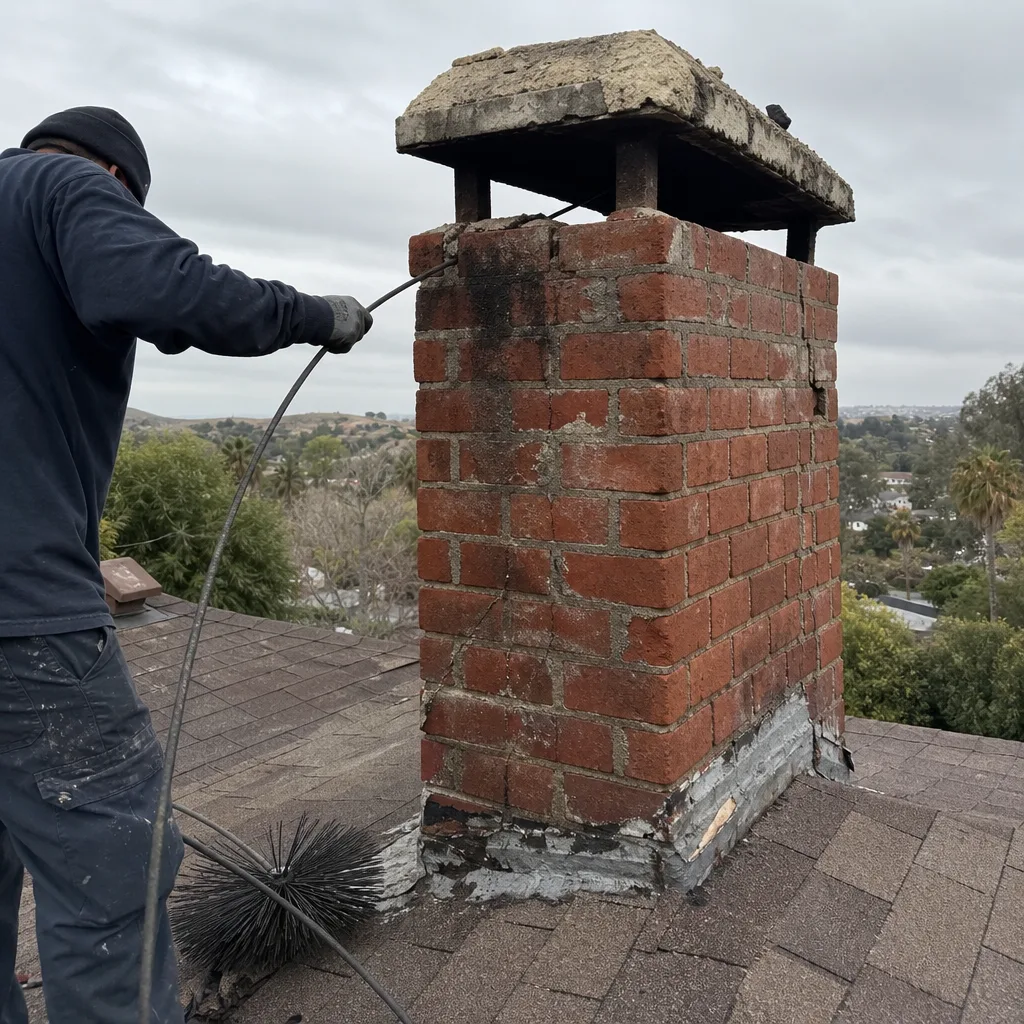 Before
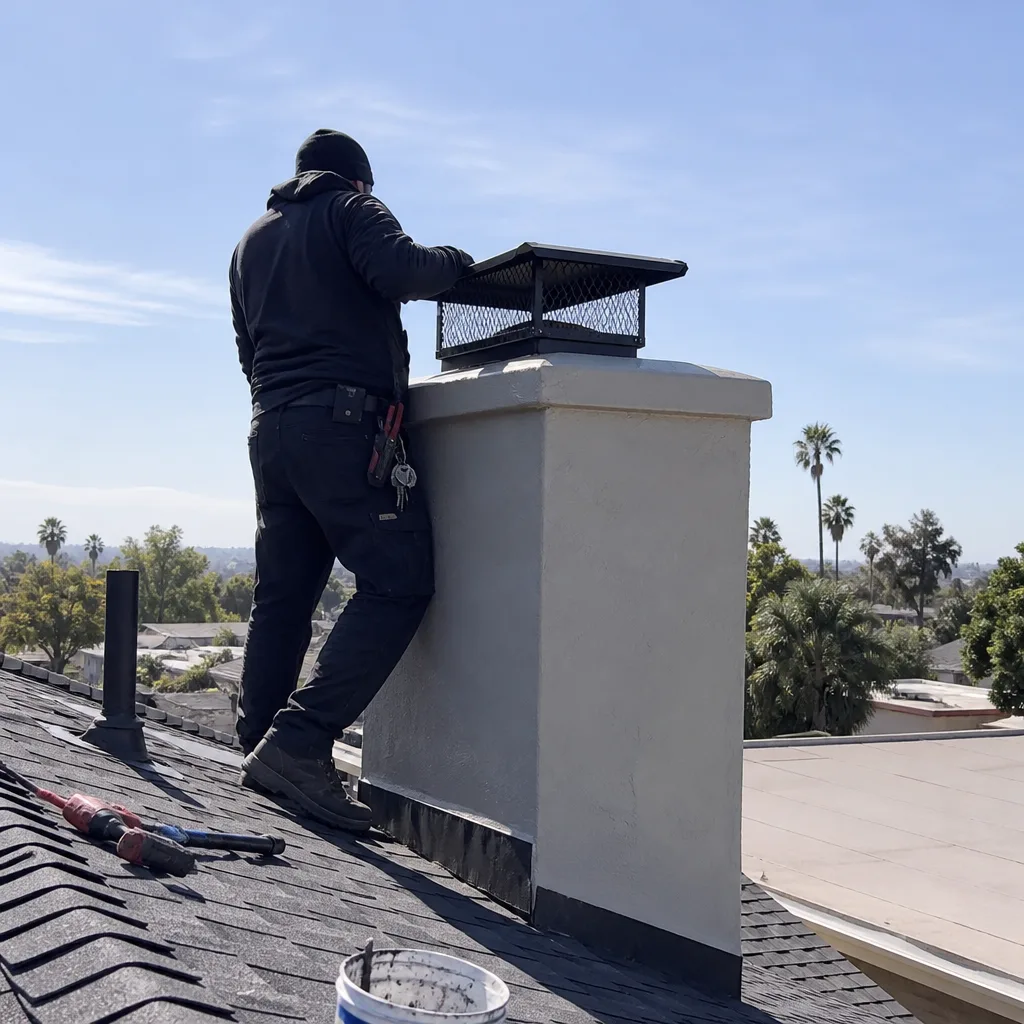 After
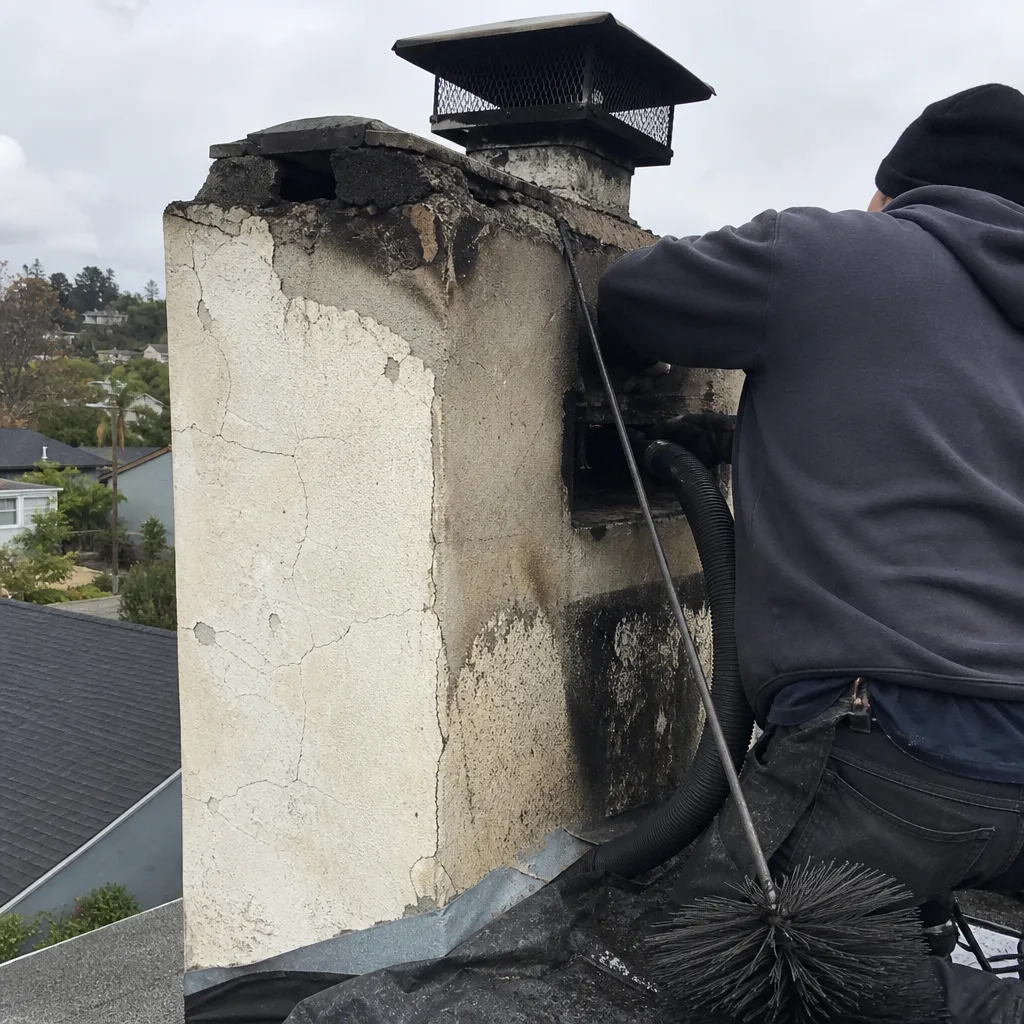 Before
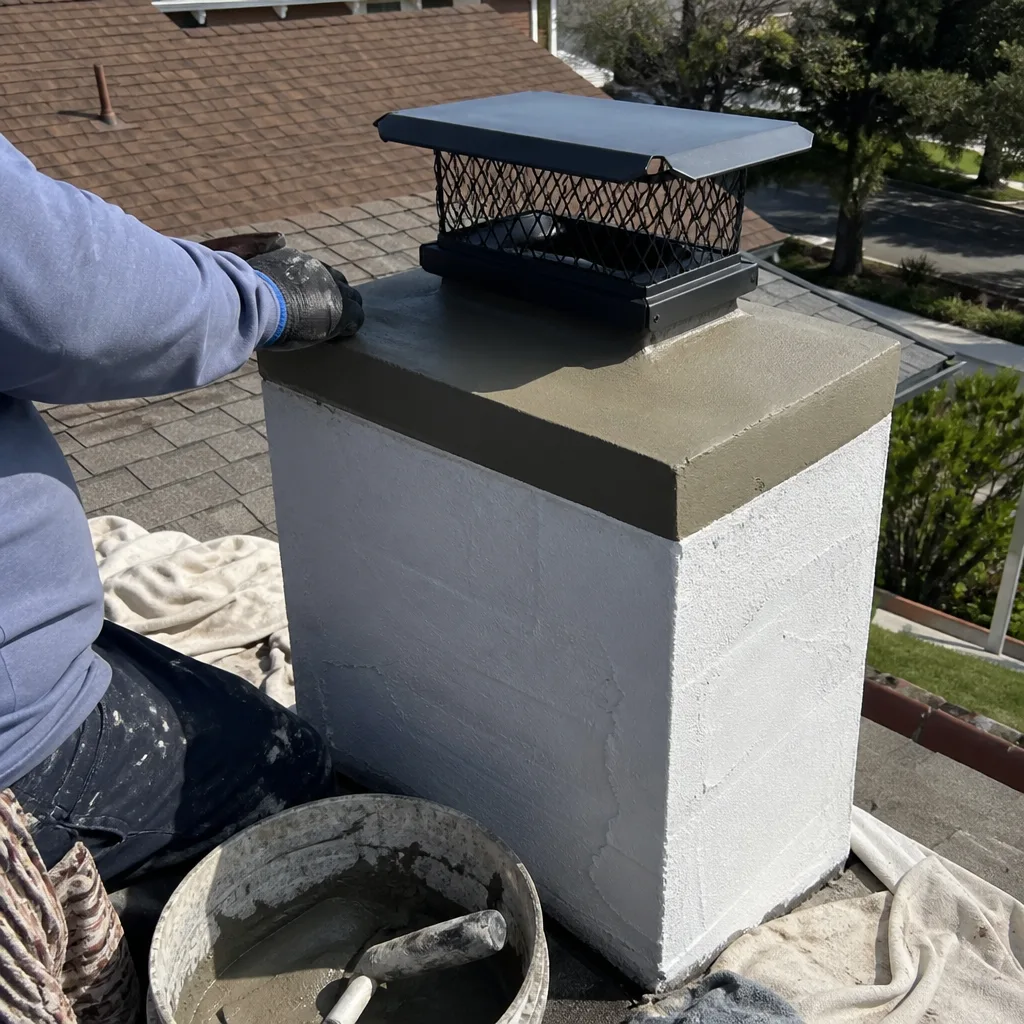 After
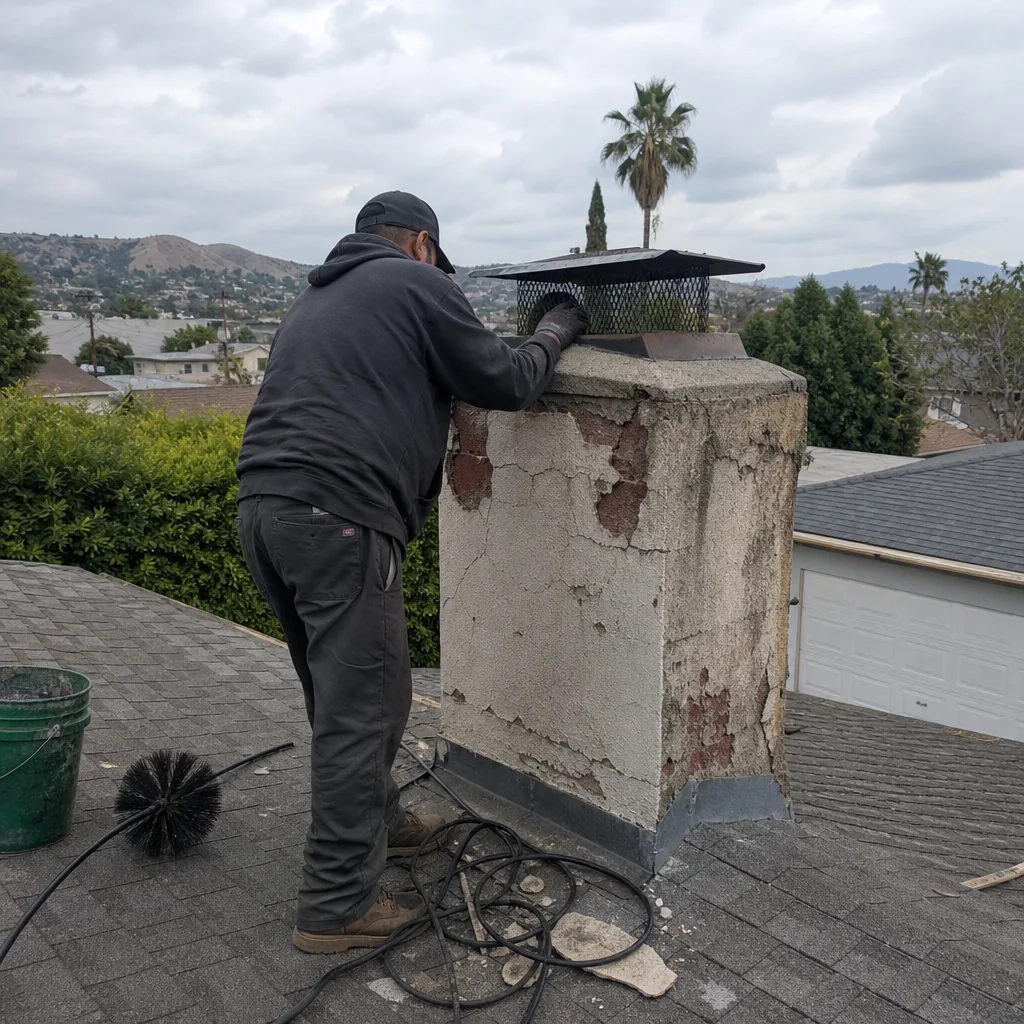 Before
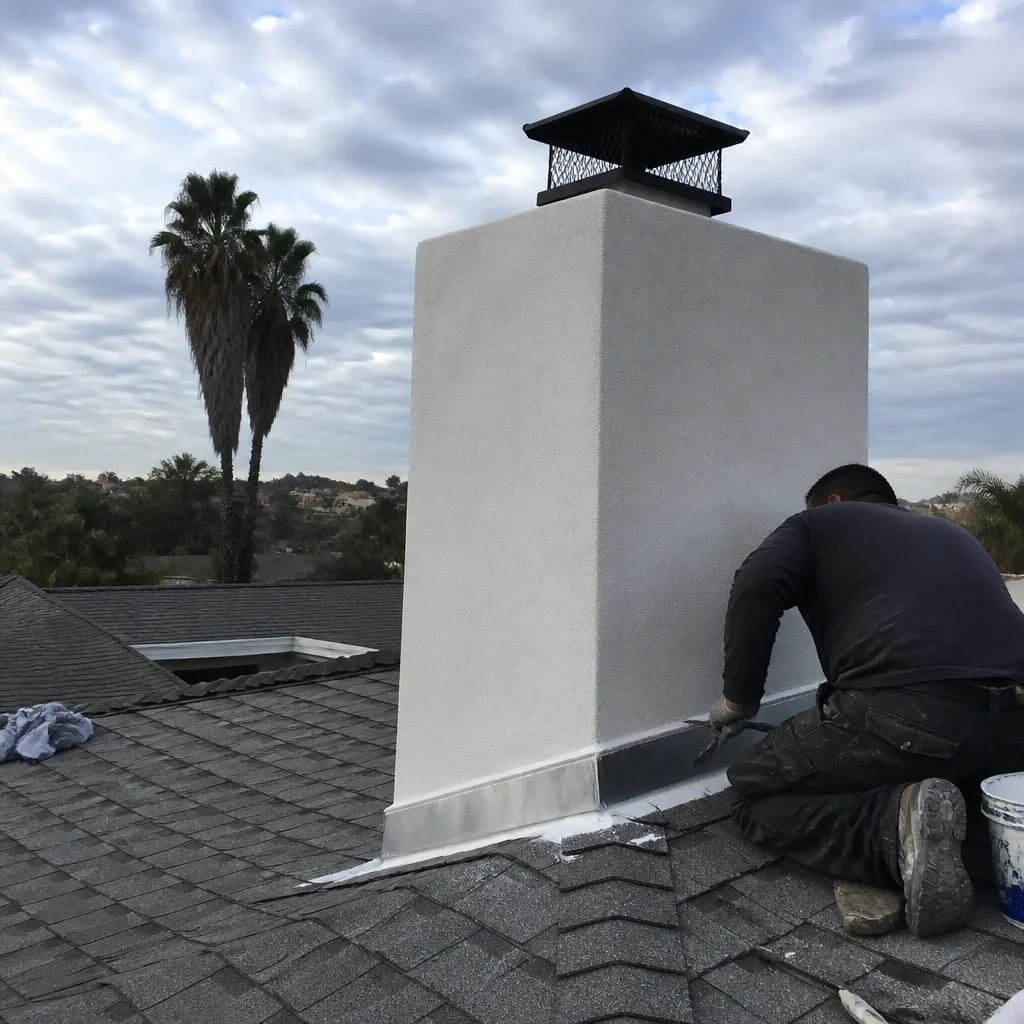 After
Frequently Asked Questions
A standard chimney sweep in Baldwin Hills for a one-story masonry chimney typically costs between $180 and $350, depending on flue height, roof access difficulty, and the level of creosote buildup. Homes on hillside lots with steep roof pitches run at the higher end of that range due to the additional safety equipment and time required. Call (877) 752-4855 for an exact quote for your chimney, estimates are free.
A wood-burning chimney in Baldwin Hills should be swept annually if you burn more than two fires per week during the season, and at minimum every two years if you burn only occasionally. The coastal humidity in this area creates more creosote condensation cycles than inland locations, which means chimneys here often need more frequent cleaning than homeowners expect. A gas fireplace should be inspected annually, though it will not require the same frequency of sweeping.
Only a camera inspection can answer that question, and you should never accept a liner replacement recommendation without seeing the camera footage yourself. Start with a level-two inspection from an independent technician who is not selling you the repair. If the liner has surface spalling but remains structurally intact, a HeatShield resurfacing may be appropriate. If the structural integrity is gone but the masonry is sound, a DuraFlex liner can reline the stack. A legitimate contractor will name the system and show you the evidence.
Creosote accumulates with every fire, and stage-two and stage-three creosote are flammable at temperatures well below those reached in a normal fire. The result of skipping a sweep is not a small inconvenience; it is a chimney fire risk that grows with each burn. Additionally, a blocked flue from years of accumulated debris can push carbon monoxide back into your home. The risk compounds annually, not linearly.
Visit the Contractors State License Board website at cslb.ca.gov and search the contractor’s name or license number. You’re looking for a C-61 specialty classification, specifically D-24 (chimney cleaning) or D-42 (chimney and flue repair). The license must be current and active, and the name on the license should match the name on the estimate. If any of those three factors doesn’t check out, don’t book.
Some do, and it’s worth asking. A company that handles both chimney and dryer vent work can consolidate your fire-safety maintenance into one visit, which saves time and often money. The leading cause of residential appliance fires is dryer lint buildup, and the same camera inspection tools used for chimneys are used for dryer vents. At Chimney Sweep Baldwin Hills, we offer both chimney sweeping and dryer vent cleaning, and we’ll inspect both systems in a single visit across Baldwin Hills.
The Bottom Line
Hiring a chimney cleaning contractor in Baldwin Hills is not a matter of picking the first name on a Google search or the cheapest quote on a mailer. The market contains trained, credentialed professionals and unlicensed operators who cannot tell you the difference between a clay tile liner and a stainless system, and a homeowner without a framework cannot tell them apart from a website alone. The framework is simple: check the CSIA certification, the C-61 license, and the insurance certificate before booking. Ask the photo question before they visit. Read the estimate line by line. Watch for the smoke shelf work while they’re on the job. And never accept a repair recommendation without camera evidence you’ve seen with your own eyes. The difference between a good chimney contractor and a bad one is not the price on the estimate. It’s whether they can document the condition of your flue before and after the work. In Baldwin Hills, where most homes carry pre-1978 masonry chimneys, that difference is the line between a safe fire and a preventable hazard.
Written by the team at Chimney Sweep Baldwin Hills, serving Baldwin Hills since 2015.