
Last updated November 2, 2026
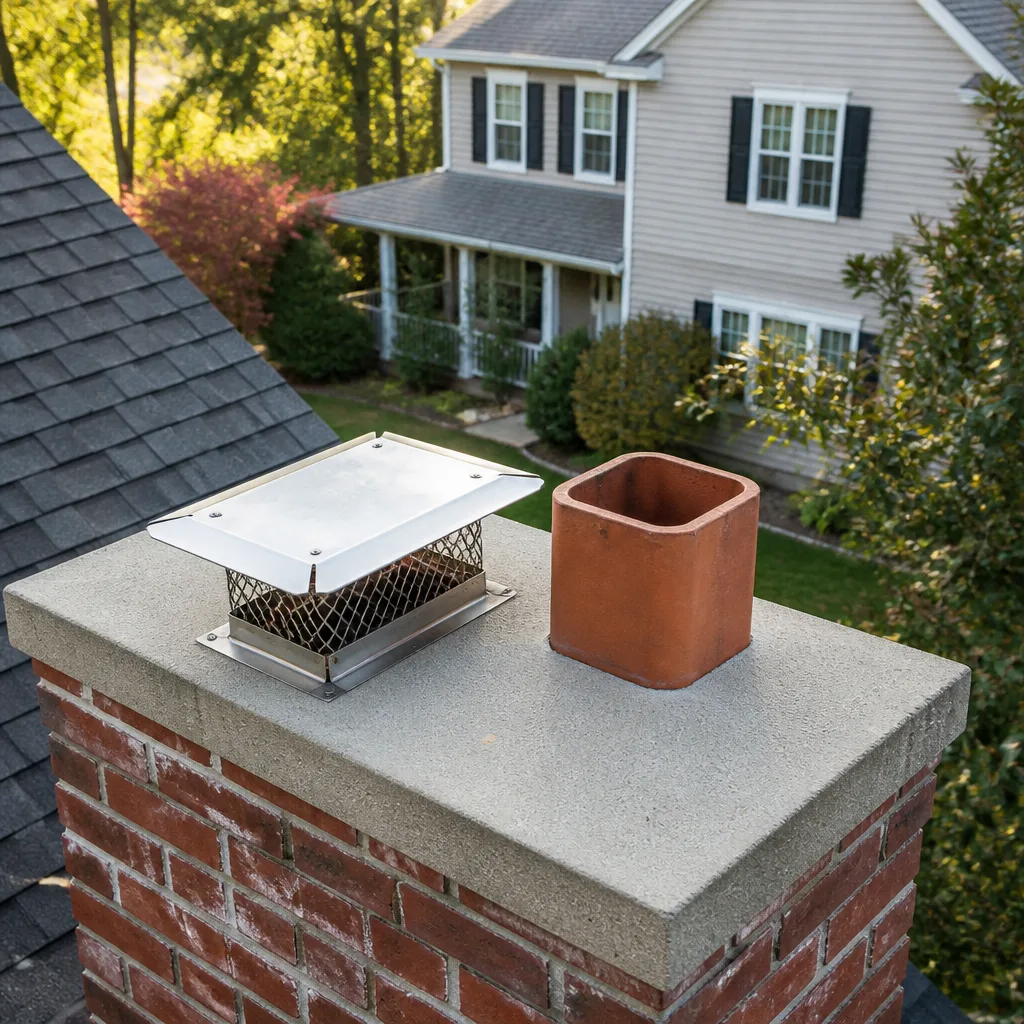 Sweep & inspection
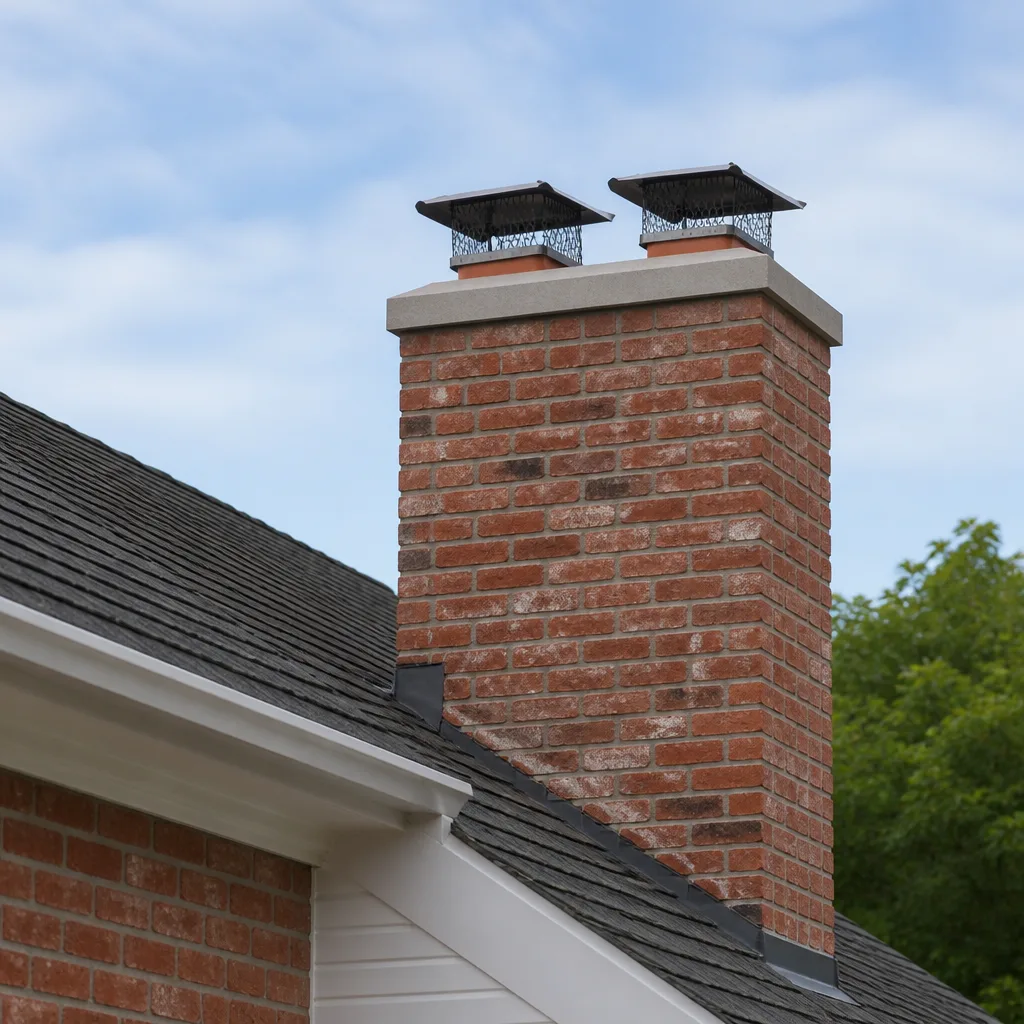 Caps & crowns
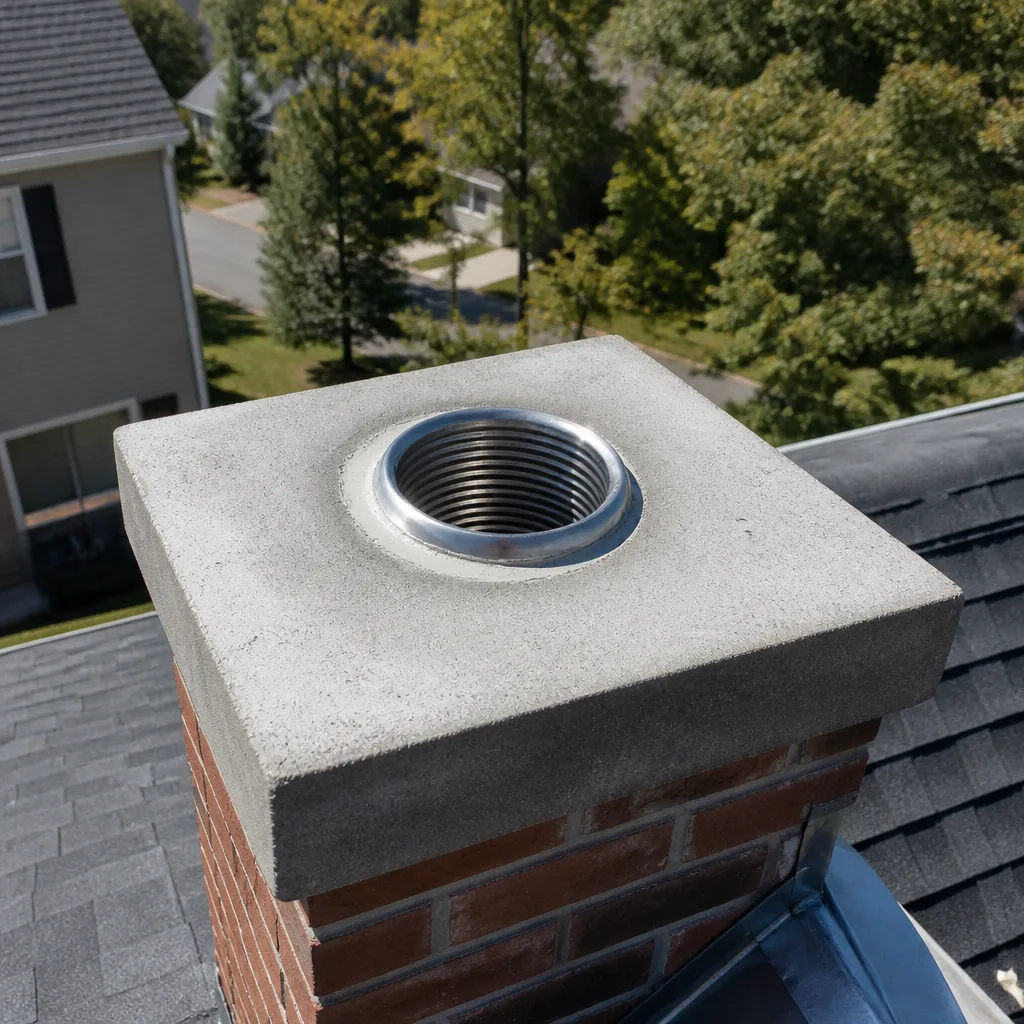 Flue relining
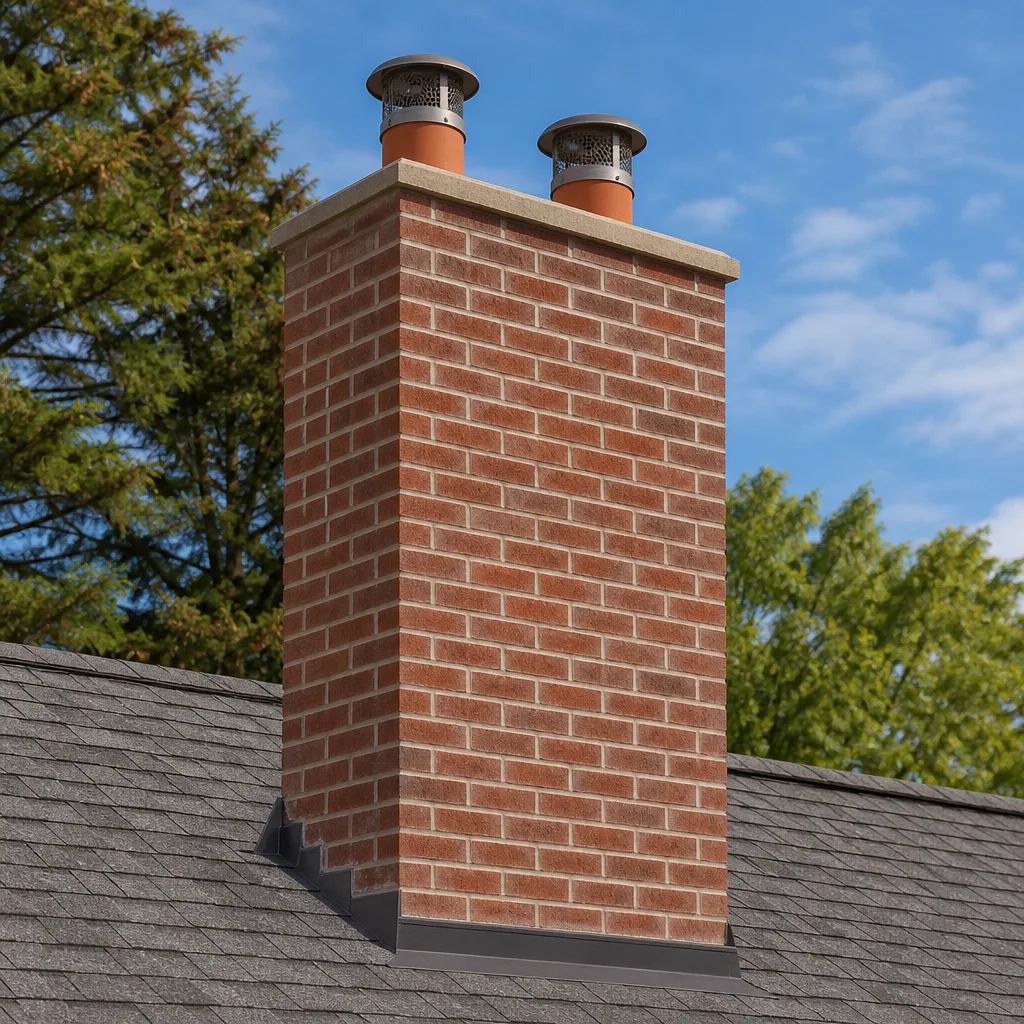 Masonry repair
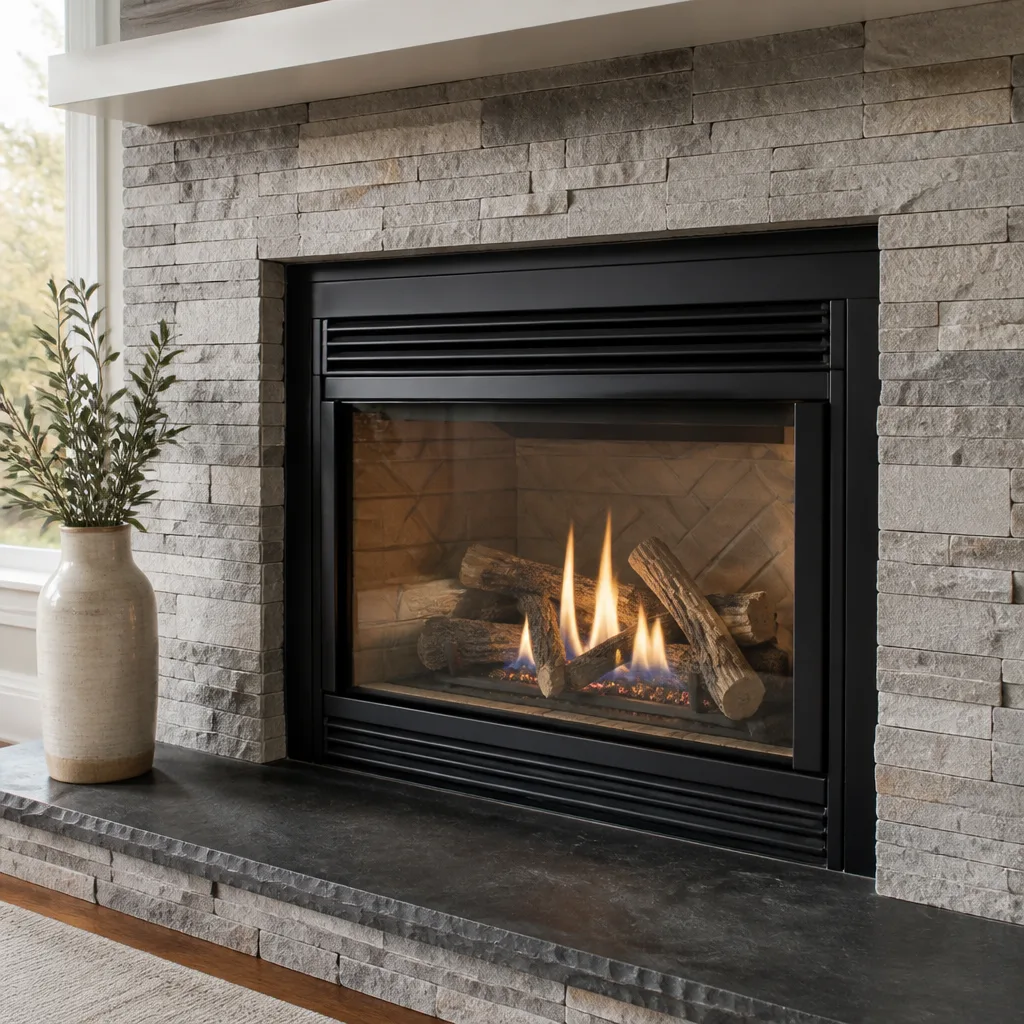 Gas fireplace service
Level 1 sweep and inspection to the NFPA 211 annual standard - flue, crown, cap, and flashing checked and photographed
Chimney sweep logs do not sweep chimneys. They loosen some creosote - which then falls where a brush and vacuum still have to collect it.
Chimney Cleaning Emergency Preparedness Guide for Baldwin Hills Homes
A chimney fire in Baldwin Hills burns at temperatures above 2,000°F and can travel from ignition to roof involvement in under four minutes. By the time you smell it, the liner tiles may already be cracked and the framing adjacent to the chase may be at ignition temperature. This guide is built for Baldwin Hills homeowners who understand that preparedness isn’t a word on a checklist for Baldwin Hills homeowners. It is a documented sequence of actions you can execute when smoke backs into the living room during a Santa Ana event, when the ground shakes hard enough to shift a flue, or when you hear the freight-train roar of a chimney fire at 2 a.m. You’ll get the response protocols, inspection triggers, documentation steps, and pre-season checks specific to our hills, our wind patterns, and our housing stock.
Quick Answer
Chimney emergency preparedness for Baldwin Hills homes means having three things in place before an event: a written response sequence for chimney fires and smoke intrusion, knowledge of which permits, codes, and inspections in CA mandate a Level 2 inspection before you use the fireplace again, and pre-season documentation of your chimney’s condition so post-event damage is provable to an insurance adjuster. The highest-impact actions are installing the right cap and damper configuration for Santa Ana negative pressure, keeping a Chimfex suppression device accessible, and knowing that any earthquake at Richter 4.0 or above within 30 miles of Baldwin Hills requires a professional inspection before your next fire.
Styles & brands we work with
- Sweep & inspection
- Caps & crowns
- Flue relining
- Masonry repair
- Gas fireplace service
Table of Contents
- The Immediate Response Sequence for a Baldwin Hills Chimney Fire
- Post-Earthquake Inspection Protocol: What a Richter 4.0 Means for Your Flue
- Santa Ana Winds and Negative Flue Pressure: How Smoke Reverses Into Your Home
- Insurance Documentation After a Chimney Fire: What to Capture Before You Call Your Adjuster
- Pre-Season Emergency Readiness Check: The Three Components That Fail Catastrophically
- Chimfex and Chemical Suppression: What Works, What Doesn’t, and When to Reach for It
- Structural Smoke Intrusion: When It’s Not a Chimney Fire But Still an Emergency
- Carbon Monoxide During Burn Season: The Invisible Emergency Protocol
The Immediate Response Sequence for a Baldwin Hills Chimney Fire
You’ll likely hear it before you see it. A chimney fire produces a low rumble that some describe as a freight train, some as a jet engine at altitude, and some as a roar like heavy surf against the breakwater at Marina del Rey. That sound is the fire pulling air through the flue at combustion velocity. You may also see large flames shooting from the chimney top, dense smoke, or embers raining onto the roof. In Baldwin Hills, where easterly winds can push embers into neighboring yards within seconds, this is not a contained event. It is the opening move of a structure fire.
Here is the exact sequence to follow, in order:
- Get everyone out of the house first. Do not stop to gather documents, phones, or pets that are not immediately at hand. A chimney fire can breach the flue and enter the attic framing in under four minutes. Baldwin Hills homes built in the 1950s through 1970s frequently have wood framing in direct contact with or close proximity to the chimney chase, which shortens that timeline.
- Close the fireplace doors or glass screen if you can do so without reaching into the firebox. This cuts a portion of the air supply. Do NOT close the damper. Closing the damper forces smoke and superheated gases into the living space instead of up the flue. This is the most counterintuitive step and the one people get wrong under pressure.
- Do not open attic access panels or crawl space hatches. Introducing air to attic spaces accelerates fire spread. This is a mistake that converts a contained flue fire into a multi-room fire.
- Call 911 from outside the house. Tell the dispatcher: “Chimney fire, active flames from the chimney top, address is [your address], occupants are [number], evacuation status is [complete/in progress].” Using the words “chimney fire” and “active flames from the top” triggers LAFD’s structure fire response, not a medical response. That distinction matters for response priority.
- If you have a Chimfex fire suppression stick and the fire is still confined to the flue, deploy it according to manufacturer instructions from a position where you can access the firebox safely. Chimfex releases combustion-inhibiting smoke that displaces oxygen in the flue. It is not a fire extinguisher and does not spray anything. It burns like a road flare and floods the flue with suppressant gas. It works on flue fires in the early stage. It does not work if the fire has already breached the flue liner and entered the chase or attic.
- When LAFD arrives, tell them exactly what you observed: sound, flame color, duration, any ember fall, and whether you deployed a suppression device. LAFD will typically ladder the roof and inspect the flue interior or run water into the flue in controlled amounts. The water introduction will damage the liner. That damage is expected and is part of the fire response, not a reason to delay calling.
A note on the “self-extinguish versus call” decision from our experience with Chimney Sweep Baldwin Hills home inspections: if you are anywhere in the Baldwin Hills, Ladera Heights, or View Park area, call LAFD. Always. The lateral distance between homes, the shared slope-side vegetation, and the wind exposure mean a chimney fire is not a private event. The fire department response is free, and the documentation they create is essential for your insurance claim. The only circumstance where a Chimfex deployment is your primary response is when you catch the fire in its first 30-60 seconds, the fire is audibly contained to the flue, and you are certain no smoke is entering the living space.
After any chimney fire, a CSIA-certified sweep must inspect the flue before the fireplace is used again. Not a standard sweep. A post-fire inspection that includes a video scan of the entire flue interior. The flue tiles will have hairline cracks at minimum, and cracked tiles are a carbon monoxide pathway into the living space. We will return to this in the documentation section.
Post-Earthquake Inspection Protocol: What a Richter 4.0 Means for Your Flue
Baldwin Hills sits within five miles of the Newport-Inglewood fault zone, which runs directly through the Kenneth Hahn State Recreation Area and down through the Baldwin Hills escarpment. This is not a hypothetical seismic risk. This is a named, active fault system with a history of moderate-to-strong events, and it intersects a housing stock where most chimneys were built with unreinforced clay tile liners and mortar crowns that have been weathering for 50 to 70 years.
Here is the protocol we recommend for Baldwin Hills homeowners. It aligns with CSIA guidance and the practical reality of our local housing stock:
Any earthquake felt at Modified Mercalli Intensity IV or higher (approximately Richter 4.0 within 30 miles) requires a Level 2 chimney inspection before the next fireplace use. This is not a recommendation. This is the line. A Level 2 inspection includes a video scan of the full flue interior, access to the attic and crawl spaces where accessible, and an evaluation of the chimney structure above the roofline. At Richter 4.0, ground acceleration is sufficient to shift unreinforced masonry chimneys, crack clay tile liner joints, and separate the flue from the surrounding chase. In Baldwin Hills, where hillside construction often places chimneys on the downhill side of the structure where foundation movement is greatest, the risk threshold is lower than flatland L.A.
What specifically fails during seismic events:
- Clay tile liner joints. The mortar joints between tile sections are the weakest point in the flue. Ground shaking shears these joints, creating gaps that allow flame and gas to contact the surrounding framing.
- Mortar crown separation. The crown is the concrete cap at the chimney top. It sits above the roofline where lateral movement is amplified. A separated crown allows water and ember intrusion.
- Chimney-to-house connections. The flashing and counterflashing where the chimney passes through the roofline is a movement joint. Seismic shifting can open it, allowing hot embers to contact roof decking.
- Damper plate misalignment. The damper is a metal plate that must seat fully to close off the flue. Seismic shifting can warp or misalign it, making it impossible to fully close or fully open.
The reason a professional inspection is mandatory rather than visual is that the most dangerous post-earthquake damage is never visible from the firebox or the roof. We commonly find shifted tile sections that appear intact from the outside but have separated at the joints inside the flue. A Chimney Sweep in Baldwin Hills with video scan equipment can document this in minutes, and that documentation serves double duty for insurance purposes if future issues arise.
One more seismic note specific to this area: the Baldwin Hills Reservoir failure of 1963, while unrelated to chimneys, demonstrated that this soil profile amplifies ground movement in specific ways. Homes on the northern slopes and the Kenneth Hahn-adjacent ridgeline experience different shaking profiles than homes in the Inglewood Oil Field buffer zone or the flats below. If your home is on a slope, treat the Richter 4.0 threshold as conservative. We’ve inspected post-event chimneys in the hills that showed joint separation from a 3.8 event that flatland homes didn’t feel at all.
Santa Ana Winds and Negative Flue Pressure: How Smoke Reverses Into Your Home
Santa Ana wind events in Baldwin Hills do something specific that most chimney guides don’t address: they create sustained negative pressure on the leeward side of structures that can overcome the natural draft of your flue. This is how smoke and burning embers end up in your living room even when the damper is open and the fire is drafting fine on a normal night.
The mechanism is straightforward. A chimney drafts because warm rising air inside the flue creates lower pressure at the firebox, pulling combustion gases up and out. When a Santa Ana event drives sustained 30-50 mph winds over the ridgeline, the turbulence around your roofline creates zones of pressure differential that can pull air down the chimney instead of allowing it to rise. This is called negative flue pressure, and Baldwin Hills homes are more exposed to it than almost any other L.A. neighborhood because of our elevation, our unobstructed easterly exposure, and the way the wind accelerates over the Baldwin Hills escarpment.
What negative flue pressure looks like in practice:
- Smoke entering the room around the damper plate despite the damper being fully open.
- Difficulty lighting a fire that drafts fine on calmer days.
- Embers being pulled from the firebox into the room rather than rising up the flue.
- A persistent cold downdraft from the fireplace even when no fire is burning.
- Visible smoke staining on the fireplace surround that indicates repeated smoke intrusion events.
The damper and cap configuration that mitigates this risk is specific. A throat damper alone, even when properly seated, is not sufficient for Baldwin Hills wind exposure. You need a top-sealing damper (installed at the flue termination, not at the firebox). A top-sealing damper creates a positive seal at the flue opening and prevents wind-driven pressure from entering the flue column. In addition, the chimney cap must be a full-coverage cap with proper screening, not a simple spark arrestor band. The cap changes the airflow around the flue termination and reduces the turbulent pushdown effect that Santa Ana winds generate.
The third component is the flue liner itself. In Baldwin Hills homes where the clay tile liner has already deteriorated (which describes most 1950s-1970s chimneys that have not been relined), the flue cross-section is no longer smooth. Rough surfaces create drag, drag reduces draft velocity, and a slow draft is easier for wind pressure to reverse. This is why some Baldwin Hills homes can’t maintain a fire on high-wind days regardless of cap configuration. The fix is a liner restoration or replacement, and this is where products like HeatShield ceramic resurfacing or DuraFlex flexible liner systems enter the picture. Gelco, Olympia Chimney, and Famco are the other professional-grade brands we stock for cap, damper, and flashing work in high-wind installations. Fire safety starts with the right materials, and the difference between a draft that holds on a Santa Ana night and one that doesn’t is often in the liner condition.
During a red flag warning, the rule for Baldwin Hills is simple: do not burn. When the National Weather Service issues a red flag warning for the Los Angeles County mountains and valleys, or when winds are sustained above 25 mph, skip the fire entirely. The chimney risks are one part. The bigger risk is an ember escaping the flue and landing in vegetation that ignites within seconds under those conditions.
Insurance Documentation After a Chimney Fire: What to Capture Before You Call Your Adjuster
The 48 hours after a chimney fire determine whether your insurance claim is a smooth settlement or a six-month battle. Most Baldwin Hills homeowners wait too long to document, document the wrong things, or can’t prove that the damage wasn’t pre-existing. That last one is the one that sinks claims. Insurers deny chimney fire claims on the basis that the flue had pre-existing liner deterioration, and without a pre-fire condition assessment, you cannot prove otherwise.
Here is the documentation sequence, in order:
- Do not move anything before photographing the scene. Photograph the firebox interior, the chimney exterior from the ground, the roof around the chimney if safely accessible, and any smoke staining on walls, ceilings, or the fireplace surround. Use your phone. Wide shots first, then close detail shots with something in the frame for scale.
- Photograph any ember fall outside the house. Check the roof, gutters, and yard for ember debris. Burn marks in the landscaping or on the roof decking around the chimney are evidence of the fire’s progression and fuel its classification as a structure fire rather than a contained flue event.
- Obtain the LAFD incident report number. LAFD will provide this. Write it down or photograph it. Your adjuster will ask for it, and the LAFD report is the official record that the fire occurred. Without it, you have no proof a fire department responded.
- Save all receipts from the emergency response. This includes any fire suppression equipment, any emergency lodging if the home was temporarily uninhabitable, and any food spoilage if utilities were interrupted.
- Contact a CSIA-certified chimney professional for a written post-fire condition assessment before you file the claim. This is the non-negotiable step. The assessment must include a video scan of the flue interior, a written description of every damaged component, and a professional opinion on repair scope. This document is your counterweight to the insurer’s pre-existing damage argument. Without it, the adjuster’s first visit will be their expert against your lay description.
- Then call your insurance company. Not before. The call starts a clock, and you want documentation in hand when that clock starts.
The reason a CSIA technician’s written assessment matters in Baldwin Hills specifically: our housing stock is old enough that most flues have some degree of pre-existing liner wear. The insurer knows this. Their adjuster will look for it. A written assessment from a technician who can distinguish fire damage from gradual deterioration, and who documents both with video, changes the claim outcome. We’ve seen homeowners get full claims approved that would have been denied because they had this assessment before the adjuster arrived.
For the repair follow-up, ask the technician about HeatShield ceramic relining as an alternative to full flue replacement. HeatShield resurfacing can restore a fire-damaged flue liner without teardown, and it’s a repair scope that sweep-only companies simply don’t offer. The technician should also evaluate the chimney crown, the damper, and the chase framing for heat exposure. A chimney fire rarely damages just the liner. The framing adjacent to the chase is often charred, and that damage is part of the claim.
Pre-Season Emergency Readiness Check: The Three Components That Fail Catastrophically
Most Baldwin Hills chimney emergencies are not random events. They are the end state of warning signs that were visible months earlier. The pre-season check should focus on the three components that fail most often and cause the most damage when they do. This is not a substitute for a professional sweep. It is a homeowner-level awareness check that tells you whether you need to escalate.
Component One: The Damper Plate. The damper is the metal plate inside the throat of the fireplace that opens and closes the flue passage. In Baldwin Hills homes, the most common damper failures are: plates that no longer seat fully when closed (caused by years of heat warping), plates that have separated from their hinges, and plates that jam in the half-open position. A damper that doesn’t seat fully when closed lets heated and cooled air exchange continuously, but more importantly, it indicates the damper assembly has metal fatigue. Test it: open and close the damper several times while listening for grinding, watching for smooth operation, and checking for full closure. Use a flashlight to confirm the plate is seating flush against the frame.
Component Two: The Clay Tile Liner Joints. The flue liner is a series of clay tiles stacked vertically, joined with mortar. The joints are the failure point. Over decades, the mortar erodes, the tiles shift microscopically, and gaps open. You cannot see this from the firebox. You can only see it with a video scan. What you can see from the firebox are indirect signs: a buildup of creosote in unusual patterns, white staining on the firebox back wall that indicates moisture intrusion, or heat discoloration on the chimney exterior above the roofline. If you see these, or if your home has never had a video scan and is more than 30 years old, schedule one.
Component Three: The Mortar Crown Seal Above the Roofline. The crown is the concrete or mortar cap at the very top of the chimney. Its job is to seal the area around the flue tile so water cannot enter the chimney structure. Crowns crack. Water enters. Freeze-thaw cycles (yes, Baldwin Hills gets cold enough for this at night during winter) widen those cracks. The flue structure begins to deteriorate from the top down. From the ground, look for: visible cracks in the crown, missing chunks of mortar, a gap between the flue tile and the crown, or vegetation growing out of the crown (moss, weeds, anything that indicates retained moisture). Any of these is a reason to call a professional.
The pre-season readiness check also includes the things your fireplace needs on hand before the first burn of the season: fire extinguisher rated for Class A (not just kitchen Class B/C), a Chimfex suppression device, the LAFD non-emergency line programmed into your phone, and a written emergency sequence for the household. The written sequence matters more than most people expect. Under stress, people make predictable errors: closing the damper during a chimney fire, opening the attic, pouring water into the firebox (never do this, the thermal shock will crack the firebox and the steam will spread the fire). A printed checklist eliminates those errors.
We also recommend a Chimney Repair in Baldwin Hills inspection before burn season if the home has not been inspected in the past two years. The inspection is where the damper, liner, and crown are all evaluated in one pass, with video documentation of liner condition. It’s the cheapest emergency investment you can make, and it creates the baseline documentation that matters in an insurance claim.
Chimfex and Chemical Suppression: What Works, What Doesn’t, and When to Reach for It
Chimfex is the most widely available chimney fire suppression device for residential use, and most homeowners who own one don’t understand what it actually does. This is important because misuse can make a fire worse.
Chimfex is a cylindrical device, similar in size to a road flare, that you activate by pulling a ring and then place in the firebox. It does not spray anything. It does not extinguish fire by cooling. It burns at a controlled rate, releasing a dense cloud of smoke that contains combustion-inhibiting compounds. These compounds displace oxygen in the flue, which starves the chimney fire. The device works only on fires still contained to the flue. If the fire has already broken through the liner and entered the surrounding structure, Chimfex is useless.
What Chimfex works on:
- Early-stage flue fires where the fire is audible but flames are not yet visible at the chimney top.
- Creosote ignition inside the flue liner where the fire is using the creosote deposit as fuel.
- Fires in open fireplaces with narrow flues where oxygen depletion is achievable.
What Chimfex does not work on:
- Any fire that has breached the flue liner and entered the chase or attic.
- Chimney fires involving a stainless steel liner where the fire is burning accumulated creosote (the liner conducts heat faster than clay tile and can ignite surrounding framing sooner).
- Fires where visible flames are shooting from the chimney top and embers are falling on the roof.
- Any situation where smoke is already entering the living space.
The decision rule for Baldwin Hills: if you see flames from the chimney top, skip Chimfex and call 911 from outside. If you hear the roar but don’t yet see flames, you have a window of 30-60 seconds where Chimfex might contain it. In that scenario, deploy the device, wait the full duration specified on the package, and then call 911 regardless. A contained chimney fire is still a chimney fire, and the flue must be professionally inspected before the next use.
One caution about Chimfex that is rarely discussed: the device itself produces intense heat and smoke in the firebox. It must be placed on the firebox floor or on a non-combustible surface. Never use it in an insert or stove. Never attempt to retrieve a partially burned Chimfex. And check the expiration date. Chimfex devices have a shelf life, and an expired one may not ignite or may not produce sufficient suppressant volume.
For homeowners who want a suppression option that also serves a daily purpose, the combination that makes sense in Baldwin Hills is: Chimfex for active chimney fires, a dry chemical ABC extinguisher for anything that escapes the firebox, and a smoke/carbon monoxide detector that is hardwired with battery backup in the same room as the fireplace. The fire suppression is the last line. Detection comes first, and in a chimney fire where the fire develops in the flue, the first detector to trip is often the one nearest the fireplace.
Structural Smoke Intrusion: When It’s Not a Chimney Fire But Still an Emergency
Not every chimney emergency involves flames. Many Baldwin Hills homes experience the slower version: smoke intrusion into the living space during routine fireplace use. The smoke is not from a chimney fire. It’s from a flue that can no longer draft properly, a liner that has cracked enough to leak into wall cavities, or a damper that no longer controls airflow. This is a fire-safety emergency of a different kind because the smoke you smell in the living room is not the smoke you should be worried about. The smoke you should be worried about is the smoke you can’t smell that is filling your wall cavities and attic.
“We see this pattern regularly in the 1950s-era homes in Baldwin Hills Estates and the streets off La Brea that slope up toward the Kenneth Hahn area,” the Chimney Sweep in Baldwin Hills team has found. “A homeowner is burning on cold nights, everything seems fine, but there’s a persistent slight smokiness in the house that nobody can place. The flue liner has a hairline crack in the middle third, hidden behind the wall line, and combustion gases are leaking through it every time they burn.”
The signs that differentiate flue leak smoke intrusion from a simple damper draft reversal:
- Smoke smell that persists after the fire is out and the fireplace is cold.
- Smoke smell in rooms other than the room with the fireplace, especially upper-floor rooms or attic spaces.
- Soot staining around wall penetrations or outlet plates on the wall containing the chimney.
- Visible smoke entering the room from the gap between the fireplace surround and the wall, not from the firebox opening.
- A smoke smell that is present before the fire is lit (stale smoke being pushed out of wall cavities by pressure changes).
The response to structural smoke intrusion is different from a chimney fire. Leave the house, call 911 only if smoke is visible or a carbon monoxide detector is active, and do not attempt to seal gaps yourself. The professional response involves a video scan of the flue to locate the breach, a pressure test to determine the severity, and then a repair scope. The repair options range from HeatShield ceramic resurfacing for hairline cracks and limited spalling to a full liner replacement using a DuraFlex flexible liner system. The determination is based on what the video scan shows, not on a visual guess from the firebox.
In a Santa Ana scenario, smoke intrusion can also occur even in a healthy chimney, as described earlier. If you experience smoke intrusion only during wind events, the cause is likely draft reversal rather than a liner breach. The test is when the smoke appears. Wind-only smoke intrusion clears when the wind drops and doesn’t leave a persistent stale smoke residual. A liner leak intrudes all the time and leaves the stale smell. Knowing which one you have determines the fix.
Carbon Monoxide During Burn Season: The Invisible Emergency Protocol
Carbon monoxide is the chimney emergency that kills without a warning sound. It has no smell, no visible presence, and unlike a chimney fire, it doesn’t announce itself. Baldwin Hills homes are at elevated risk because our housing stock combines older heating appliances, aging chimney infrastructure, and tightly-sealed retrofits that reduce natural ventilation. Add a running fireplace on a cold night, and the conditions are in place.
The mechanism is simple. Incomplete combustion in the fireplace produces CO. In a properly functioning chimney, the CO goes up the flue and out. When the chimney can’t draft (blocked flue, deteriorated liner, negative pressure from wind or competing exhaust appliances), the CO enters the home. In worse cases, a cracked or separated liner allows CO to exit below the roofline and migrate through wall cavities into living spaces. This is why a CO detector that’s mounted in a hallway far from the fireplace isn’t sufficient for homes where the chimney is actively used. The detector needs to be in the room with the fireplace and in sleeping areas.
The Baldwin Hills-specific CO protocol:
- Install a hardwired CO detector with battery backup in the room with the fireplace and in each sleeping area. If you have one detector, it goes in the sleeping area. If you have two, the second goes in the burning room. Test them at the start of burn season and replace the batteries on the daylight savings schedule, same as smoke detectors.
- Learn the detector’s low-level and high-level patterns. A sustained low-level reading (below 70 ppm but persistent) is not a false alarm. It indicates slow flue leakage. Do not disable it. Get the chimney inspected.
- Treat a CO alarm as a fire department response event. Evacuate and call 911 from outside. The LAFD will deploy a gas detection meter and can confirm the source. The LAFD report becomes part of your documentation trail if repairs are needed.
- After any CO event, the chimney must be video-inspected before the fireplace is used again. A CO event without a diagnosed cause will recur. The cause is almost always a flue condition or a draft problem, not an appliance defect.
The other Baldwin Hills CO risk factor is the aging masonry chimney that is no longer in use but still serves as a chase for other appliances. If you have a furnace or gas water heater vented through an unlined or deteriorating chimney, the CO path is the same, but the symptoms are harder to trace. This is common in mid-century Baldwin Hills homes that have had multiple generations of appliance replacements but never addressed the shared chimney flue. The Dryer Vent Cleaning in Baldwin Hills service is relevant here for the other combustion appliance that kills: the clothes dryer. Lint buildup is the leading cause of appliance fires, and in older homes the dryer vent is often overlooked while the fireplace gets all the attention. A whole-home fire-safety approach includes both.
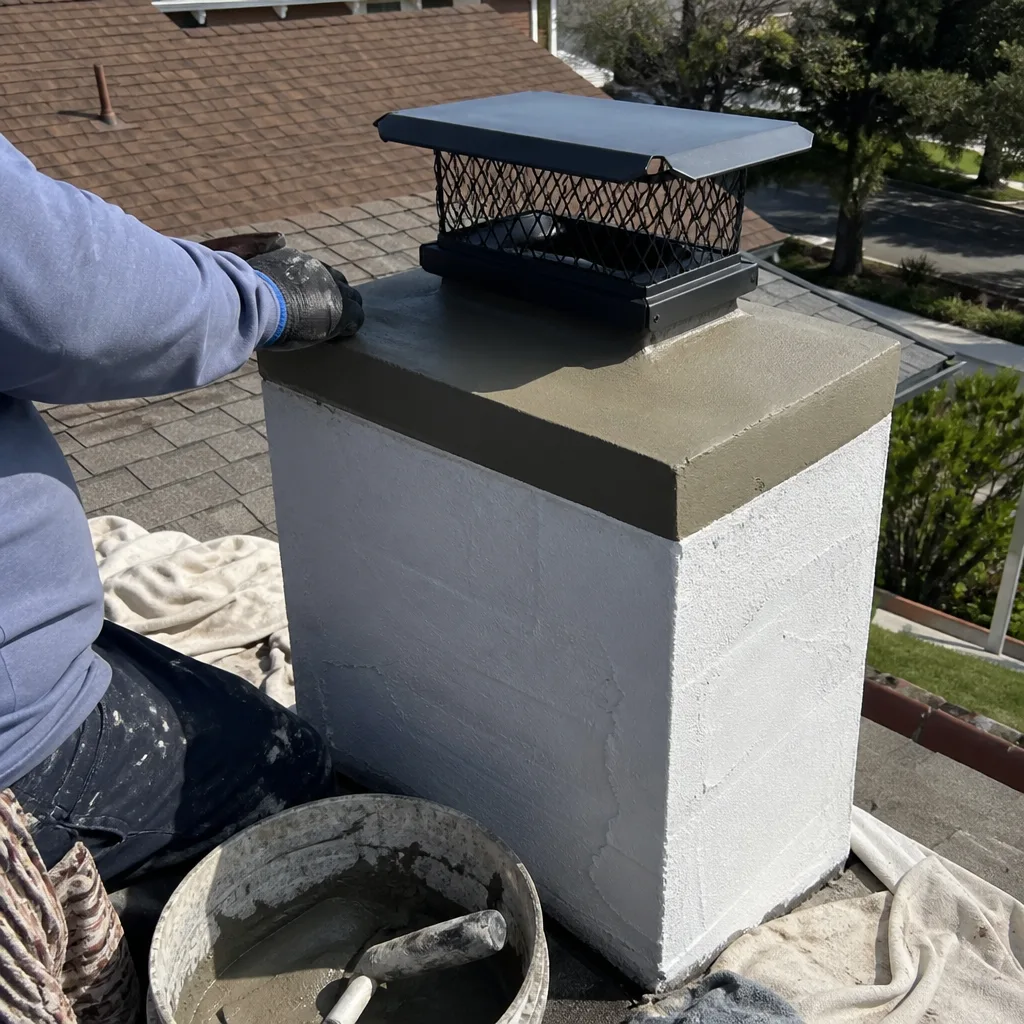
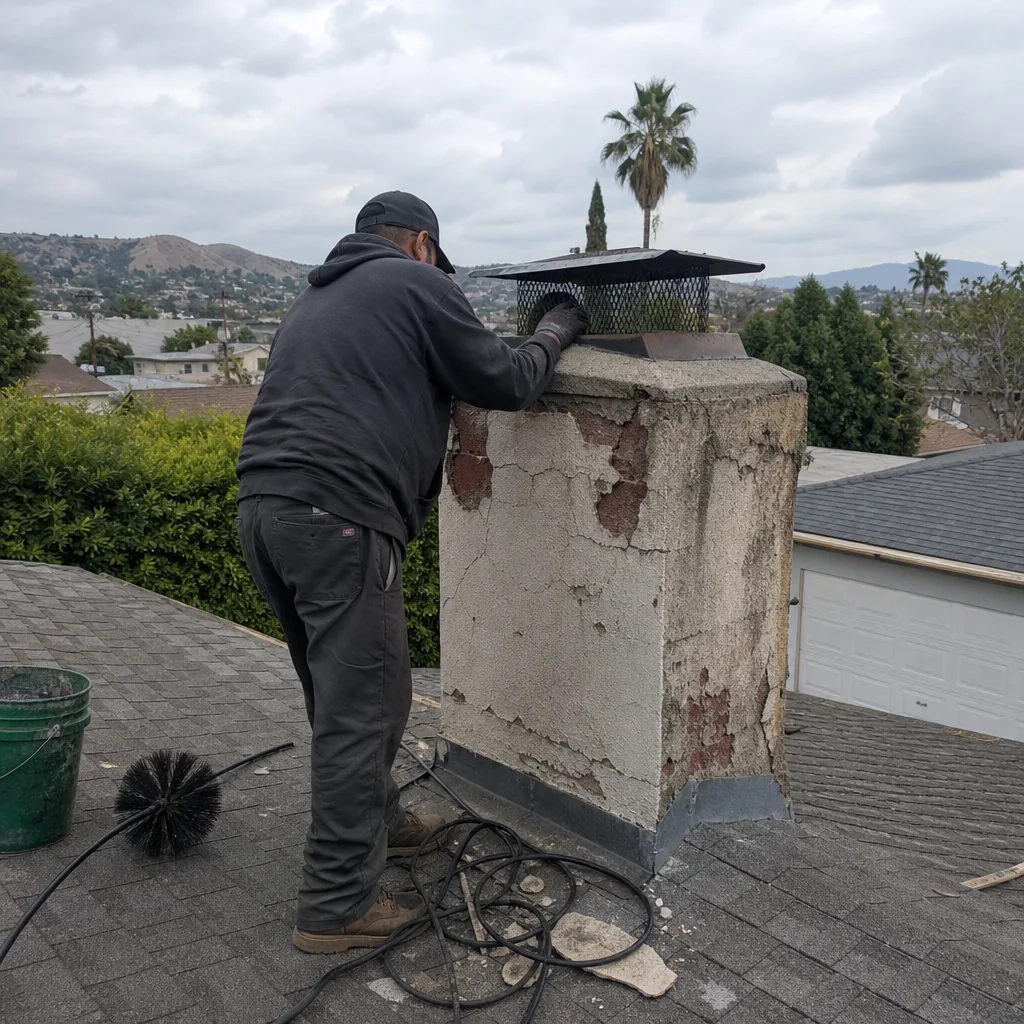
See the difference
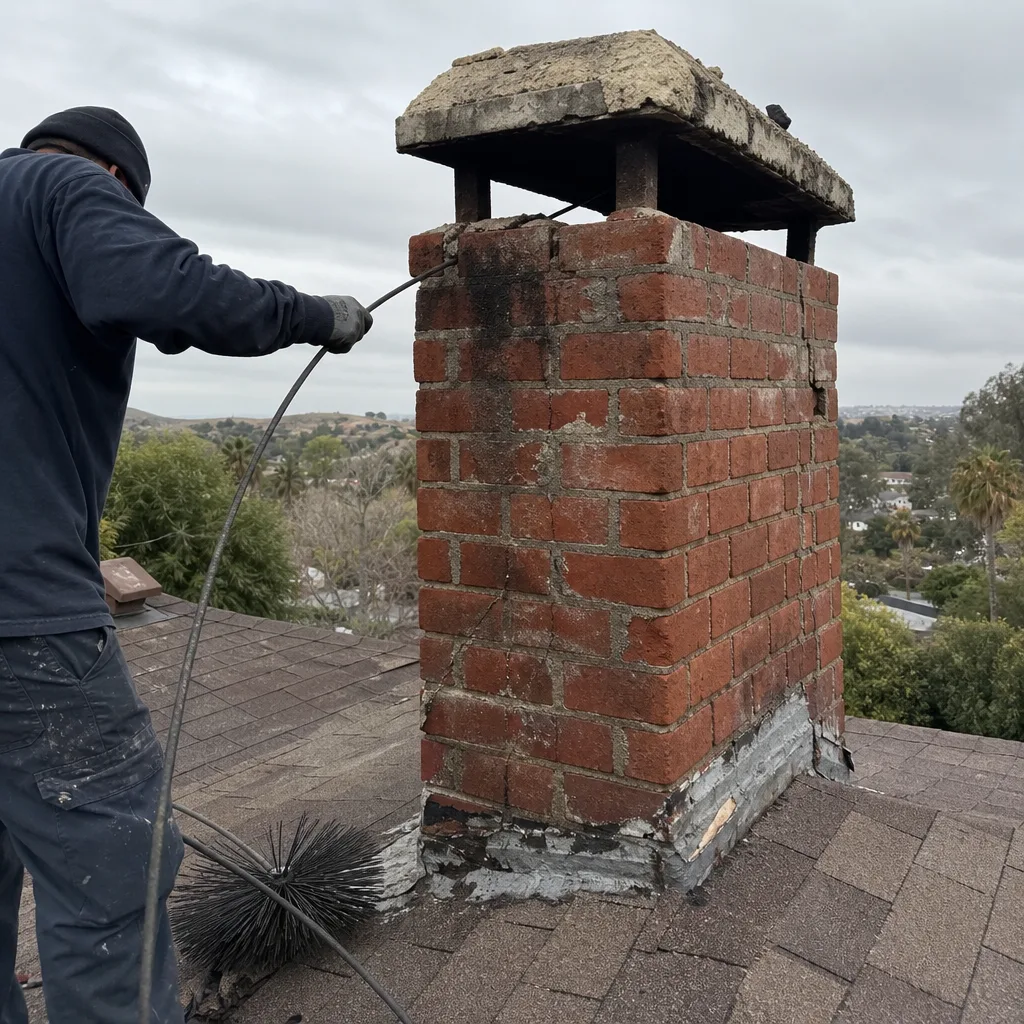 Before
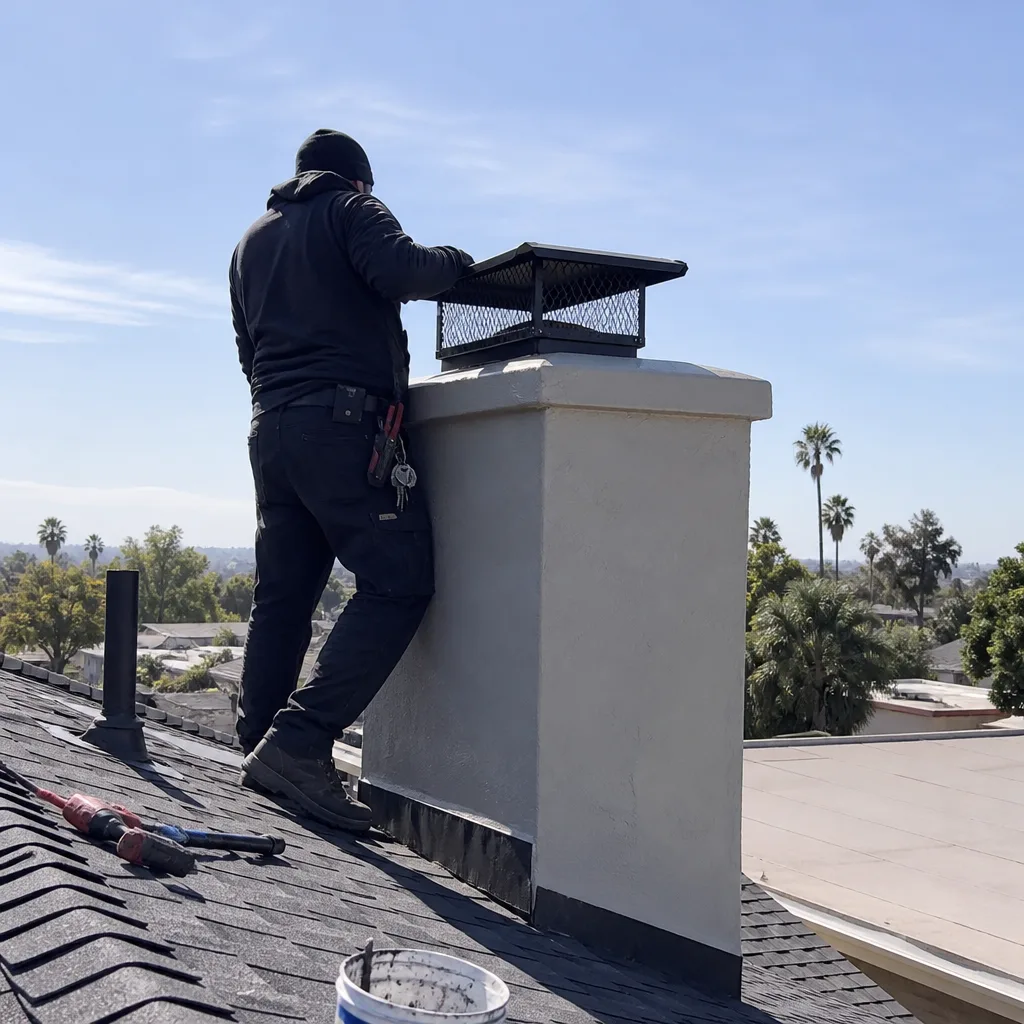 After
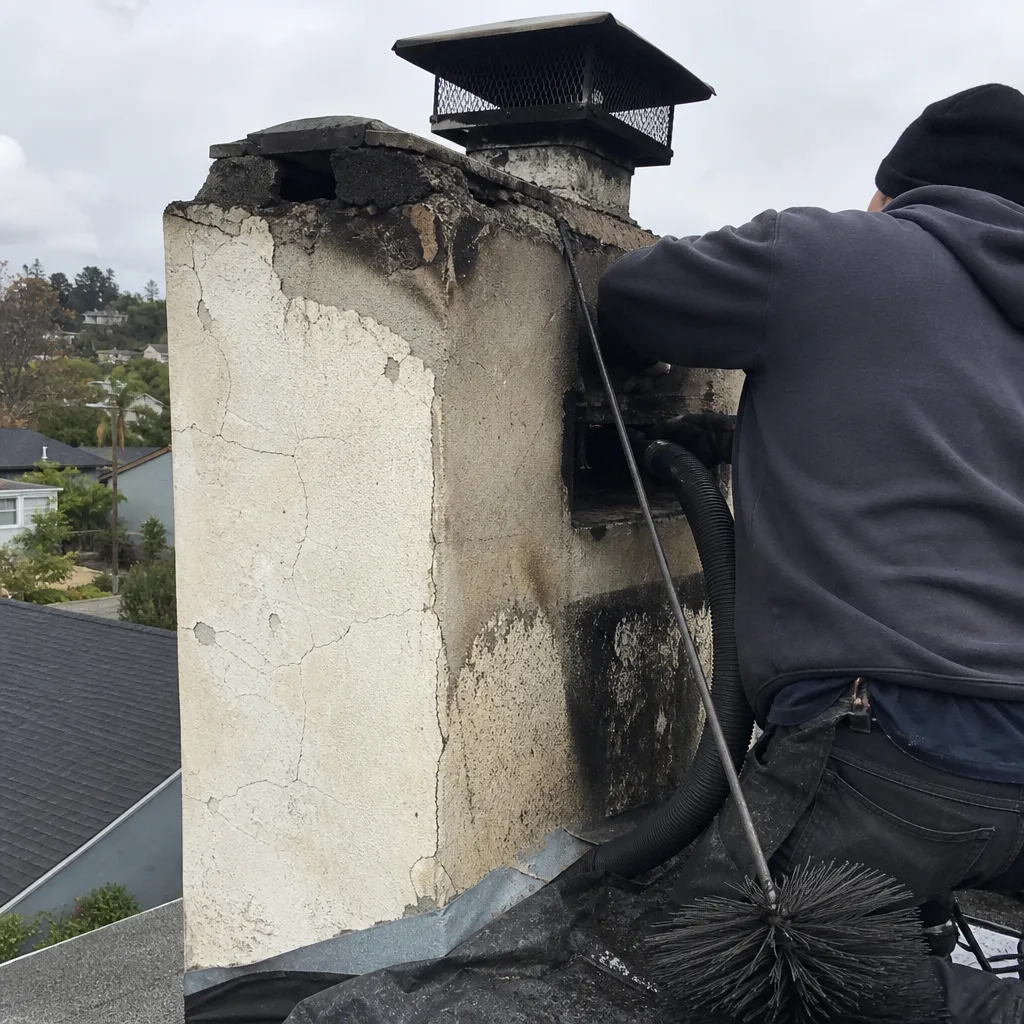 Before
 After
 Before
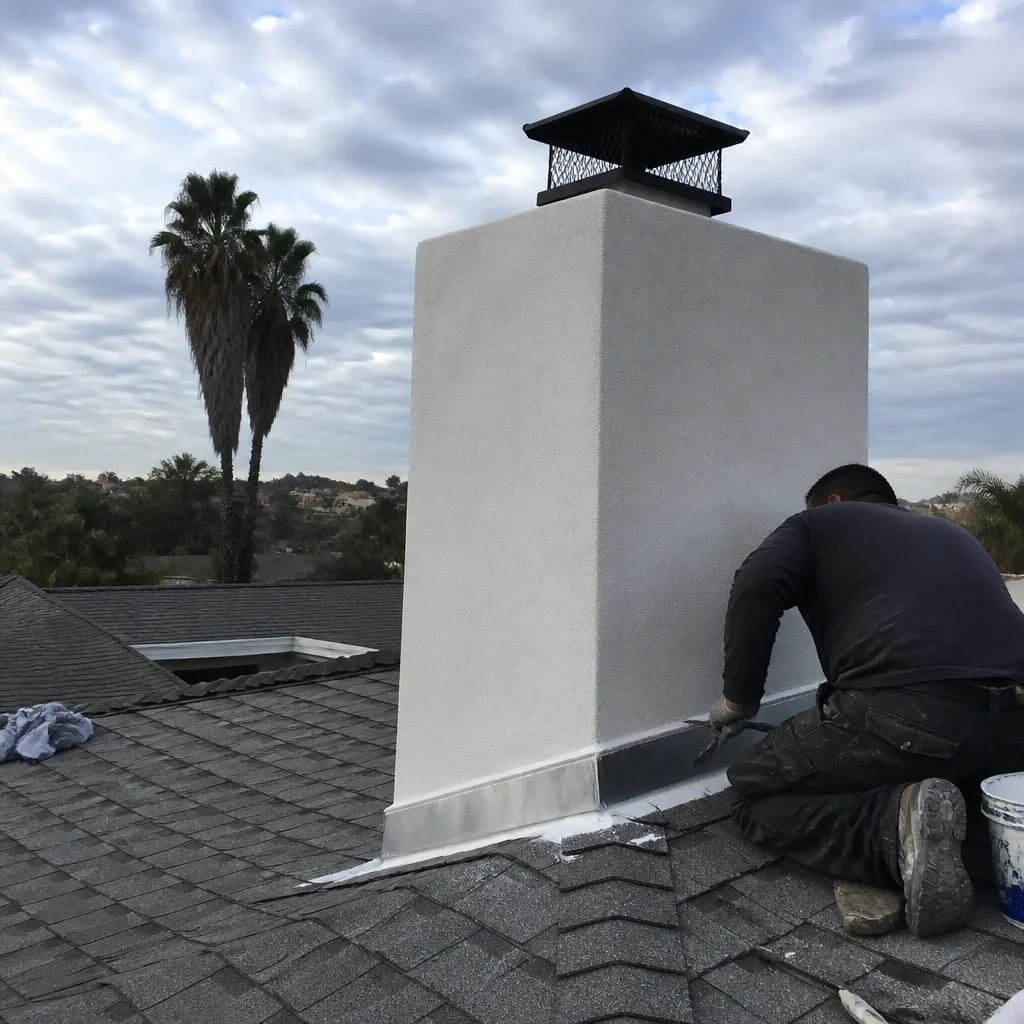 After
Common Mistakes to Avoid
- Closing the damper during a chimney fire. This is the single most dangerous mistake and the most common. It traps superheated gases in the firebox and forces smoke into the living space. The damper stays open. Close the fireplace doors or glass screen instead.
- Waiting to call 911 because the fire “looks contained.” Chimney fires look contained from inside the home. From inside the flue, they are traveling at combustion velocity toward your attic. In Baldwin Hills, the fire department response is never the wrong call.
- Skipping the post-earthquake inspection because the chimney still stands. A standing chimney does not mean an intact flue. The damage from a Richter 4.0 event in this area is almost always internal joint separation that you cannot see from outside.
- Documenting a chimney fire with a few firebox photos and no written assessment. The insurer will argue pre-existing liner deterioration. Your counter-evidence is a CSIA technician’s assessment with video. Get it before you file.
- Burning during red flag warnings because the fireplace feels safe indoors. The danger is not the fire in the firebox. It is the ember that exits the flue and lands in the brush along the Kenneth Hahn slopes.
- Using a Chimfex device after flames are visible at the chimney top. At that stage, the fire has reached the upper flue and Chimfex won’t contain it. Evacuate and call 911.
- Ignoring a persistent smoke smell that only appears during burning. That smell is flue gas leakage, and flue gas contains carbon monoxide. It will not resolve itself.
When to Call a Professional
Call a professional for any of these specific situations: you’ve experienced a chimney fire of any size (post-fire inspection is mandatory), you’ve felt an earthquake at Richter 4.0 or above and used your fireplace in the previous season, you have a smoke smell in the house during fireplace use that you can’t explain, your CO detector has triggered during burning, you see cracks or missing mortar in your crown, your damper no longer opens and closes smoothly, or it has been more than two years since your last video inspection. A professional inspection is also the right response if you’ve just purchased a Baldwin Hills home and the seller can’t produce chimney maintenance records. Chimney Sweep Baldwin Hills offers free estimates in Baldwin Hills – call (877) 752-4855.
Frequently Asked Questions
The first thing is to get everyone out of the house and call 911 from outside, then close the fireplace doors or glass screen if you can do so without reaching into the firebox. Do not close the damper. Closing the damper traps superheated gases in the firebox and forces smoke into the living space. In Baldwin Hills, where homes are close together and the hillside vegetation carries embers quickly in the wind, the LAFD response is the priority over any self-suppression attempt.
A wood-burning chimney used regularly during winter should be swept once per year, before the start of burn season. Gas fireplace chimneys can go two years between inspections but should still be checked annually if the chimney also vents a furnace or water heater. Homes in Baldwin Hills that burn soft woods or fires with less than fully seasoned wood may need more frequent cleaning because creosote accumulates faster. The frequency question is answered by one rule: if you burn, you get an annual inspection.
After any earthquake at Richter 4.0 or above felt in Baldwin Hills, yes. The Newport-Inglewood fault runs directly through this area, and ground shaking at that level is enough to shear clay tile liner joints and separate the chimney crown. A Level 2 inspection includes a video scan of the flue interior and access to attic and crawl spaces. Without it, you risk lighting a fire in a flue with unseen joint gaps that allow flame and carbon monoxide to reach the house framing.
Creosote accumulates in the flue with each fire. Once the creosote layer reaches about 1/8 inch thickness, it becomes combustible. A hot fire or a burning ember reaching that deposit ignites it, and you have a chimney fire. The longer the creosote accumulates, the hotter and longer the fire burns when it ignites. A chimney fire in a heavily coated flue burns longer, reaches higher temperatures, and is more likely to breach the liner and reach the framing. The cost of a sweep is a fraction of the cost of a post-fire liner replacement. Call (877) 752-4855 for a sweep estimate.
Yes. Santa Ana wind events create sustained negative pressure zones on the leeward side of ridge structures that can overwhelm normal chimney draft and pull smoke downward into the home. This is a common Baldwin Hills problem because of our elevation and wind exposure. The fix is a top-sealing damper paired with a full-coverage cap, and in many cases a liner restoration to restore smooth flue flow. A clean flue drafts better but does not eliminate the pressure reversal problem by itself.
Does homeowner’s insurance cover chimney fire damage in Baldwin Hills?
Most Baldwin Hills homeowner’s policies cover chimney fire damage as a sudden, accidental event, but claims fail on the pre-existing damage