
Last updated November 3, 2026
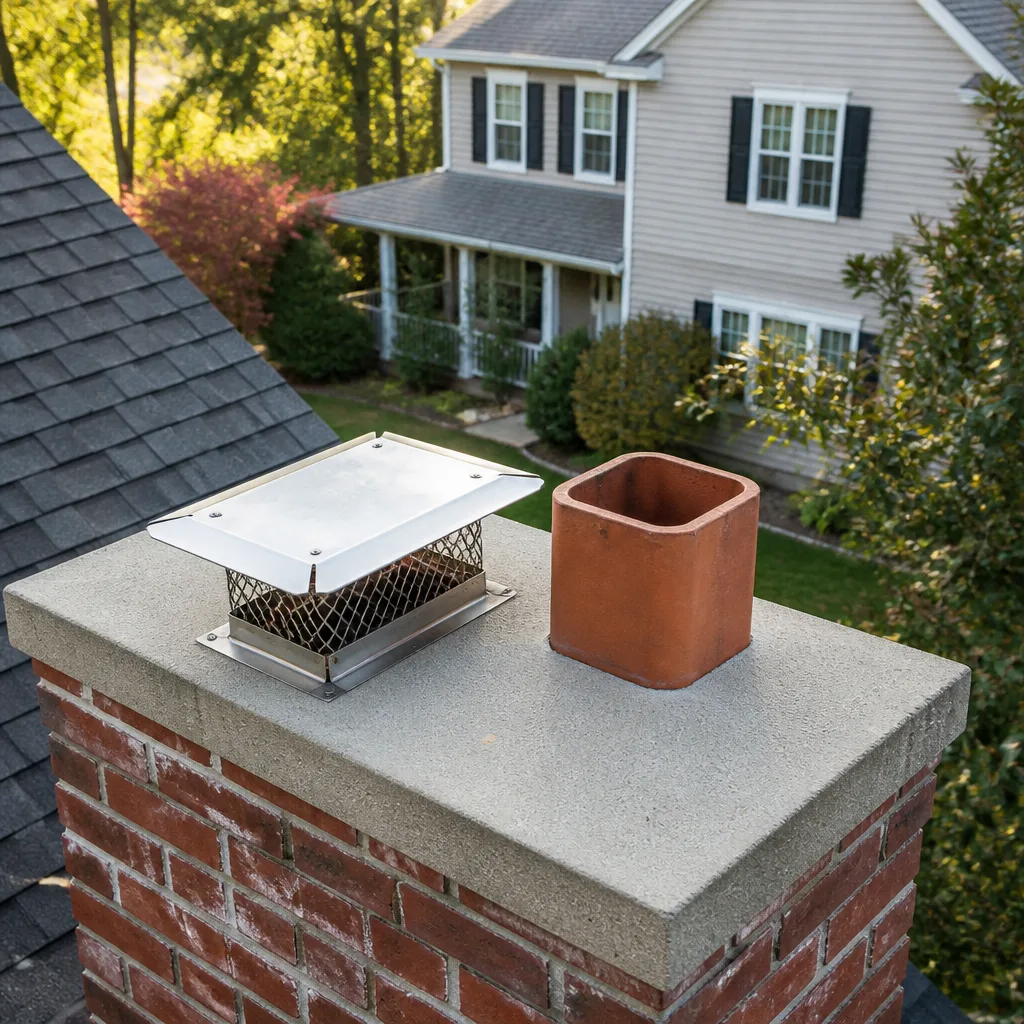 Sweep & inspection
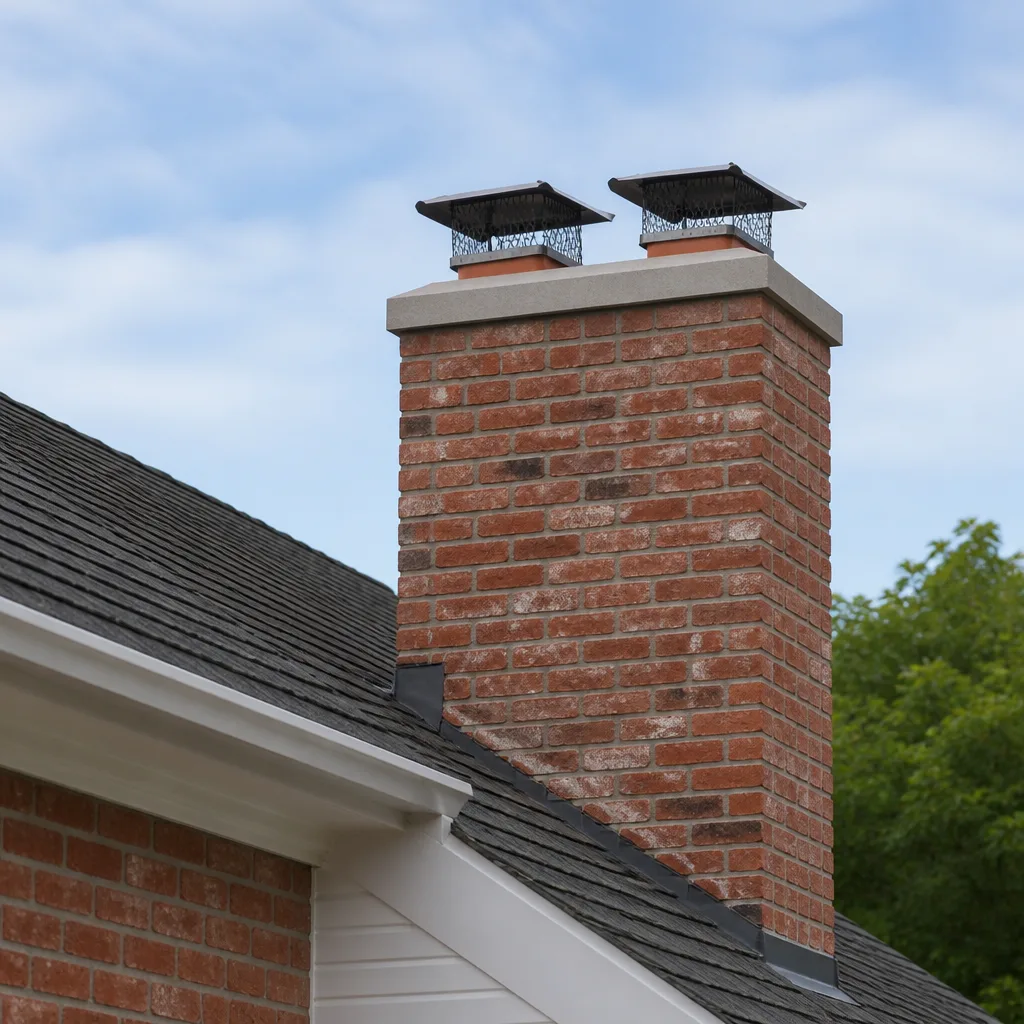 Caps & crowns
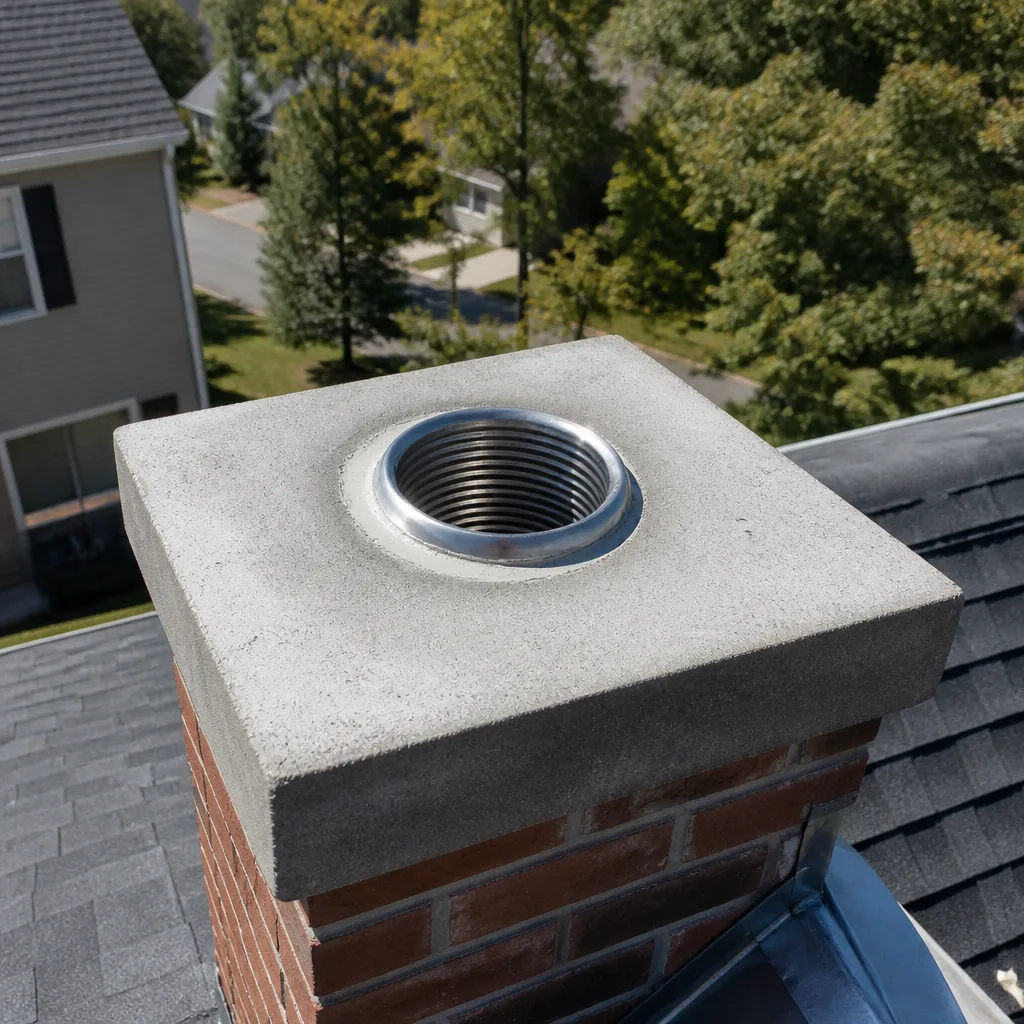 Flue relining
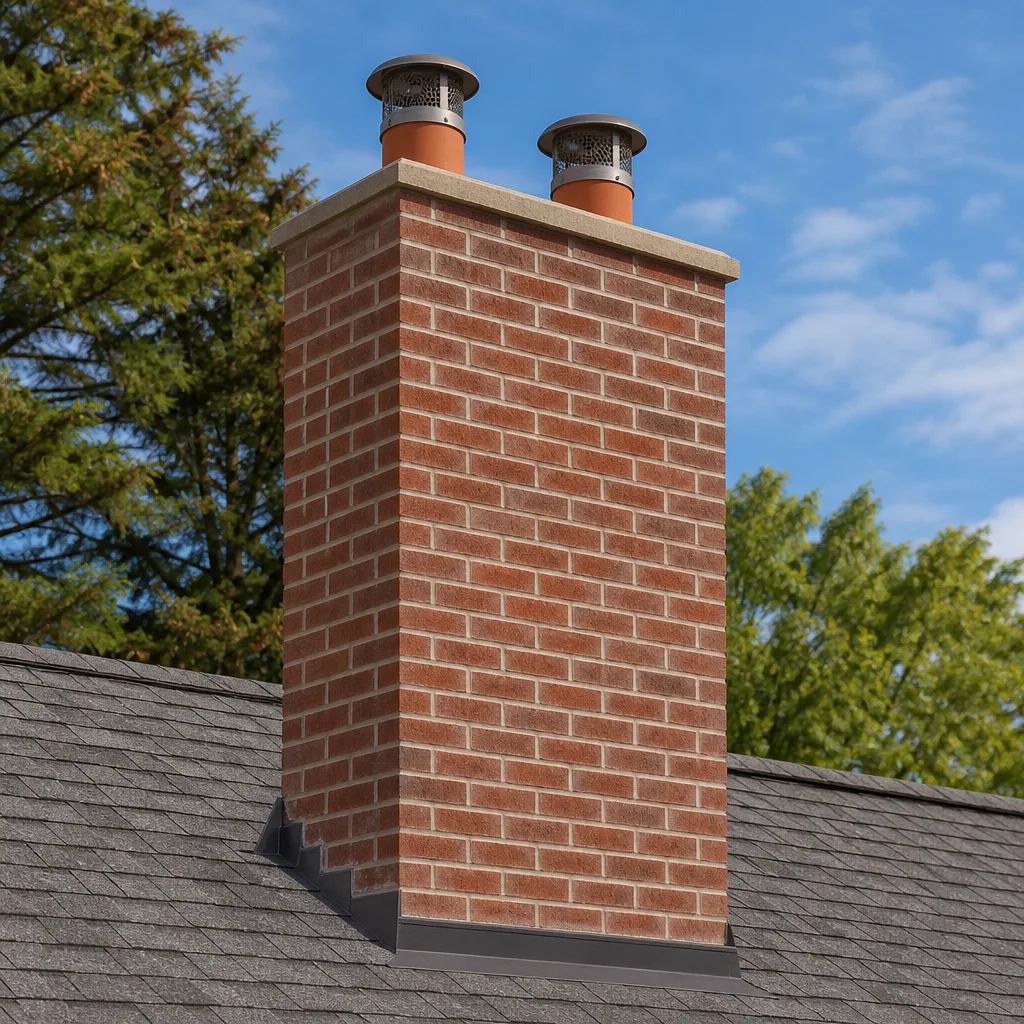 Masonry repair
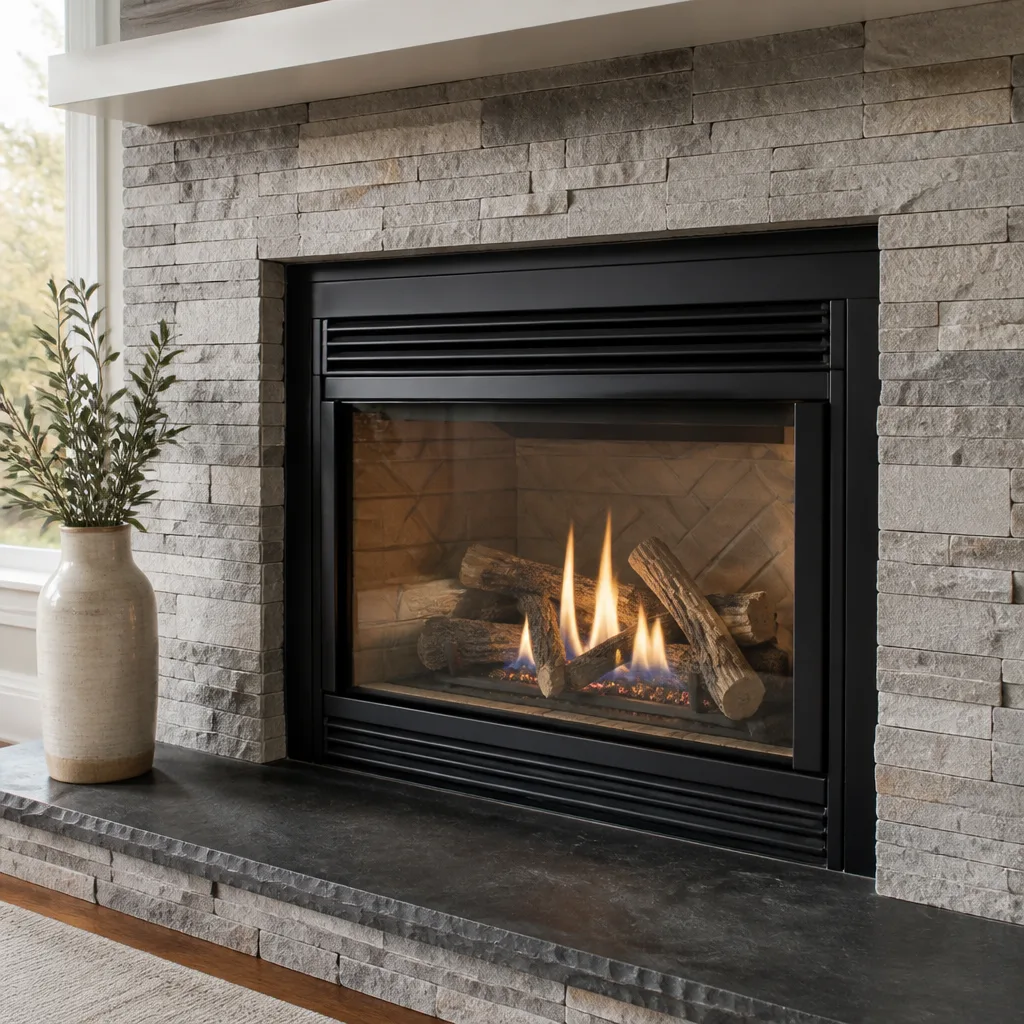 Gas fireplace service
Level 1 sweep and inspection to the NFPA 211 annual standard - flue, crown, cap, and flashing checked and photographed
Chimney sweep logs do not sweep chimneys. They loosen some creosote - which then falls where a brush and vacuum still have to collect it.
The Complete Chimney Sweep Guide for Baldwin Hills Homeowners
Most Baldwin Hills homes burn wood fewer than 15 times a year, which sounds safe. But low-use fireplaces accumulate moisture-laden creosote at a faster rate per burn than heavily used ones. The marine layer that rolls over the Baldwin Hills each evening doesn’t just cool the air, it introduces condensation inside flues that sit idle for months. That moisture binds with soot and creates a dense, acidic creosote that’s harder to remove and more corrosive to masonry than the fluffy, dry creosote found in daily-use fireplaces in colder climates. This guide treats our local microclimate and housing stock as the variables they are. You’ll learn what a proper our Chimney Sweep services in Baldwin Hills actually requires, how to identify what your chimney needs, how creosote staging works, and why the timing of your sweep matters more than most checklist articles admit.
Styles & brands we work with
- Sweep & inspection
- Caps & crowns
- Flue relining
- Masonry repair
- Gas fireplace service
Quick Answer
A chimney sweep in Baldwin Hills CA should follow the CSIA Level 1 inspection protocol, address moisture-accelerated creosote that’s distinctive to marine-layer climates, and recommend specific cleaning methods based on creosote stage rather than a one-size-fits-all brushing. For deeper context, see The Complete Guide to Chimney Cleaning in Baldwin Hills. We charge a flat-price sweep agreed to before we book, and every inspection includes a camera report so you see exactly what we found.
Table of Contents
- Why Baldwin Hills Chimneys Behave Differently
- Identifying Your Chimney Type and What It Means for Sweeping
- Creosote Staging: What Stage You Have and What Removal Works
- When a Sweep Is Not Enough: Liner Damage and Resurfacing
- Seasonal Timing: Why October Sweeps Beat Spring Sweeps in Baldwin Hills
- What a Proper Sweep Visit Includes, Step by Step
- Dryer Vents and Whole-Home Fire Safety
- Cost Structure for Chimney Sweeps in Baldwin Hills
- Common Mistakes to Avoid
- When to Call a Professional
- Frequently Asked Questions
- The Bottom Line
Why Baldwin Hills Chimneys Behave Differently
The Baldwin Hills sit in a unique meteorological pocket. We’re close enough to the coast that the marine layer pushes inland most evenings between May and July, but far enough east that daytime temperatures climb higher than Santa Monica or Culver City. That daily swing of 15 to 20 degrees Fahrenheit creates a condensation cycle inside masonry flues that flatland neighborhoods don’t experience to the same degree. Warm afternoon air pulled into the chimney cools rapidly once the evening fog arrives. Moisture condenses on the interior flue walls, and that moisture mixes with whatever combustion deposits are already there. The result in our experience is a creosote that’s denser, stickier, and more acidic than what you’d find in a chimney used daily in a dry climate.
That’s not a theoretical distinction. It changes the sweep protocol. A standard wire brush will handle dry Stage 1 creosote without issue. The same brush can’t touch the tar-like deposits that form when creosote absorbs repeated cycles of condensation. In Baldwin Hills, we regularly find Stage 2 deposits in chimneys whose owners tell us they burn fewer than ten fires a year. That mismatch between use frequency and deposit severity is the defining characteristic of chimney maintenance in this area, and it’s why generic advice from national sweep franchises often falls short here.
Here’s what compounds it further: Baldwin Hills includes post-war tract homes from the late 1940s through the early 1960s, hillside mid-century homes from the 1970s, and reinforced masonry builds mandated after the 1994 Northridge earthquake. Each era used different flue materials and different construction practices. That means the right sweep for one Baldwin Hills home may be wrong for the one across the street.
Identifying Your Chimney Type and What It Means for Sweeping
Before we bring a brush anywhere near a flue, we determine what we’re working with. Your chimney falls into one of three broad categories, and each requires a different approach. You can often identify your type with a quick look at your roofline and fireplace opening.
- Pre-1980 masonry chimneys. These are solid brick or masonry block structures with a clay tile flue liner. In Baldwin Hills, most pre-1980 masonry chimneys were built with terra cotta clay tiles that are now 40 to 70 years old. Clay tile degrades through thermal expansion and moisture penetration, and the mortar joints between tiles crack over time. A sweep on this type of chimney requires care: aggressive rotary cleaning can break brittle tiles that are already compromised. We inspect before we clean, every time, because brushing a cracked tile flue changes the risk profile from maintenance to repair.
- Post-1994 reinforced masonry chimneys. After the Northridge earthquake, California building codes changed substantially for new masonry construction. Chimneys built after 1994 in Baldwin Hills typically have reinforced construction with steel rebar and improved footing requirements, and they often use stainless steel liners or better-sealed clay systems. These chimneys are structurally more robust against seismic micro-movement, but the liner still accumulates creosote at the same rate as any other. Sweeping is more straightforward, though we still camera-inspect the liner for any earthquake-related shifting at the joints.
- Factory-built and zero-clearance fireplaces. Many Baldwin Hills homes built or renovated in the 1980s and 1990s have pre-fabricated metal chimney systems. These are entirely different animals. The flue is a stainless steel or galvanized pipe, and the cleaning protocols are specific to the manufacturer’s system. You cannot use the same rotary chains or aggressive chemical treatments on a factory-built chimney that you’d use on a masonry flue. The manufacturer’s clearance requirements and the integrity of the metal pipe are the primary concerns. We also check the chimney cap and spark arrestor, which corrode faster in our coastal-influenced air.
If you’re not sure which type you have, here’s a quick field check: look at the fireplace opening. If you see clay tile sections visible just above the damper, you have a masonry chimney. If you see a metal pipe or a circular metal opening, you have a factory-built system. The chimney’s exterior appearance can also tell you: all-brick from ground to chimney top usually means masonry, while a framed chase with siding or stucco usually means factory-built.
Why does the era matter so much for a sweep? Because pre-1980 clay tile flues in Baldwin Hills are the ones most likely to have hidden degradation that a basic brush sweep won’t reveal, and may worsen. A Chimney Sweep in Baldwin Hills who doesn’t distinguish between these types is doing a disservice. We camera-inspect every flue before we recommend any cleaning method.
Creosote Staging: What Stage You Have and What Removal Works
Creosote isn’t one substance. It’s a spectrum of three recognized stages, each with different chemistry, appearance, and removal requirements. Understanding which stage you have determines whether a standard sweep is sufficient or whether you need more aggressive treatment.
Stage 1 Creosote: Flaky Soot
Stage 1 is the lightest deposit, a dry, flaky, dusty layer of soot that brushes off easily. It looks like matte black powder or thin flakes on the flue wall. In a dry climate with regular use, this is what most chimneys accumulate. In Baldwin Hills, Stage 1 is what we typically see in chimneys that have been swept within the last two years and have seen limited use since. Standard wire brush sweeping removes Stage 1 completely in a single pass, and it’s usually the cheapest and fastest service to perform.
Stage 2 Creosote: Tar-Like Glaze
This is where Baldwin Hills moisture becomes a problem. Stage 2 creosote is no longer dry and flaky. It’s a hard, shiny, black glaze that resembles tar or thick paint. It forms when Stage 1 deposits absorb moisture from condensation and then undergo further heating cycles that compress and polymerize them. The marine layer in our area accelerates this by introducing moisture during idle periods. Stage 2 cannot be removed with a standard wire brush. It requires either rotary cleaning equipment fitted with polyurethane rods, chemical treatment with a product like ACS (Anti-Creo-Soot), or a combination of both. In our experience, Stage 2 in Baldwin Hills chimneys often requires a two-step approach: a chemical application that begins breaking down the glaze, followed by a rotary mechanical pass that removes the loosened material. We schedule a single additional visit for the chemical step in most cases, and the combined service costs more than a standard sweep because of the added labor and materials.
Stage 3 Creosote: Solidified Tar
Stage 3 is the most serious deposit level. It’s a thick, hardened, tar-like layer that has baked onto the flue walls and begun to restrict the flue opening. In some cases, it looks like hardened lava or glossy tar drips. Stage 3 creosote is both a fire hazard and a structural concern, because removing it mechanically can damage the underlying liner. This is where we stop and assess carefully. Stage 3 removal often requires a combination of aggressive chemical breakdown and careful mechanical scraping, and if the underlying clay tile liner has degraded beneath the creosote, the correct fix is a liner repair or replacement, not just a sweep. No responsible chimney company will promise that a brush sweep will solve Stage 3. If someone tells you a standard sweep will handle it, get a second opinion.
Which Removal Method Applies
- Standard wire brush: Appropriate for Stage 1 deposits only. Safe for all chimney types when used properly.
- Rotary cleaning with polyurethane rods: Appropriate for Stage 2 deposits on masonry chimneys. The rods spin and knock off glazed creosote without the abrasion of metal chains. We do not use metal chains on clay tile liners in Baldwin Hills because of the age of our housing stock and the risk of breaking brittle tiles.
- Chemical treatment (ACS): Appropriate as a precursor for Stage 2 and Stage 3 deposits. Anti-Creo-Soot is a manganese-based catalyst that alters the creosote’s chemical structure so it becomes brittle and removable. It’s sprayed into the flue and given time to work before mechanical removal.
- Manual scraping: Used only for isolated Stage 3 deposits where rotary equipment would be too aggressive. This is slow, careful work, and it’s always paired with a camera inspection afterward to confirm liner integrity.
When a Sweep Is Not Enough: Liner Damage and Resurfacing
Here’s the honest part of this guide that most sweep checklists never include: sometimes a sweep is not the right service. A chimney sweep removes combustible deposits. It does not repair a deteriorated flue liner, and in some cases, sweeping a chimney with a badly damaged liner can make the problem worse by dislodging pieces or exposing hidden cracks. The key is knowing the difference before the brushes come out.
That’s where HeatShield and FireGuard enter the conversation. HeatShield is a ceramic flue liner resurfacing system. It’s applied as a spray-on cementitious ceramic that coats the inside of a deteriorated clay tile flue, creating a new, continuous, insulated lining. It’s not a patch. It’s a resurfacing that bonds to the existing tile and fills cracks, gaps, and spalled areas. For Baldwin Hills homes with pre-1980 clay tile flues, HeatShield is often the difference between a $2,000 liner resurfacing and a $8,000-plus full tear-down and rebuild. We’re one of the companies in the area that’s certified and equipped to apply HeatShield, which matters because most sweep-only operations cannot offer this restoration service at all. They clean and leave, and if they find a damaged liner, they refer you to a masonry contractor and walk away.
What HeatShield addresses: cracked clay tile liners, minor mortar joint separation, spalled or chipped tile surfaces, and gaps between tile sections that expose the masonry chase. What it does not address: structural damage to the chimney’s exterior masonry, a collapsed liner that has already shifted, or a firebox that needs full rebuilding. HeatShield is a liner restoration product, not a structural repair system.
We also work with FireGuard, which is a spray-on ceramic liner used primarily in factory-built chimney systems where the metal flue has developed pinholes or minor corrosion. FireGuard coats the interior of the metal pipe and restores its fire resistance. For homeowners with 1980s-era zero-clearance fireplaces showing age, FireGuard can extend the usable life of the system without replacing the entire chimney.
The practical takeaway: if your chimney receives a camera inspection and the liner shows minor cracking or joint separation, a sweep plus HeatShield resurfacing may be the complete fix in one appointment sequence. If the liner is structurally failed or the chimney itself has moved, that’s a repair project, and we’ll tell you that plainly. Our Chimney Repair in Baldwin Hills service handles liner restoration, and we show you every camera image before any recommendation is made.
One more point on products, because it matters when you’re comparing companies. We stock and install HeatShield, Gelco, Olympia Chimney, Famco, and Copperfield products. We name them because these are the same materials professional chimney contractors specify on commercial projects. Gelco makes chimney caps and chase covers that withstand our coastal air far better than the big-box generic versions. Olympia Chimney supplies liner components and dampers we use on repair work. Famco makes the venting components we use on dryer vent and factory-built chimney systems. When a company tells you “we use professional-grade materials” without naming any, ask which ones. The answer tells you everything.
Seasonal Timing: Why October Sweeps Beat Spring Sweeps in Baldwin Hills
National chimney guidelines often recommend spring sweeping, after the burning season ends. That advice assumes a cold-winter climate where chimneys get heavy use from November through March. It does not apply to Baldwin Hills. Our burning season starts in late November or December and runs through February, with occasional use continuing into early spring. That’s it. Three to four months of intermittent fires.
Here’s why October is the smarter month in this area: first, the Santa Ana wind season begins in earnest in October, and Santa Anas carry wildfire ash and particulate matter that settles into open chimneys. A chimney swept in October is clean going into both the fire season and the wind season. A chimney swept in April sits for seven months accumulating dust, ash, and moisture through the foggy summer and the autumn Santa Anas, then gets used. That means your first fire of the season is burning through seven months of accumulated debris in a flue that’s been absorbing marine-layer condensation all summer.
Second, October is before the first cold snap. In Baldwin Hills, the first genuine fire-weather evening usually arrives in late November, but families start using fireplaces in December. If you wait until then, you’re booking during peak demand. We’re scheduling quickly in October and early November, and you can get your fireplace ready before the holidays.
Third, October is when we can combine the chimney sweep with a dryer vent cleaning in a single visit efficiently. Dryer vent fires are the leading residential appliance fire cause in the United States, and the lint accumulation pattern in Baldwin Hills is no different from anywhere else. We address both fire-safety systems in one trip: chimney plus dryer vent. Dryer Vent Cleaning in Baldwin Hills follows the same logic as chimney sweeping, but for the appliance exhaust that runs through your laundry room wall or roof.
Seasonal recommendation, summarized: book your sweep between late September and mid-November. That positions you clean ahead of the holidays, the burning season, and the peak Santa Ana wind events. If you miss that window, don’t skip it entirely. A late-season sweep is still better than none. But October is the target for Baldwin Hills specifically.
What a Proper Sweep Visit Includes, Step by Step
When we perform a Chimney Sweep Baldwin Hills home visit, the process follows a sequence we’ve refined over years of working in this area’s housing stock. Here’s what you should expect from any sweep company that’s operating at a professional level, not just a brush-on-a-drill operation.
- Interior protection setup. Drop cloths and a vacuum are positioned before any work begins. A proper sweep company runs a high-volume HEPA-filtered vacuum during the entire process to keep dust out of your living space. We don’t leave a dust film on your furniture, and that’s not a nicety, it’s the standard.
- Damper and firebox inspection. We check the damper for operation, rust, or misalignment. The damper throat is a common failure point in older Baldwin Hills homes, and a damper that doesn’t seal properly accelerates moisture intrusion during the marine-layer season.
- Top-down camera inspection. Unless the chimney is too steep or inaccessible, we run a camera from the top down before brushing. This shows us the liner’s condition, any blockages, and the creosote stage. It’s the difference between an informed sweep and a blind one.
- Mechanical cleaning. Based on the creosote stage and chimney type, we select the appropriate brush or rotary setup. The cleaning is done from the top down in most cases, with the vacuum running continuously.
- Post-sweep camera verification. After the mechanical pass, we run the camera again. You see the before and after images yourself. This is not optional for us. It’s the verification step that separates professional work from guesswork, and it’s the basis for any recommendation we make afterward.
- Chimney cap and crown check. We inspect the cap for damage, missing spark arrestor mesh, or rust. In Baldwin Hills, corrosion on exposed metal components is accelerated by our coastal-influenced air. A damaged cap that lets rainwater in during the winter is the leading cause of moisture damage we see.
- Report and recommendations. You get a written summary with camera images. If there’s a repair issue, we show you exactly what we saw and explain what it means. If nothing is wrong, we tell you that too. We don’t invent problems to justify a repair upsell.
A standard sweep appointment on a single-story Baldwin Hills masonry chimney takes about 45 to 75 minutes. Factory-built chimneys may take slightly longer due to manufacturer-specific protocols. Two-story homes add time for roof access setup. We’ll give you an accurate time window when you book.
Dryer Vents and Whole-Home Fire Safety
While this guide focuses on chimneys, the fire safety picture in any Baldwin Hills home includes the dryer vent, and we bring it up because most homeowners never connect the two. A clothes dryer exhausts lint-laden air through a duct that runs from the appliance to the exterior. Over time, lint accumulates on the inside of that duct. The U.S. Fire Administration reports that clothes dryers are involved in approximately 2,900 residential structure fires annually, and the leading cause is failure to clean the vent. That’s a national statistic, but the risk applies to any Baldwin Hills laundry room identically.
What changes in our area is the added factor of time. Many Baldwin Hills homes have dryer vents that haven’t been cleaned in years because no one thinks about them. A dryer vent that was installed when the house was built and has never been cleaned is a recognized fire hazard, not a hypothetical one. We offer dryer vent cleaning as a standalone service because it’s not an add-on gimmick. It’s a separate fire-safety system in your home that deserves the same attention as your chimney. One call covers both, and if you’re already booking a chimney sweep in October, adding a dryer vent cleaning takes about 20 extra minutes and completes the fire-safety picture for your home.
Cost Structure for Chimney Sweeps in Baldwin Hills
Here’s a straight answer on pricing for chimney sweeps in Baldwin Hills CA, because far too many companies make you call before they’ll say a number. The exact cost depends on chimney type, height, creosote stage, and accessibility, but these are the ranges we work within for this area.
- Standard sweep, single-story masonry chimney with Stage 1 creosote: $149 to $249. This is the flat-price sweep we quote before booking. Camera inspection is included.
- Standard sweep, two-story home or steep roof access: $249 to $399. The added cost reflects roof access equipment and additional time.
- Stage 2 creosote removal with rotary cleaning: $299 to $449. This includes the rotary pass and a second camera verification.
- Stage 2 or Stage 3 creosote with chemical treatment (ACS): $449 to $699. This typically requires two visits: one for chemical application, one for mechanical removal.
- Dryer vent cleaning: $99 to $199 depending on duct length and accessibility.
- Camera inspection only: $99 to $149 if you want an assessment before committing to a sweep.
- HeatShield liner resurfacing: $2,000 to $4,000 depending on flue size and number of stories. This is a repair service, not a sweep cost, but we include it here because homeowners deserve the full picture before a booking.
These are the honest ranges for Baldwin Hills. If someone quotes you $50 for a chimney sweep, you’re not getting a camera inspection, you may not be getting a properly cleaned flue, and you’re not getting a professional who stands behind the work. We don’t compete on being the cheapest call. We compete on being the one that shows you the camera images and tells you the truth afterward. For an exact quote, call (877) 752-4855 and we’ll walk through your chimney type and home layout over the phone. Estimates are free.
Common Mistakes to Avoid
- Skipping the camera inspection before the sweep. A metal-on-metal brush can crack a brittle, aging clay tile flue, especially in pre-1980 Baldwin Hills construction. Anyone who sweeps without looking first is working blind, and in this housing stock, that’s a liability you’re paying for.
- Assuming low use means no creosote. As we covered, the marine layer’s condensation cycle creates creosote buildup in low-use chimneys at a rate that surprises most Baldwin Hills homeowners. A fireplace used ten times a year still needs an annual or bi-annual inspection.
- Waiting until December to book. By December, we’re running at full capacity and you may wait two to three weeks for an appointment. That’s two to three weeks of burning in a dirty flue. October booking solves this.
- Using chemical creosote logs as a substitute for sweeping. Creosote sweeping logs can help soften Stage 1 and some Stage 2 deposits, but they do not remove the creosote. The loosened material still needs to be mechanically removed. Skipping the sweep after using a log is worse than using nothing, because the loosened but unremoved creosote can fall and block the damper throat.
- Ignoring the dryer vent because “it’s a different system.” It’s a different system, but it’s the same fire risk profile. If you’re booking a chimney sweep for fire safety, adding a dryer vent cleaning completes the job. We handle both in one visit.
- Accepting a liner repair recommendation without seeing the photos. If a company tells you your liner needs HeatShield or full replacement and won’t show you the camera images, walk away. A photograph is the only proof that a liner is actually damaged beyond what a sweep can address. We provide images as standard practice, not on request.
- Comparing quotes on price alone. A $99 sweep that doesn’t include camera inspection, proper equipment, or a post-sweep verification is not the same service as a $199 sweep that does. The cheapest options in Baldwin Hills are typically the ones that leave Stage 2 deposits on the flue wall and never tell you.
When to Call a Professional
You need a professional chimney sweep whenever you notice any of the following: visible creosote buildup on the damper or firebox walls, a fireplace that smokes back into the room instead of drawing upward, an odor coming from the fireplace during humid weather (this is moisture interacting with creosote, a signature Baldwin Hills condition), dark stains on the interior or exterior wall near the chimney, or if it’s been more than 12 months since your last inspection. You also need a professional if you’ve recently purchased an older Baldwin Hills home and have no maintenance records for the chimney. We’ve found hidden liner damage in homes that had “cleaned” chimneys, because the previous owner used a sweep company that never ran a camera. Chimney Sweep Baldwin Hills offers free estimates in Baldwin Hills, call (877) 752-4855 to schedule or ask questions.
Frequently Asked Questions
A standard chimney sweep in Baldwin Hills costs $149 to $249 for a single-story masonry chimney with normal creosote buildup, and $249 to $399 for two-story homes or steep roof access. Stage 2 or Stage 3 creosote removal costs more, typically $299 to $699, because it requires rotary cleaning or chemical treatment. Call (877) 752-4855 for an exact quote based on your chimney type and home layout. Estimates are free.
We recommend an annual inspection and sweep for Baldwin Hills homes that use their fireplace at all, even lightly, because the marine layer’s condensation cycle creates creosote buildup faster per burn than dry climates. If you use your fireplace ten or more times per year, an annual sweep is your baseline. If you use it rarely and the chimney is dry and well-capped, you can extend to 18 to 24 months, but the camera inspection should still happen annually.
The honest answer depends on what the camera shows. If the liner has minor cracking or joint separation but is still structurally intact, HeatShield resurfacing is often the right fix and costs far less than a full replacement. If the liner is collapsed, severely shifted, or the chimney structure has moved, you need a repair. The only way to know is a camera inspection. We never recommend liner work without showing you the photos that justify it.
Creosote accumulates in stages. Stage 1 is a maintenance issue you’re not yet in danger from. Stage 2 is a fire hazard: glazed creosote burns at temperatures that can crack clay tile liners and start chimney fires. Stage 3 is a high fire hazard that typically requires professional removal and possibly liner repair. Beyond fire risk, skipped sweeps in Baldwin Hills allow moisture to combine with deposits and accelerate liner corrosion. The result is that a $199 sweep deferred for three years becomes a $2,000-plus HeatShield repair. Call (877) 752-4855 to get an inspection scheduled before it reaches that point.
Sometimes. Draft problems can come from creosote buildup, a closed or broken damper, a blockage at the cap, or negative air pressure inside the home. A proper sweep removes the first three causes. Negative air pressure from bathroom fans, kitchen exhaust, or closed-window environments is a structural issue, not a sweep issue, and we’ll diagnose it correctly rather than telling you a sweep fixed something it didn’t.
Yes. The lint trap catches most lint, but not all of it. A portion passes through the trap and deposits inside the duct, where it accumulates over time and restricts airflow. Restricted airflow causes the dryer to run hotter and longer, which creates the conditions for lint ignition. We recommend having your dryer vent cleaned at the same interval as your chimney, once per year, and we handle both services in one visit.
The Bottom Line
Baldwin Hills chimneys need a different kind of attention than chimneys in colder, drier climates. For more guides & resources on local chimney care, explore our blog. The marine layer creates moisture conditions that accelerate creosote formation in rarely used fireplaces. The housing stock spans at least three construction eras, each with different liner types and protocols. A proper sweep here requires a camera inspection before and after the brushing, the right removal method for the creosote stage, and an honest assessment of whether a sweep is the right service in the first place. If the liner needs work, HeatShield resurfacing is the restoration capability that separates a real chimney company from a brush-and-leave operation. Book your sweep in October, cover the dryer vent in the same visit, and you’ll have whole-home fire safety handled before the first cold night. Call (877) 752-4855 for a free estimate.
Written by the team at Chimney Sweep Baldwin Hills, serving Baldwin Hills since 2015.
See the difference
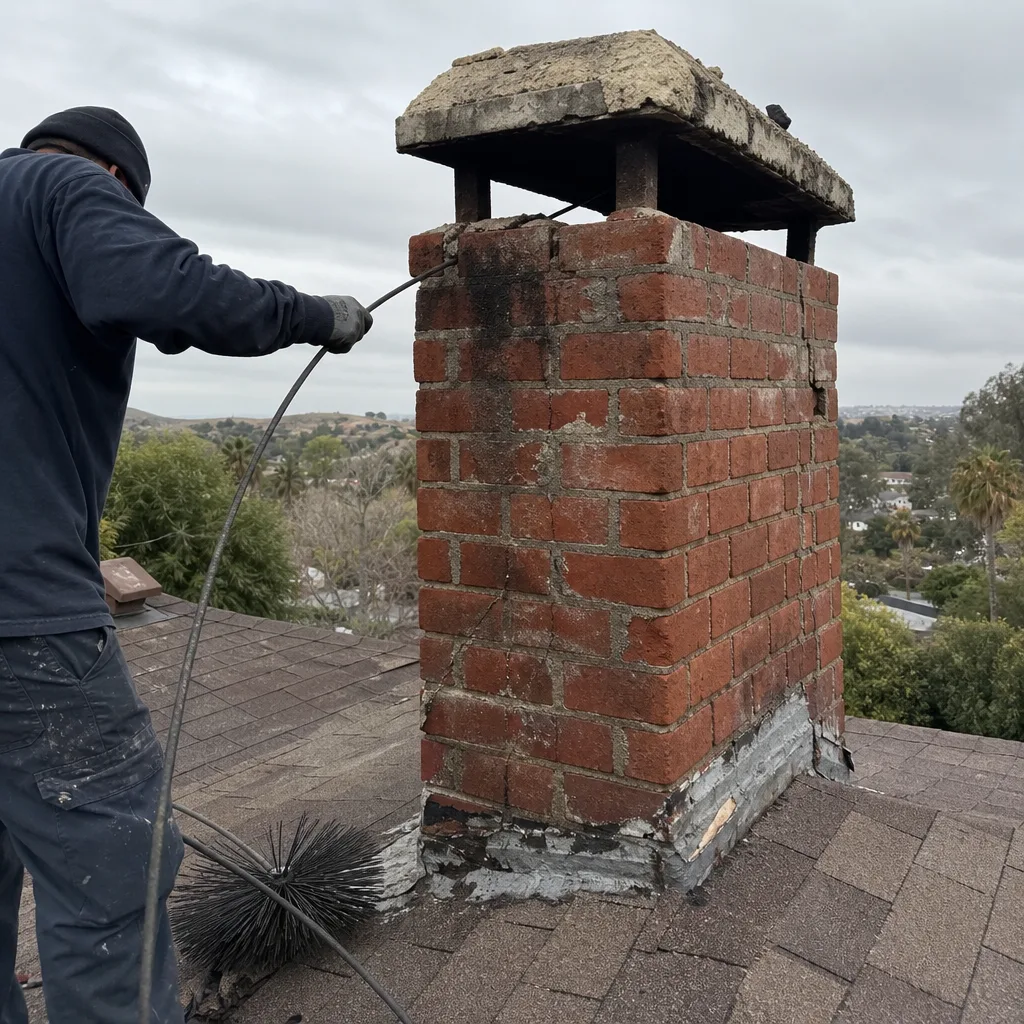 Before
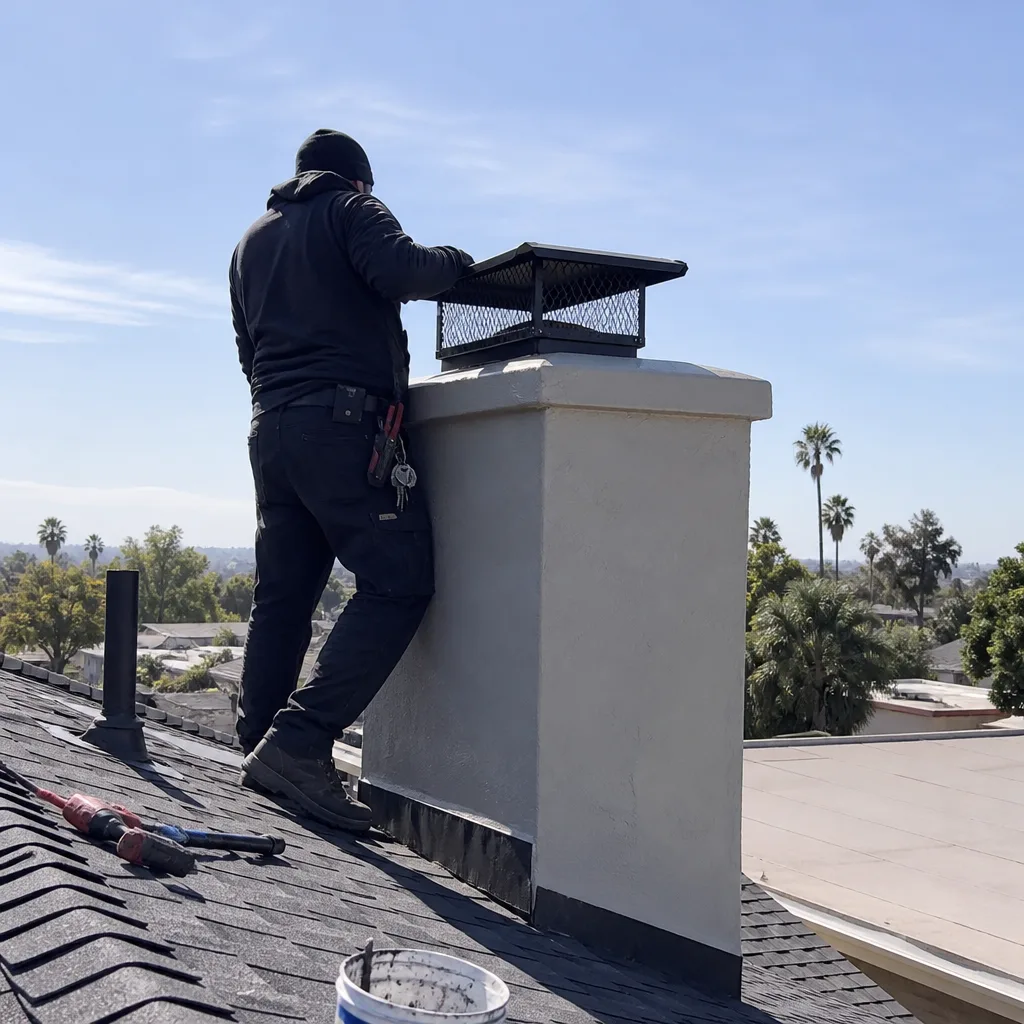 After
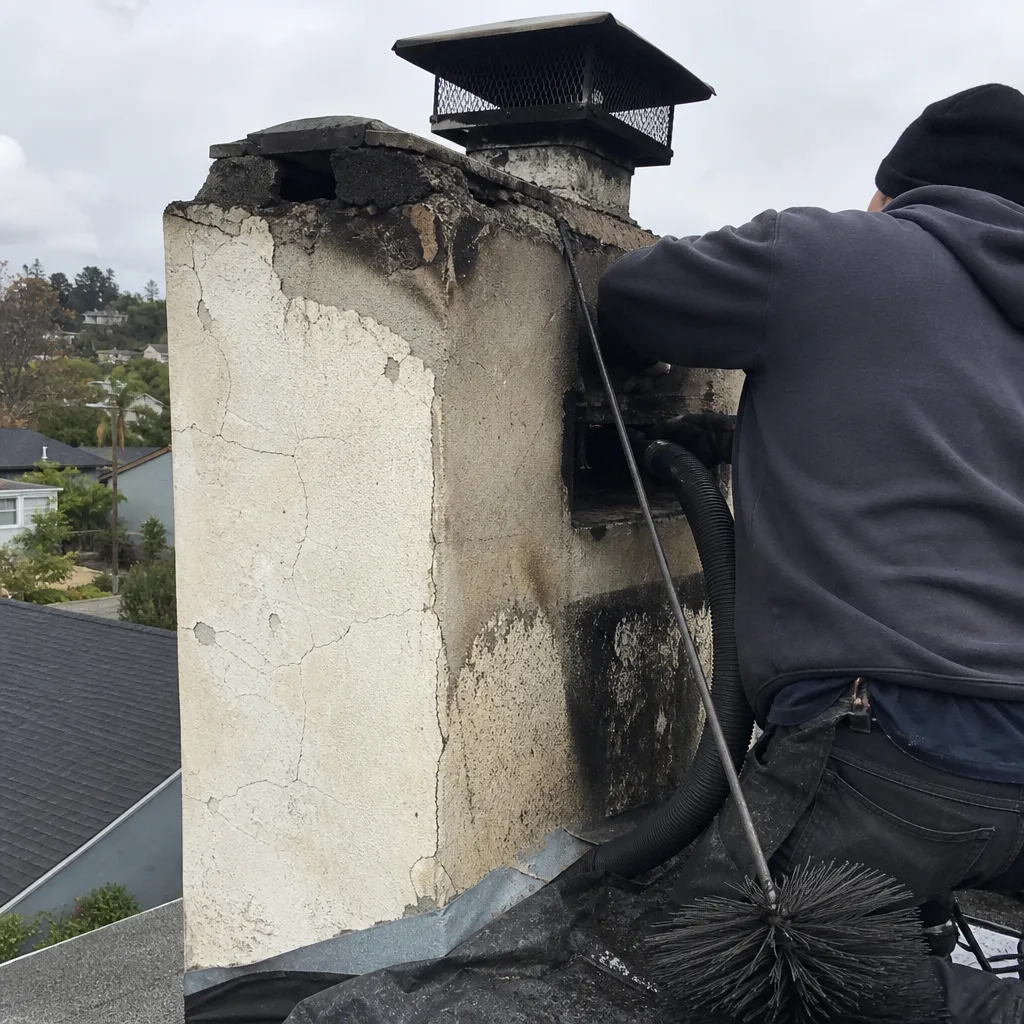 Before
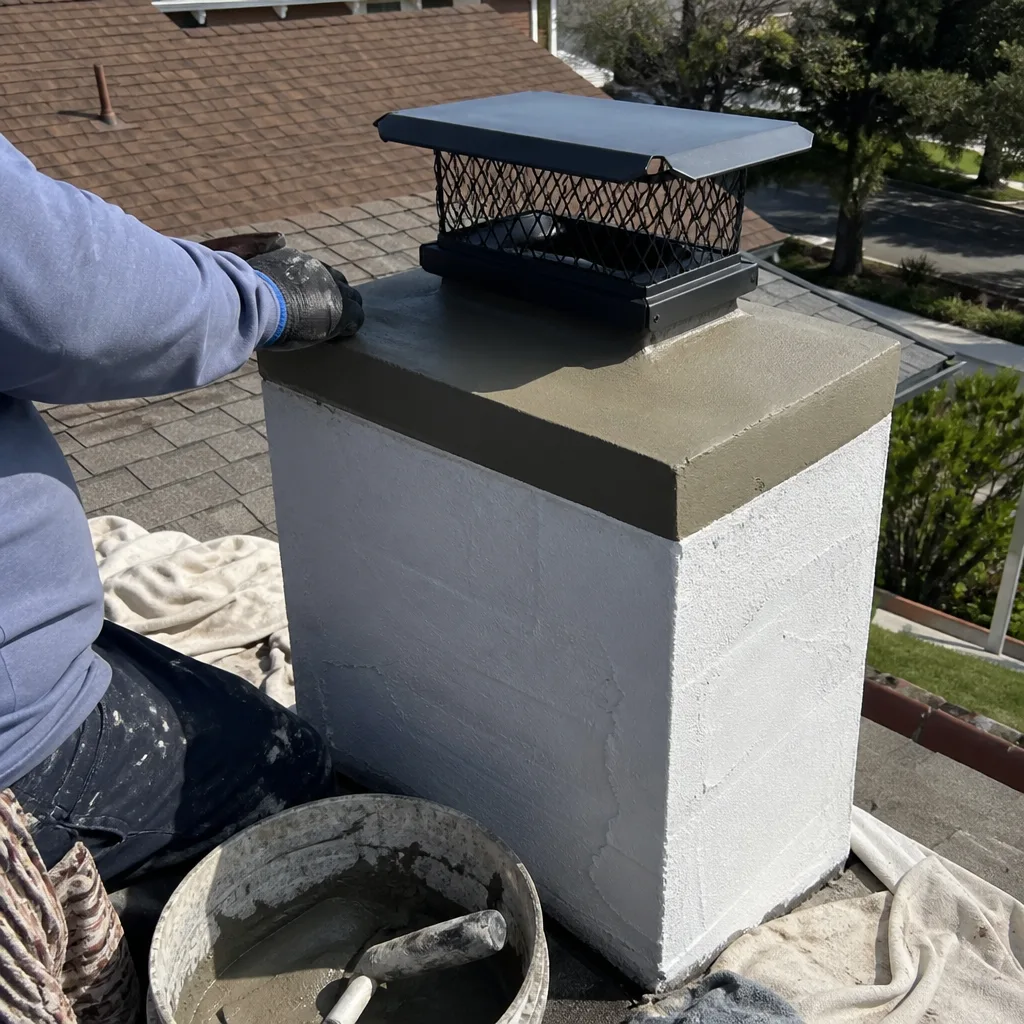 After
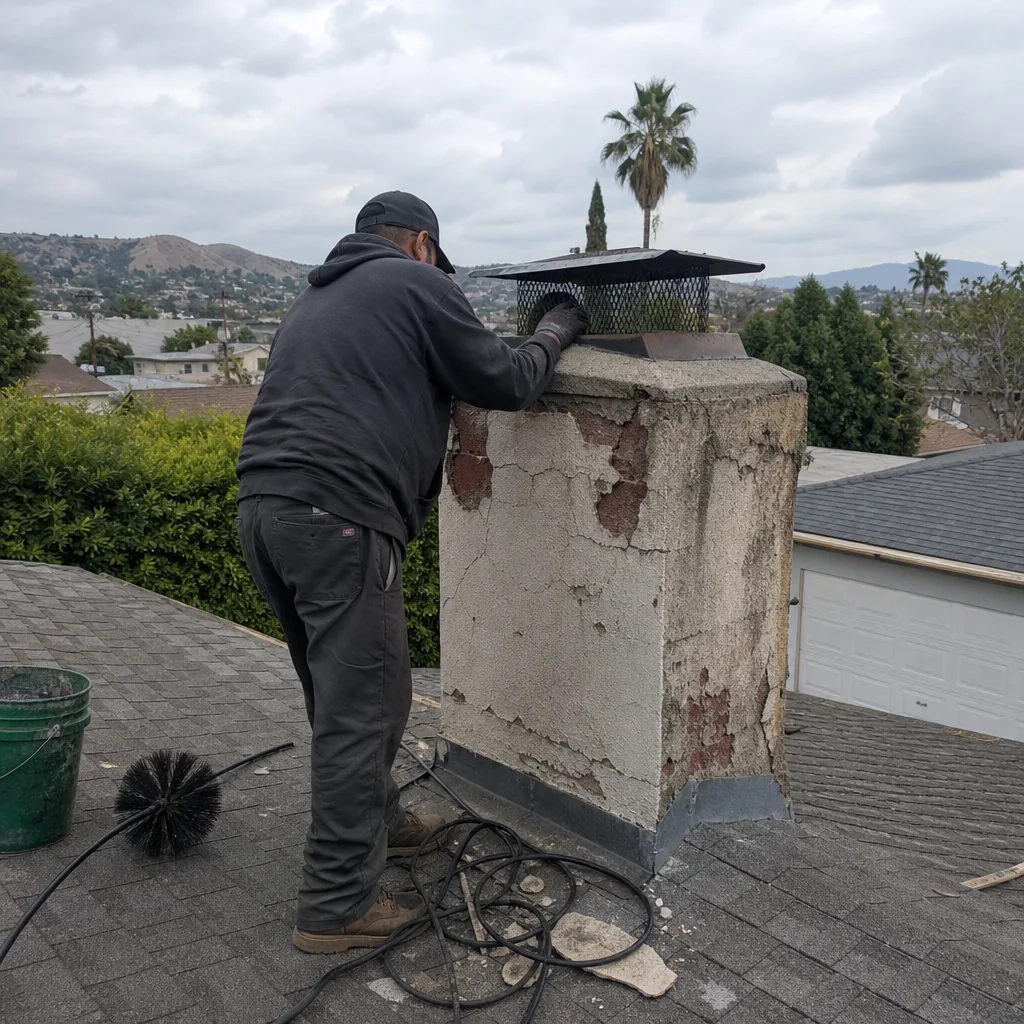 Before
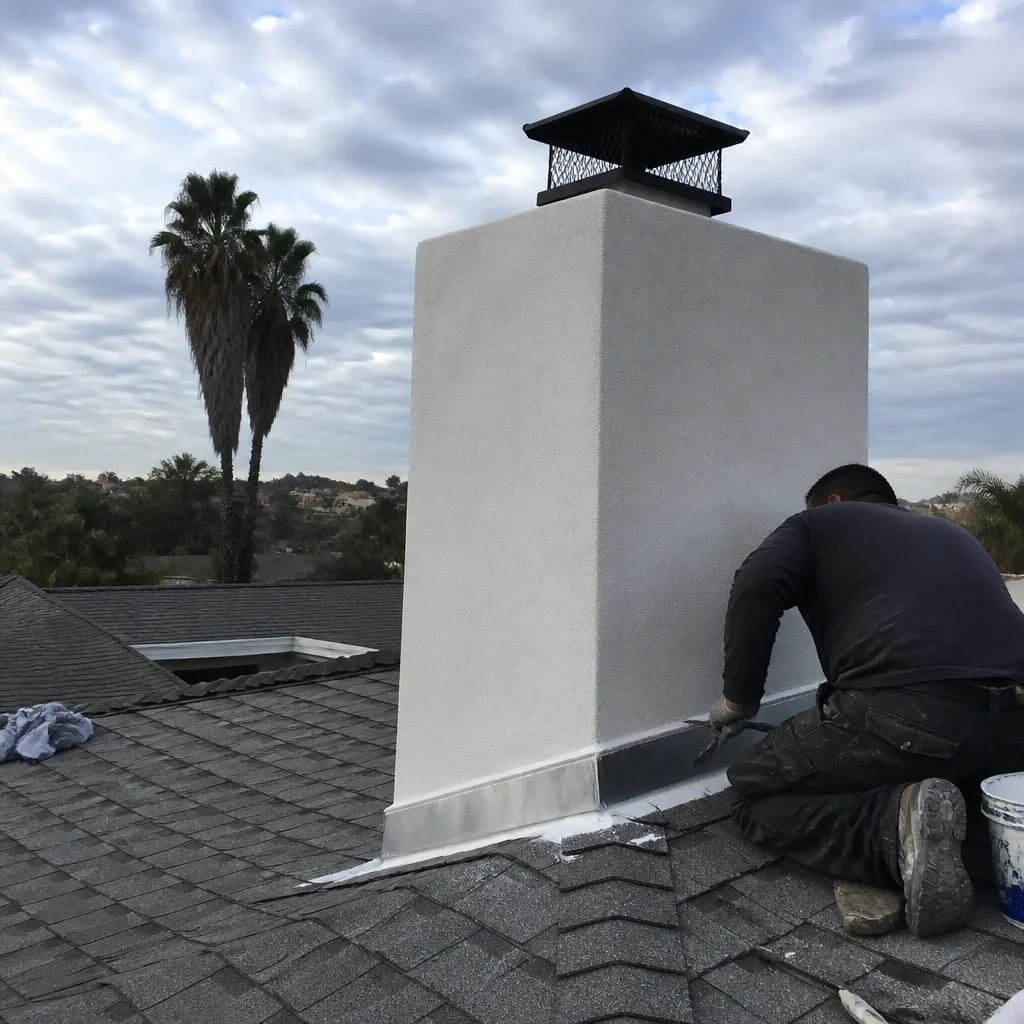 After